
About G. C. Henderson
Lived 1870 – 1944 (aged 73). G. C. Henderson was a British and Australian historian, academic, non-fiction writer and university teacher.
George Cockburn Henderson (1 May 1870 – c. 9 April 1944) was an Australian academic with a considerable career in Adelaide.
History Cockburn was born in Hamilton, New South Wales, the eighth of nine children
He graduated BA in March 1893, winning a gold medal in philosophy, the Fraser Scholarship in History, and the James King of Irrawang Travelling Scholarship of £110 for two years, and in 1894 he enrolled at Balliol College, Oxford, where he was awarded a Brackenbury Scholarship in history which funded his studies there to the value of £80 per annum for five years. He also excelled at athletics and was a leading oarsman and member of the Balliol crew at the Henley and Oxford races. In recognition of his highly successful work, he was promoted by the Oxford extension delegacy to first-class lecturer.
In 1898 he accepted a position at Sydney University as Acting Professor of History, while Professor Wood was on holiday in England. On 5 January 1899, two days before leaving, he married May Gertrude Sturge, a niece of John Bright and of Joseph Sturge, A second acting Professorship, of Philosophy, arose at Sydney University, which Henderson filled, in 1900 returning to England, living at Kingham, and at Charlbury, in Oxfordshire, the home of his wife's parents.
Early in 1902 Henderson was invited to give a course of lectures in Sydney, and while he was in Australia Professor Douglas peremptorily resigned, and the University of Adelaide offered him the chair of History (or perhaps his friend William Mitchell, professor of English and Philosophy, persuaded him to apply); he accepted and took up residence in North Adelaide. He attempted to persuade his wife to join him, but she repeatedly declined. By 1910 she was living with the newspaper editor Richard Henry Gretton, and Henderson instituted divorce proceedings. Henderson's resignation from the university was accepted reluctantly and he was awarded the title of professor emeritus. He continued his historical researches; notably on Abel Tasman with M. Wieder, the Dutch historian.
He was cared for over the course of 20 years by his niece Elsie Henderson, who lived next door to his "cozy villa". When the pair visited England in 1936 he arranged for Elsie to be presented to the court of King Edward VIII (later Duke of Windsor). Henderson was depressed and his life was complete after completing a book. Elsie found him on 9 April 1944 near the road on his property, throat slit, with a razor under his body.
Other activities He represented the university on the Board of Governors of the Public Library. Art Gallery, and Museum He was chairman of the library committee and the archives department, which opened in 1920, and owed much of its early success to his insistence that wherever possible archive material should be donated rather than purchased. He gave a large number of public lectures in Adelaide, and in Perth May–June 1906, 1907 and 1908, to packed and appreciative houses. He was a powerful advocate for establishment of a university in Western Australia. He was a supporter of the Literary Societies movement and the South Australian Literary Societies' Union, of which he was president in 1906.
Publications Henderson, G. C. Sir George Grey; Pioneer of Empire in Southern Lands Dent & Co., of London (1907) Henderson, G. C. Fiji and the Fijians 1835–1856''' Henderson, G. C., Thomas Williams The journal of Thomas Williams, missionary in Fiji, 1840-1853, Volume 1 Angus & Robertson (1931) Henderson, G. C. The discoverers of the Fiji Islands: Tasman, Cook, Bligh, Wilson, Bellinghausen J. Murray, (1933)
Recognition He left the bulk of his estate to the University of Sydney to fund the G. C. Henderson research scholarship, studying the South Pacific islands. The Henderson room at the History Department at the University of Adelaide, which carries much of his library, was named for him.
Further readingGeorge Cockburn Henderson – a Memoir Libraries Board of South Australia (1964) by Marjory R. CassonA History of the Faculty of Arts at the University of Adelaide 1876-2012 ed. Nick Harvey et al.''
Don’t just read it —
keep it.
Full-length biographies made to live with: read them, listen on the way to work, watch them tonight.
- E-book
- Audio
- Video
Instant download · yours to keep · every purchase keeps this site free
Important facts
People in G. C. Henderson's life
Named in this biography and alive at the same time
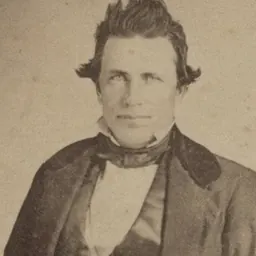




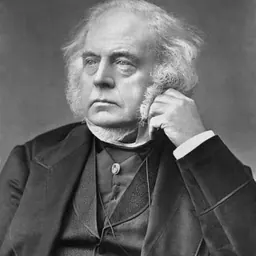
Related people
Same field, nearest in time
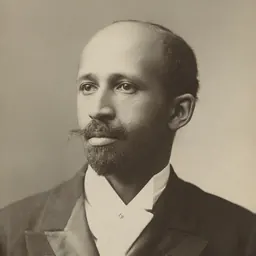
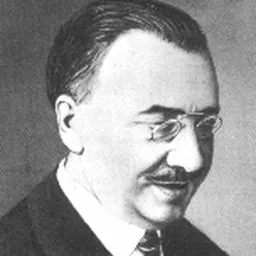

Contemporaries
People whose lives overlapped G. C. Henderson's





Frequently asked questions
Who was G. C. Henderson?
Australian historian (1870-1944)
When was G. C. Henderson born?
G. C. Henderson was born on 1 May 1870 in Newcastle.
When did G. C. Henderson die?
G. C. Henderson died on 9 April 1944 in Dora Creek.
What was G. C. Henderson's occupation?
G. C. Henderson was a historian, academic, non-fiction writer and university teacher.
What nationality was G. C. Henderson?
G. C. Henderson was British and Australian.
Sources & further reading
· DBpedia: George Cockburn Henderson
Cite this page
APA: Biography.guide. (2026). G. C. Henderson. https://biography.guide/g-c-henderson/
MLA: "G. C. Henderson." Biography.guide, https://biography.guide/g-c-henderson/.
Chicago: "G. C. Henderson." Biography.guide. https://biography.guide/g-c-henderson/.
Data last updated: 2026-09-20 · Spot an error? Report a correction.
Page generated 2026-09-27 05:32 UTC