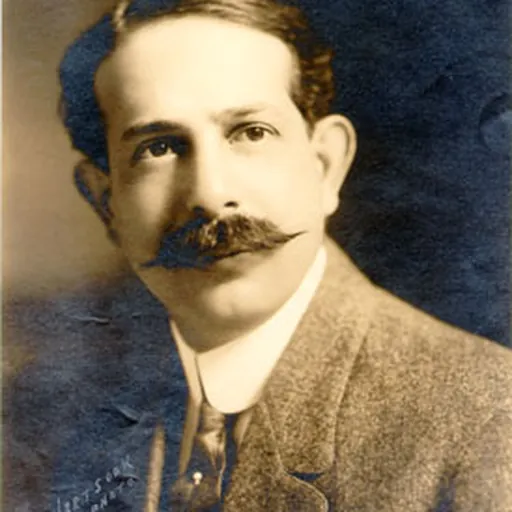
About G. Albert Lansburgh
Lived 1876 – 1969 (aged 92–93). G. Albert Lansburgh was an American architect.
Gustave Albert Lansburgh (January 7, 1876 – April 1969) was an American architect largely known for his work on luxury cinemas and theaters. He was the principal architect of theaters on the West Coast from 1900 to 1930.
Life and career
Lansburgh was born in Colombia (in a part of the country that is now Panama) and raised largely in San Francisco. After graduating from that city's Boys High School in 1894, Lansburgh enrolled in the University of California, Berkeley. While a student there, he worked part-time in the offices of prominent San Francisco architect Bernard Maybeck. Upon graduation, he moved to Paris, where in 1901, he was enrolled in the prestigious École des Beaux-Arts, earning a diploma in March 1906.
Lansburgh returned to the Bay Area in May 1906, one month after the region had been devastated by the San Francisco earthquake and subsequent fires. First in partnership with Bernard Julius Joseph for two years, then in his own practice, Lansburgh designed numerous buildings in the recovering city. Among these were four of the seven Carnegie branch libraries for the city and his first theater, for the San Francisco–based Orpheum Theater Circuit. In his long career thereafter, Lansburgh become known primarily as a theater architect, designing more than 50 of them, many for the Orpheum Circuit and its successor firm, RKO. He continued to design other buildings, including Oakland's Temple Sinai in 1914.
Family Lansburgh's son was director Larry Lansburgh.
List of works G. Albert Lansburgh's works include:
Theaters Los Angeles
Palace, 1910 Orpheum, 1926 Warner Hollywood, 1927 Wiltern, 1931
Other
Kinema, Fresno, 1913 Orpheum #2, Salt Lake City, 1913 Orpheum #2, Kansas City, 1915 Orpheum, St. Louis, 1915 Orpheum, New Orleans, 1917 State-Lake, Chicago, 1919 Martin Beck, New York City, 1924 Sacramento Memorial Auditorium, Sacramento, 1926 (collaborating architect)
Other buildings San Francisco Bay Area
Elkan Gunst Building, 1907 M.A. Gunst Building, 1907 Sachs Building, 1908 Brown Mausoleum, 1909 Temple Sinai, 1914 1st Hebrew Congregation Synagogue #3, 1914 Clift Hotel, 1915 Mission Branch Library, 1915 Sunset Branch Library, 1918 North Beach Branch Library, 1921 Presidio Branch Library, 1921 Temple Emanu-El #2, 1926 American Trust Company Office Building, Berkeley, 1927 Home of Peace Cemetery Mausoleum, 1936
Don’t just read it —
keep it.
Full-length biographies made to live with: read them, listen on the way to work, watch them tonight.
- E-book
- Audio
- Video
Instant download · yours to keep · every purchase keeps this site free
Important facts
People in G. Albert Lansburgh's life
Named in this biography and alive at the same time


Related people
Same field, nearest in time



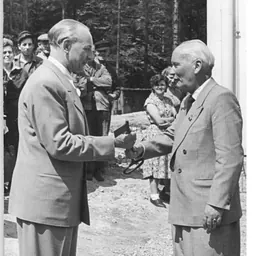
Contemporaries
People whose lives overlapped G. Albert Lansburgh's

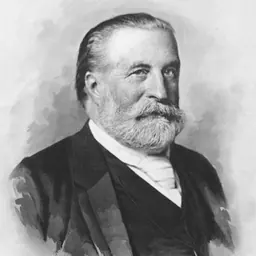
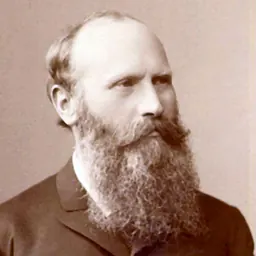
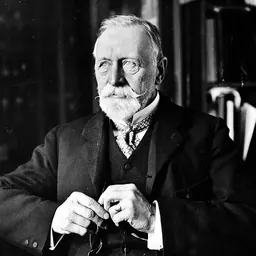
Frequently asked questions
Who was G. Albert Lansburgh?
American architect
When was G. Albert Lansburgh born?
G. Albert Lansburgh was born on 7 January 1876.
When did G. Albert Lansburgh die?
G. Albert Lansburgh died in 1969.
What was G. Albert Lansburgh's occupation?
G. Albert Lansburgh was an architect.
What nationality was G. Albert Lansburgh?
G. Albert Lansburgh was American.
Sources & further reading
· Wikipedia: G. Albert Lansburgh
· DBpedia: G. Albert Lansburgh
Cite this page
APA: Biography.guide. (2026). G. Albert Lansburgh. https://biography.guide/g-albert-lansburgh/
MLA: "G. Albert Lansburgh." Biography.guide, https://biography.guide/g-albert-lansburgh/.
Chicago: "G. Albert Lansburgh." Biography.guide. https://biography.guide/g-albert-lansburgh/.
Data last updated: 2026-09-21 · Spot an error? Report a correction.
Portrait: Wikimedia Commons · author & licence
Page generated 2026-09-27 04:58 UTC