
Fumiko Ikawa-Smith
Japanese-Canadian archaeologist
About Fumiko Ikawa-Smith
Born 1930. Fumiko Ikawa-Smith is a prehistorian.
Fumiko Ikawa-Smith is a Japanese Canadian archaeologist. She is an emeritus professor in the department of anthropology at McGill University, Montreal, Quebec, Canada. She trained as an anthropologist and prehistorian and specialises in the Early Palaeolithic cultures in East Asia, specifically Japan). also an archaeologist, with one son.
Life
Born in Kobe, Japan on 10 September 1930, Fumiko is the eldest daughter of the Buddhist historian, Ikawa Joukei. She studied English at an early age at the suggestion of her mother, a secondary school teacher. She graduated with an undergraduate degree from Tsuada College which subsequently became Tsuda University in 1953 with her thesis on the critical essays by T. S. Eliot. This experience led her to resign her position in 1954 in order to study anthropology as a postgraduate student at the same institution. She obtained an A. M. in anthropology, from Radcliffe College, Cambridge, Massachusetts, US, in 1958. an archaeologist interested in prehistory whom she had met at Harvard University. to excavate in Egypt, on the Canadian Expedition to Egyptian Nubia from September 1962 to May 1963. The small group was headed by Philip E.L. Smith, with the title of the “Canadian Expedition to Egyptian Nubia”, was Canadian government's contribution to the International salvage archaeology efforts in connection with the Aswan Dam construction. After spending the summer in Japan, they returned to Toronto for the academic year. Upon their return to Canada when Philip, her husband resumed teaching, she was employed with the Expedition funds as research assistant to sort and label artifacts. She subsequently became a lecturer in the department of anthropology at the University of Toronto. She started teaching part-time at McGill University in Montreal in 1966 as her husband, Philip, started to teach at Université de Montréal. After a few years of part-time teaching, she was appointed assistant professor of anthropology in 1970, associate professor in 1974 and granted tenure. She obtained her PhD from Harvard University in 1974 for her dissertation on the Early Palaeolithic cultures of Japan. She was promoted to associate professor in 1975. A year after she obtained her PhD in 1975, she became the chair of the anthropology department at McGill University. She became professor in 1979.
Fumiko has two strands in her career: a university administrator and a researcher. She was the chair of the anthropology department in 1975, soon after being granted tenure and promoted to Associate Professor. She suspected that she was promoted to chair as each of the well-established full professors in the department: Peter Gutkind, Richard Anthony Salisbury, and Bruce G. Trigger might try to influence her. She is reported to have said that she thought at the time that each established academic thought he could persuade her to carry out his own agenda, as "I was a woman, a Japanese woman at that, who is supposed to be docile. I think I became a chair not "in spite of" being a woman, but "because" of being a woman.”
She was director of the Centre for East Asian Studies at McGill University between 1983 and 1988. and to invite numerous visiting professors from Japan. She held two visiting professorships: one at Kwansei Gakuin University, Japan in 1996-1997 She is a founding member of the Japan Studies Association of Canada founded in 1987. She served as the acting president prior to the ratification of its Constitution and several times as its president. In October 2017 she received the Inaugural award for the Lifetime Service to the Association
Publications
1972 "1971-nen no doko: Obei (The archaeological trends during 1971: Europe and the Americas)". Kokogaku Janaru, No. 68: 66–71. 1976 Kyusekki bunka kenkyu no hohoron (Methodology for Palaeolithic research). Nippon no Kyusekki Bunka, edited by M. Aso, S. Kato, and T. Fujimoto, Vol. 5, pp. 19–70. Tokyo: Yuzankaku. September 1976 "On Ceramic Technology in East Asia", Current Anthropology 17 (3): 513-515 https://doi.org/10.1086/201773 1980 "Current Issues in Japanese Archaeology." American Scientist 68 (2) 134–45. https://www.jstor.org/stable/29773725 1982 "Co-Traditions in Japanese Archaeology". World Archaeology 13: 296–309. https://doi.org/10.1080/00438243.1982.9979835 1986 "Migrationism Exemplified: Migrations in Prehistory". Science 234(4780:1132–1133 https://doi.org/10.1126/science.234.4780.1132-a 1990 "L’idéologie de l’homogénéité Culturelle Dans l’archéologie Préhistorique Japonaise". Anthropologie et Société 14(3): 51–76. URI : https://id.erudit.org/iderudit/015143ar DOI: https://doi.org/10.7202/015143ar 1995 "Japanese Ancestors and Palaeolithic Archaeology". Asian Perspectives 18(1): 15–25. https://scholarspace.manoa.hawaii.edu/handle/10125/16828 1999 "Construction of National Identity and Origins in East Asia: A Comparative Perspective". Antiquity 73(281): 626–629. https://doi.org/10.1017/S0003598X00065200 December 2001 Gender in Prehistory In: Pursuit of Gender: Worldwide Archaeological Approaches, edited Sarah Milledge Nelson & Myriam Rosen-Ayalon by p 323–354 Altamira: Rowman 2008 "ASIA, EAST | Japanese Archipelago, Paleolithic Cultures". Encyclopedia of Archaeology. Academic Press. https://doi.org/10.1016/B978-012373962-9.00230-2, accessed March 27, 2020. 2011 "Practice of Archaeology in Contemporary Japan". In: Practice of Archaeologies. L. Lozny, ed. Pp. 675–705. New York, NY: Springer. https://doi.org/10.1007/978-1-4419-8225-4_20. 2014 "Movius Line". Claire Smith, ed. Encyclopedia of Global Archaeology. Pp. 5059 – 5065. New York: Springer Reference. https://doi=10.1007/978-1-4419-0465-2_680 2017 "Paleolithic Archaeology in Japan". In Handbook of East and Southeast Asian Archaeology. P Lape and J. Olsen, eds. Pp. 195–217. New York: Springer. https://doi.org/10.1007/978-1-4939-6521-2_16.
Numerous co-authored papers including:
1981 Ikawa-Smith, I., Jeong-Hak Kim, Richard J. Pearson, Kazue Pearson, "The Prehistory of Korea". Pacific Affairs 53(3):560 https://doi.org/10.2307/2757335 April 1983 Seonbok Yi, G. A. Clark, Jean S. Aigner, Marie-Henriette Alimen, R. S. Davis, André Debenath, Gai Pei, Karl L. Hutterer, Fumiko Ikawa-Smith, Jia Lanpo, Kubet Luchterhand, Sarah M. Nelson, George H. Odell, H. D. Sankalia, Myra Shackley, Pow-Key Sohn, and Wilhelm G. Solheim, "Observations on the Lower Palaeolithic of Northeast Asia [and Comments and Reply]", Current Anthropology 24, no. 2 : 181–202. https://doi.org/10.1086/202964 February 1985 Seonbok Yi, Geoffrey Clark, Jean S. Aigner, S. Bhaskar, Alexander B. Dolitsky, Gai Pei, Kathleen F. Galvin, Fumiko Ikawa-Smith, Shimpei Kato, Philip L. Kohl, Richard B. Stamps, and William B. Workman, ""The "Dyuktai Culture" and New World Origins [and Comments and Reply]", Current Anthropology 26, no. 1 : 1-20. https://doi.org/10.1086/203221
Don’t just read it —
keep it.
Full-length biographies made to live with: read them, listen on the way to work, watch them tonight.
- E-book
- Audio
- Video
Instant download · yours to keep · every purchase keeps this site free
Important facts
People in Fumiko Ikawa-Smith's life
Named in this biography and alive at the same time

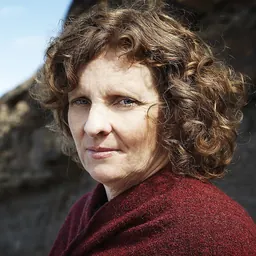




Related people
Same field, nearest in time


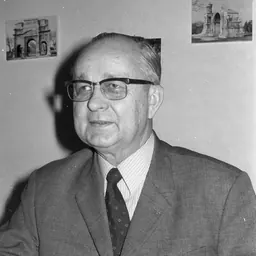
Contemporaries
People whose lives overlapped Fumiko Ikawa-Smith's

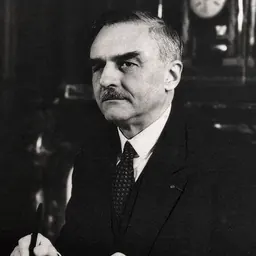
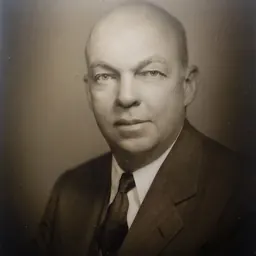
Frequently asked questions
Who is Fumiko Ikawa-Smith?
Japanese-Canadian archaeologist
When was Fumiko Ikawa-Smith born?
Fumiko Ikawa-Smith was born on 10 September 1930 in Kobe.
What is Fumiko Ikawa-Smith's occupation?
Fumiko Ikawa-Smith is a prehistorian.
What nationality is Fumiko Ikawa-Smith?
Fumiko Ikawa-Smith's recorded nationality: Japanese Canadian.
Sources & further reading
· Wikipedia: Fumiko Ikawa-Smith
Cite this page
APA: Biography.guide. (2026). Fumiko Ikawa-Smith. https://biography.guide/fumiko-ikawa-smith/
MLA: "Fumiko Ikawa-Smith." Biography.guide, https://biography.guide/fumiko-ikawa-smith/.
Chicago: "Fumiko Ikawa-Smith." Biography.guide. https://biography.guide/fumiko-ikawa-smith/.
Data last updated: 2026-09-20 · Spot an error? Report a correction.
Page generated 2026-09-27 05:06 UTC