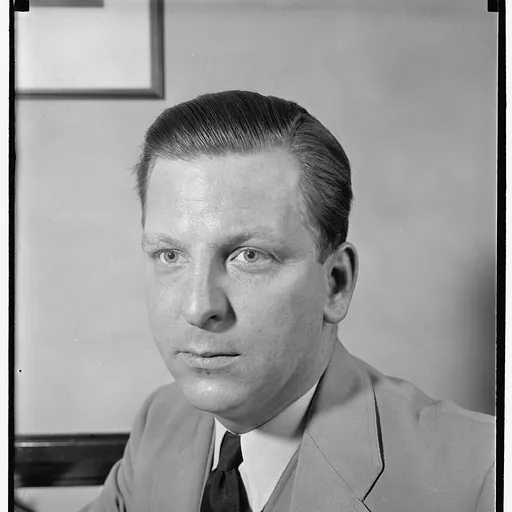
About Fulton Lewis Jr.
Lived 1903 – 1966 (aged 62–63). Fulton Lewis Jr. was an American radio personality.
Fulton Lewis Jr. (April 30, 1903 – August 20, 1966) was a conservative American radio broadcaster from the 1930s to the 1960s.
Early life and career Lewis was born into influential circles in the nation's capital. He remained close to the circles of power all his life (President Herbert Hoover and his wife attended the wedding of Lewis to Alice Huston, who was the daughter of former Republican National Committee chairman Claudius Hart Huston) and wrote the music for that school's official fight song, The Cavalier Song ). He dropped out of UVa, but soon after enrolled in the George Washington University Law School. He left that institution when he obtained a reporting job with The Washington Herald. He found his niche in news reporting, and within three years was the paper's city editor. During that time he met and courted his future wife.
Radio career alt=On the left, a suited man seated before a microphone, smiling and holding a script. On the right, radio station advertising copy. Advertisement for Fulton Lewis Jr.'s radio show on WKIC in Hazard, Kentucky. Lewis left the Herald to join Universal News Service, run by the Hearst family. Between 1933 and 1936 Lewis wrote a newspaper column called "The Washington Sideshow" which was syndicated by King Features. His radio career began when he volunteered to fill in for a vacationing news reporter. The head of Washington AM radio station WOL (1260 AM) was impressed with Lewis' "on-the-spot" reporting and offered him a full-time position. His commentaries were broadcast nationally by the Mutual Broadcasting System.
Lewis' commentary program (presented as a "news" program, but which allowed him to choose his topic and to give his opinions in depth) ran from 7:00-7:15 p.m. Eastern time, five days a week. His audience liked Lewis' folksy broadcasting style. At his commercial peak, Lewis was heard on more than 500 radio stations and boasted a weekly audience of sixteen million listeners. His signature closing was "That's the top of the news as it looks from here." He also transitioned briefly to television in the early 1950s but the format of his program did not appeal in that medium, so he returned to radio for the remainder of his career. He despised Earl Warren, even, at one point, calling to lynch him: "I wouldn't impeach him. I'd lynch him." Even after McCarthy was disgraced nationwide, Lewis continued to strongly champion him, and this did much to reduce his nationwide radio audience and appeal. He continued on air, however, until his death in 1966, after which his son Fulton Lewis III kept the broadcast running for another twelve years.
Legacy Lewis was influential in persuading the U.S. Congress to allow radio broadcasting of Congressional activities.
Among those who worked for Lewis was Kenneth Tomlinson, future head of the Corporation for Public Broadcasting (CPB). In this position, Tomlinson worked to eliminate what he calls liberal bias at the Public Broadcasting Service and National Public Radio. One of CPB's ombudsmen, Bill Schulz, was a writer for Lewis and for Human Events. Schulz and Tomlinson were also colleagues at Reader's Digest.
Lewis wrote the words for "The Cavalier Song" for the University of Virginia while a student there. The song was featured in the 2000 movie Bring It On.
In 1942 Lewis was the first recipient of the Alfred I. duPont Award.
Lewis's name is remembered in the Hollywood Walk of Fame, in a star placed on the South side of the 6200 block of Hollywood Boulevard.
Lewis is buried in Rock Creek Cemetery in Washington, D.C. Fellow radio personality Paul Harvey broadcast a eulogy on August 22, 1966 saying "Fulton Lewis, Jr. believed in government by the people. He prodded us and cajoled us and spurred us and nagged us and shamed us when he had to, into acceptance of the responsibilities of self-government . . . hanging onto what’s left of the Constitution with one hand and fighting off its detractors with the other, he would not let us fail. If men are competent to govern themselves then, in the end, our republic will prevail. And tomorrow’s historians from that pinnacle looking back will thank God that he was on our side."
A 1987 editorial in The Washington Post referred to Lewis as " . . one of the most unprincipled journalists ever to practice the trade."
A 2005 Salon.com article stated, "A prominent radio broadcaster in the '40s, '50s and '60s, Lewis was known for his complete lack of objectivity."
Don’t just read it —
keep it.
Full-length biographies made to live with: read them, listen on the way to work, watch them tonight.
- E-book
- Audio
- Video
Instant download · yours to keep · every purchase keeps this site free
Important facts
People in Fulton Lewis Jr.'s life
Named in this biography and alive at the same time

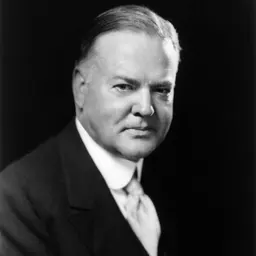
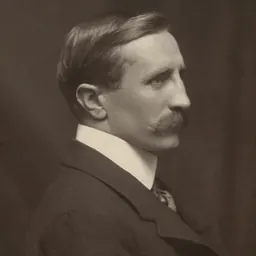



Related people
Same field, nearest in time


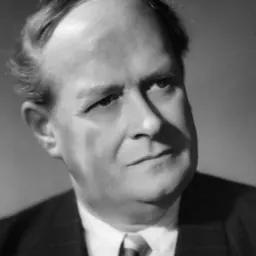
Contemporaries
People whose lives overlapped Fulton Lewis Jr.'s

Frequently asked questions
Who was Fulton Lewis Jr.?
American radio broadcaster
When was Fulton Lewis Jr. born?
Fulton Lewis Jr. was born in 1903.
When did Fulton Lewis Jr. die?
Fulton Lewis Jr. died in 1966.
What was Fulton Lewis Jr.'s occupation?
Fulton Lewis Jr. was a radio personality.
What nationality was Fulton Lewis Jr.?
Fulton Lewis Jr. was American.
Sources & further reading
Cite this page
APA: Biography.guide. (2026). Fulton Lewis Jr.. https://biography.guide/fulton-lewis-jr/
MLA: "Fulton Lewis Jr.." Biography.guide, https://biography.guide/fulton-lewis-jr/.
Chicago: "Fulton Lewis Jr.." Biography.guide. https://biography.guide/fulton-lewis-jr/.
Data last updated: 2026-09-22 · Spot an error? Report a correction.
Portrait: Wikimedia Commons · author & licence
Page generated 2026-09-27 05:04 UTC