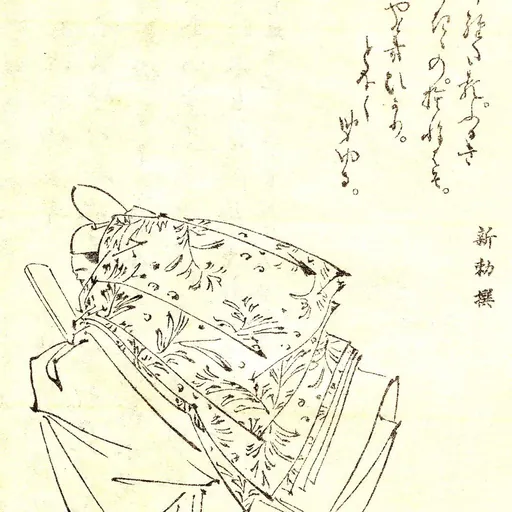
Fujiwara no Yoshimi
Japanese noble
About Fujiwara no Yoshimi
Lived 813 – 867 (aged 53–54). Fujiwara no Yoshimi was a Japanese.
was a Japanese noble of the early Heian period. He was the fifth son of the sadaijin Fujiwara no Fuyutsugu of the Fujiwara Hokke and the uncle of Emperor Montoku. He reached the court rank of and the position of udaijin, and was posthumously granted the rank of . He was also known as .
Life
Studying at college in his youth, he possessed a quick tongue. In 834, Emperor Ninmyō summoned him and appointed Yoshimi to serve him personally as a and . He was steadily promoted in the court. In 838 he was bestowed the rank of , in 840 promoted to , in 841 to , in 843 to and governor of Awa province, in 844 to director of the kurōdo-dokoro, and in 846 to and . In 842, he also led 40 troops in surrounding Prince Tsunesada in the succession dispute known as the Jōwa Incident. Finally, in 848, he joined the ranks of the kugyō with a promotion to sangi.
In 850, Yoshimi's nephew Crown Prince Michiyasu took the throne as Emperor Montoku. Yoshimi was promoted to and appointed as . In 851 he surpassed his brother Nagara, who had been first to make sangi, with a promotion to chūnagon, receiving the rank of in the same year. In 854, he was promoted again to dainagon and . In 857, when his brother Yoshifusa was made daijō-daijin, Yoshimi filled his old rank of udaijin. In 859, he was promoted to .
In 864 Yoshimi sent his daughter Tamiko as a bride to Emperor Seiwa. Yoshimi's older and more powerful brother Yoshifusa was cautious of his popularity and success. In the Ōtenmon Incident of 866, Yoshimi ordered Minamoto no Makoto's arrest based on the testimony of Tomo no Yoshio, but Yoshifusa protested Makoto's innocence and prevented it. After this, Yoshimi lost most of his political influence.
In 867, Yoshimi suddenly became ill in his chambers, and died that same month. He was posthumously granted the rank of . In accordance with his will, he was given a simple burial, his coffin covered with just a single sheet.
Personality and anecdotes According to the Nihon Sandai Jitsuroku, Yoshimi was magnanimous and excelled since childhood. A deep believer in Buddhism, his long habit of abstaining from meat and eating simple food meant that all his life he was extremely thin.
The same text records a number of anecdotes about his life, as follow:
Once, when Emperor Ninmyō had boiled some medicine to remove its impurities, he ordered his retainers to taste it to determine its consistencies. Nervous, nobody would try it, but Yoshimi took the cup and drank it all. Ninmyō is said to have praised Yoshimi for respecting his duty to his master. Yoshimi studied Buddhist writings and was familiar with the Shingon school. When his wife died in Yoshimi's thirties, he immersed himself in prayer to shake off his desires and never remarried.
Legends
The Konjaku Monogatarishū contains a story in which Yoshimi defends Ono no Takamura who was still a student, when the latter is accused of a crime. Later, Yoshimi dies of sickness and is taken before Enma in Hell. Takamura, now working in Enma's palace as a retainer and assisting in his judgments, intervenes, and Yoshimi is forgiven and returned to life.
Genealogy
Father: Fujiwara no Fuyutsugu Mother: , daughter of Wife: Daughter of Eldest son: Son: Son: Other children: Son: Eldest daughter: , court lady of Emperor Montoku Daughter: , court lady of Emperor Seiwa Daughter: wife of
Although Yoshimi had many children, his eldest son Tokitsura died young after advancing to the rank of dainagon, and none of his other descendants were able to reach the level of kugyō. However, Yoshimi's obituary entry in the Nihon Sandai Jitsuroku does praise the talent and conduct of Tadakata and Naokata, and especially Tadakata's ability with clerical script. Yoshimi's brothers Yoshifusa and Nagara married their daughters to emperors Montoku and Seiwa and were thus able to become the grandfathers of the emperors born of those marriages, but while Yoshimi married off his daughters similarly, neither of them was fortunate enough to bear the emperor any children.
Don’t just read it —
keep it.
Full-length biographies made to live with: read them, listen on the way to work, watch them tonight.
- E-book
- Audio
- Video
Instant download · yours to keep · every purchase keeps this site free
Important facts
Family & relationships
People in Fujiwara no Yoshimi's life
Named in this biography and alive at the same time


Contemporaries
People whose lives overlapped Fujiwara no Yoshimi's



Frequently asked questions
Who was Fujiwara no Yoshimi?
Japanese noble
When was Fujiwara no Yoshimi born?
Fujiwara no Yoshimi was born in 813.
When did Fujiwara no Yoshimi die?
Fujiwara no Yoshimi died on 9 November 867.
What nationality was Fujiwara no Yoshimi?
Fujiwara no Yoshimi was Japanese.
Sources & further reading
· Wikipedia: Fujiwara no Yoshimi
· DBpedia: Fujiwara no Yoshimi
Cite this page
APA: Biography.guide. (2026). Fujiwara no Yoshimi. https://biography.guide/fujiwara-no-yoshimi/
MLA: "Fujiwara no Yoshimi." Biography.guide, https://biography.guide/fujiwara-no-yoshimi/.
Chicago: "Fujiwara no Yoshimi." Biography.guide. https://biography.guide/fujiwara-no-yoshimi/.
Data last updated: 2026-09-23 · Spot an error? Report a correction.
Portrait: Wikimedia Commons · author & licence
Page generated 2026-09-27 05:08 UTC