
About Fritz Bamberger
Lived 1902 – 1984 (aged 82). Fritz Bamberger was a German and American humanities scholar, journalist, editor, philosopher, pedagogue and university teacher, known for Coronet (magazine).
Fritz Bamberger (7 January 1902 – 21 September 1984) was a German Jewish Scholar, educator and magazine editor who directed the school system for the education of Jews in pre- World War II, was the editor-in-chief of Coronet starting in 1942, and taught and wrote in the areas of philosophy and intellectual history.
Life in Germany (1902–1939) Bamberger grew up in Gelsenkirchen, Germany. He studied philosophy and Oriental languages at the University of Berlin, and was awarded a doctorate in 1923 at the age of 21. Bamberger also studied at and graduated from the Hochschule die Wissenschaft des Judentums, where he subsequently taught philosophy from 1933 to 1934. From 1926 to 1933 he was a member of the Forschungsinstitut (research institute) of the Akademie für die Wissenschaft des Judentums (Academy for the Science of Judaism) in Berlin, working on books about Maimonides and Gabirol, and serving as one of the editors of the Akademieausgabe (Academy Edition) of a work on Moses Mendelssohn's collected writings (Moses Mendelssohn: Gesammelte Schriften).
After Hitler's rise in Germany, Bamberger organized a system of schools from kindergarten to college for Jewish students forced from the public schools. In 1934 he was appointed Director of the Bureau of Education for Jews in Berlin and President of the Jewish Teachers College,
Life in the United States (1939–1984) In January 1939, after having been arrested and briefly held by the Nazi government, Bamberger and his family emigrated to Chicago, Ill. From 1939 to 1942 he taught philosophy and comparative literature at the College of Jewish Studies and the University of Chicago. In 1942 Bamberger left academia for Esquire, Inc., where he subsequently became editor-in-chief of Coronet magazine and thereafter executive director of Esquire magazine. In 1962 Bamberger resigned from Esquire to return to academic life, becoming Assistant to the President and Professor of Intellectual History at the Hebrew Union College – Jewish Institute of Religion (HUC-JIR) in New York. In 1979 he retired. During his life, Bamberger created a major collection of works by and about Spinoza, which is now at the library of the HUC-JIR campus in Jerusalem.
Till his death in 1984 he served as a vice president of the Leo Baeck Institute and vice chairman of the North American Board of the World Union for Progressive Judaism.
Personal life In 1933, Bamberger married Kate Schwabe, a violinist. They had two children, Michael (1936) and Gabrielle (1938). Kate died in 1952. Bamberger married again: Maria Nussbaum in 1963.
Selected publications and writings 1924 – Untersuchungen zur Entstehung der Wertproblems in der Philosophie des 19. Jahrhunderts (The Origin of the Problem of Values in the Philosophy of the 19th Century) 1929 – Die geistige Gestalt Moses Mendelssohn (The Spiritual Figure of Moses Mendelssohn) 1929–1938 Moses Mendelssohn: Gesammelte Schriften (Collected Writings) (co-editor and contributor) 1935 – Das System des Maimonides. Eine Analyse des More Newuchim vom Gottesbegriff aus. Schocken, Berlin 1935 (The System of Maimonides) 1937 – Das 9. Schuljahr der Volkshochschulen der Jüdischen Gemeinde zu Berlin. Zielsetzung und Plangestaltung (The 9th School Year of Adult Education Schools of the Jewish Community of Berlin. Goals and Curriculum Plan), with Erna Barschak 1941 – Zunz's Conception of History, American Academy for Jewish Research, Jerusalem Proceedings 1958 – Leo Baeck, the Man and the Idea, Leo Baeck Institute 1960 – Julius Guttman, Philosopher of Judaism, London 1962 – Books are the Best Things: An Anthology from Old Hebrew Writings; 1970 – The Mind of Nelson Glueck, Cincinnati 2003 – Spinoza and Anti-Spinoza Literature: The Printed Literature of Spinozism 1665–1832, Hebrew Union College Print,
Don’t just read it —
keep it.
Full-length biographies made to live with: read them, listen on the way to work, watch them tonight.
- E-book
- Audio
- Video
Instant download · yours to keep · every purchase keeps this site free
Important facts
People in Fritz Bamberger's life
Named in this biography and alive at the same time
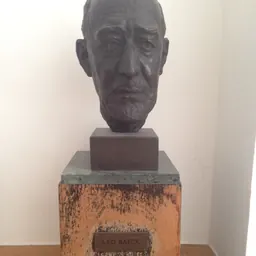



Related people
Same field, nearest in time






Contemporaries
People whose lives overlapped Fritz Bamberger's
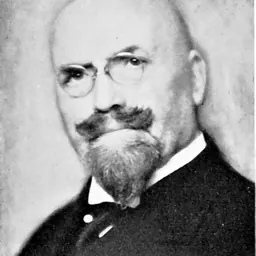



Frequently asked questions
Who was Fritz Bamberger?
German Jewish scholar and editor (1902–1984)
When was Fritz Bamberger born?
Fritz Bamberger was born on 7 January 1902 in Frankfurt.
When did Fritz Bamberger die?
Fritz Bamberger died on 24 September 1984 in New York City.
What was Fritz Bamberger's occupation?
Fritz Bamberger was a humanities scholar, journalist, editor, philosopher, pedagogue and university teacher.
What was Fritz Bamberger known for?
Fritz Bamberger was known for Coronet (magazine).
What nationality was Fritz Bamberger?
Fritz Bamberger was German and American.
Sources & further reading
· DBpedia: Fritz Bamberger (scholar)
Cite this page
APA: Biography.guide. (2026). Fritz Bamberger. https://biography.guide/fritz-bamberger/
MLA: "Fritz Bamberger." Biography.guide, https://biography.guide/fritz-bamberger/.
Chicago: "Fritz Bamberger." Biography.guide. https://biography.guide/fritz-bamberger/.
Data last updated: 2026-09-20 · Spot an error? Report a correction.
Page generated 2026-09-27 05:27 UTC