
About Friedrich Sylburg
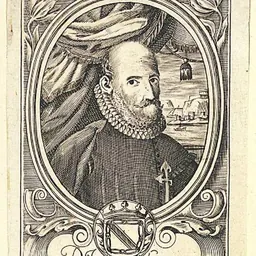
Lived 1536 – 1596 (aged 59–60). Friedrich Sylburg was a librarian, poet, classical philologist, translator, philologist and historian.
Friedrich Sylburg (1536 – 17 February 1596) was a German classical scholar.
The son of a farmer, he was born at Wetter near Marburg. He studied at Marburg, Jena, Geneva, and, lastly, Paris, where his teacher was Henry Estienne (Stephanus), to whose great Greek Thesaurus Sylburg afterwards made important contributions.
Returning to Germany, he held educational posts at Neuhausen near Worms and at Lich near Gießen, where he edited a useful edition of the Institutiones in graecam linguam (1580) of Nicolaus Clenardus (Cleynaerts). In 1583 he resigned his post at Lich and moved to Frankfurt to act as corrector and editor of Greek texts for the enterprising publisher Johann Wechel. To his Frankfurt period belong the editions of Pausanias, Herodotus, Dionysius Halicarnassensis (one of his best pieces of work, highly praised by Carsten Niebuhr), Paeanius, Aristotle, the Greek and Latin sources for the history of the Roman emperors and the Peri syntaxeos of Apollonius Dyscolus.
In 1591 he moved to Heidelberg, where he became librarian to the elector palatine. The Wechel series was continued by Hieronymus Commelinus (Jerome Commelin) of Heidelberg, for whom Sylburg edited Clement of Alexandria, Justin Martyr, the Etymologicum magnum, the Scriptores de re rustica, the Greek gnomic poets, Xenophon, Nonnus and other works. All Sylburg's editions show great critical power and indefatigable industry; the latter may well have caused his death.
Works F. Sylburg (Ed.), Dionisii Halicarnassei scripta quae exstant, omnia, et historica, et rhetorica (Frankfurt: heirs of Andreas Wechel 1586) (parallel Greek and Latin), available at Google Books Notes of Sylburg in a critical edition of Aristotle, De Poetica Liber (parallel Greek and Latin), available at Google Books Ἐτυμολογικὸν τὸ Μέγα or Etymologicon Magnum (Leipzig, 1816) (in Greek), available at Google Books Various Works of Sylburg held and digitized in original editions, freely available at Münchener DigitalisierungsZentrum Digitale Bibliothek List of Works in WorldCat
Don’t just read it —
keep it.
Full-length biographies made to live with: read them, listen on the way to work, watch them tonight.
- E-book
- Audio
- Video
Instant download · yours to keep · every purchase keeps this site free
Important facts
Related people
Same field, nearest in time




Contemporaries
People whose lives overlapped Friedrich Sylburg's



Frequently asked questions
Who was Friedrich Sylburg?
German classical scholar
When was Friedrich Sylburg born?
Friedrich Sylburg was born in 1536 in Wetter.
When did Friedrich Sylburg die?
Friedrich Sylburg died on 17 February 1596 in Heidelberg.
What was Friedrich Sylburg's occupation?
Friedrich Sylburg was a librarian, poet, classical philologist, translator, philologist and historian.
What nationality was Friedrich Sylburg?
Friedrich Sylburg's recorded nationality: Landgraviate of Hesse, Electoral Palatinate.
Sources & further reading
· Wikipedia: Friedrich Sylburg
Cite this page
APA: Biography.guide. (2026). Friedrich Sylburg. https://biography.guide/friedrich-sylburg/
MLA: "Friedrich Sylburg." Biography.guide, https://biography.guide/friedrich-sylburg/.
Chicago: "Friedrich Sylburg." Biography.guide. https://biography.guide/friedrich-sylburg/.
Data last updated: 2026-09-20 · Spot an error? Report a correction.
Page generated 2026-09-27 05:04 UTC