
Friedrich Kittler
Literary scholar and media theorist
About Friedrich Kittler
Lived 1943 – 2011 (aged 68). Friedrich Kittler was a German literary historian, media scholar, historian, university teacher, literary scholar and philosopher.
Friedrich Adolf Kittler (June 12, 1943 – October 18, 2011) was a literary scholar and a media theorist. His works relate to media, technology, and the military.
Biography Friedrich Adolf Kittler was born in 1943 in Rochlitz in Saxony, named after his uncle Friedrich and father Adolf. His family fled with him to West Germany in 1958, where from 1958 to 1963 he went to a natural sciences and modern languages Gymnasium in Lahr in the Black Forest, and thereafter, until 1972, he studied German studies, Romance philology and philosophy at the Albert Ludwigs University of Freiburg in Freiburg im Breisgau.
In 1976, Kittler received his doctorate in philosophy after a thesis on the poet Conrad Ferdinand Meyer. In 1976 he co-edited with Horst Turk an essay collection, Urszenen. Between 1976 and 1986 he worked as academic assistant at the university's Deutsches Seminar. In 1984, he earned his Habilitation at the University of Freiburg, in the field of Modern German Literary History, by the habilitationsschrift Aufschreibesysteme 1800/1900 [translated as Discourse Networks 1800/1900]. Typical habilitations required 3 academic evaluations, but his required 13. Some objected that it "misses in principle the scholarly discourse".
Friedrich Kittler became an Assistant Professor in German at Freiburg for the next decade. He had several stints as a visiting assistant professor or visiting professor at universities around the world, such as the University of California, Berkeley (1982), the University of California, Santa Barbara (1982–83), Stanford University (1982–83), University of Basel (1986), and the European Graduate School. He was an associate member of the Collège international de philosophie (1983–86).
From 1986 to 1990, he headed the DFG's Literature and Media Analysis project in Kassel and in 1987 he was appointed Professor of Modern German Studies at the Ruhr University. In 1993 he was appointed to the chair for Media Aesthetics and History at the Humboldt University of Berlin.
In 1993, Kittler was awarded the "Siemens Media Arts Prize" (Siemens-Medienkunstpreis) by ZKM Karlsruhe (Zentrum für Kunst und Medientechnologie, or "Centre for Art and Media Technology") for his research in the field of media theory.
He was recognized in 1996 as a distinguished scholar at Yale University and in 1997 as a distinguished visiting professor at Columbia University in New York. Kittler was a member of the Hermann von Helmholtz Centre for Culture and the research group Bild Schrift Zahl ("Picture Writing Number") (DFG). During the late years in Humbolt, he had an entourage of artists and intellectuals, who self-styled as the Kittlerjugend as a provocative joke on the Hitlerjugend. He died in 2011.
Philosophy
Style Among Kittler's theses was his tendency to argue, with a mixture of polemicism, apocalypticism, erudition, and humor, that technological conditions were closely bound up with epistemology and ontology itself. This claim and his style of argumention is aptly summed up in his dictum "Nur was schaltbar ist, ist überhaupt"—a phrase that could be translated as "Only that which is switchable, exists" or more freely, "Only that which can be switched, can be." This phrase plays on the concept that in principle any representation can be presented according to the on/off binary logic of computing. Kittler goes one step further by suggesting that, conversely, anything that can't be "switched" can't really "be," at least under current technical conditions. He invoked this doctrine on his deathbed in 2011. Dying in a hospital in Berlin and sustained only by medical instruments, his final words were "Alle Apparate ausschalten", which translates as "switch off all apparatuses".
History of media and science
One particular focus of Kittler's work is the close relationship between media, technology, military, and science.
Kittler regularly held seminars [Oberseminar] on History of Media and Science [Medien- und Wissenschaftsgeschichte], on topics ranged from the genealogy of the popes, to Norbert von Hellingrath and Erich von Hornbostel's duties in the First World War.
In Optical Media (based on a lecture series he gave at Humboldt University in 1999), he traced the history of optical media, from Renaissance linear perspective to modern computer graphics.
Since 2000, he wrote on the genealogy between music and mathematics. He expected to write 8 books on this, starting from ancient Greek and ending with Turing machines, but only 2 were finished before his death. In those, he analyzed ancient Greek text fragments and the ancient Greek alphabet as the first vowel alphabet in history.
Politics In political tendencies, Kittler was a conservative who distrusted both sides of the Cold War, and wished that Germany went by a third way. He was against leftist politics, and during the 1968 protests, stayed at home listening to The Beatles and Pink Floyd out of "50% laziness and 50% conservatism". Unlike typical media theorists, his work was not for the typical agendas for exposing media manipulation and liberating human beings, but demonstrating its impossibility, since "media determine our situation". (pp. 5–6 )
He was against the profit motive, and consistently criticized the American software industry as a sham, because software does not exist. A software is actually a one-way cryptographic function used to obfuscate the hardware from users, and in this way, restrict the user's freedom. He also disliked the American military–industrial complex as "the devil".
In his later years, he attempted to found European culture upon ancient Greek, music, and love thus his last books titled Musik und Mathematik: Aphrodite and Eros.
He had a deep interest in interpreting Gravity's Rainbow, and Thomas Pynchon was his favorite contemporary author.
To deepen Foucault's analysis of discourse, Kittler traced discourse to the media technologies that generate discourse, and traced media technologies to war. War is reinterpreted as the struggle for survival between media technologies, which drives their evolution. In particular, he considered WWII not as the triumph of one human ideology over another, but as a developmental stage towards the next stage, where human-made history comes to an end, and history would be made by machines instead. In support, he pointed to the development of computers during WWII. (introduction, Kittler uses this word to mean that literature analysis would be taken on the material level, where instead of reading a book, it is manipulated as a codex of inked papers.
For example, in Dracula's Legacy, he analyzed Dracula (1897) as a drama of media, where the vampire is tracked down by Mina Harker's careful typewriting and collating of information about Dracula. It is "a written account of our bureaucratization".
Goethe's Faust (1808) was analyzed in Discourse Networks as a record of how the "republic of scholars" was becoming subsumed by a printed media culture. Faust's laments about scholarship was a metaphor for the previous republic of scholars that degenerated into endless commentary, "which simply heaves words around". Faust's rejection was a metaphor for Romanticism, which elevates original genius from true feelings inside each individual. In the Romanticism discourse network, text is used as sound, and reading is controlled auditory hallucination, thus the focus on poetry. Speech was learned from mothers, thus text was from "Mother's Mouth", and the concept of women was merged with the concept of Nature, which is the source of meaning. This is the title of a collection of lectures that he edited.
By adopting the French post-structuralists' theory, he was working in opposition to hermeneutics and phenomenology then-prevalent in German humanities. As a research program against hermeneutic interpretation of text, he used Lacan and Foucault to bypass questions of subjectivity and self-reflection. To begin with, one should attempt to abandon the usual practice of conceiving of power as a function of so-called society, and, conversely, attempt to construct sociology from the chip’s architectures.
Literature, media, information systems, p. 162Kittler's theory of discourse network
In Gramophone, film, typewriter, he traced the evolution of early 20th century media technology, and "collects, comments upon, and relays passages and texts that show ... the novelty of technological media". (page xi ) He described methods to apply literary criticism to laboratories, factories, mathematics, circuit boards, or any other information systems. The difference between information and communication is that while communication presumes human meaning and intent, information (in Shannon's theory) is defined by statistical correlation without assuming anything about humans.
Consequently, he sees in writing literature, in writing programmes and in burning structures into silicon chips a complete continuum: "As we know and simply do not say, no human being writes anymore. [...] Today, human writing runs through inscriptions burnt into silicon by electronic lithography [...]. The last historic act of writing may thus have been in the late seventies when a team of Intel engineers [plotted] the hardware architecture of their first integrated microprocessor."
Computer programming Kittler believed that, just as the effect of writing had great effect on politics and humanities, digital technology does the same. Therefore, computer literacy is essential for modern intellectuals. He got his first PC in 1989 as a 386.
He wrote programs mainly in C and assembly. He enjoyed debugging and got an excited reply a decade later.
Don’t just read it —
keep it.
Full-length biographies made to live with: read them, listen on the way to work, watch them tonight.
- E-book
- Audio
- Video
Instant download · yours to keep · every purchase keeps this site free
Important facts
People in Friedrich Kittler's life
Named in this biography and alive at the same time
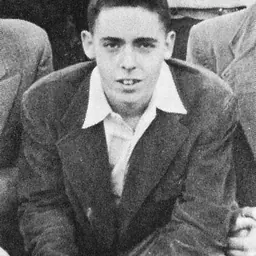

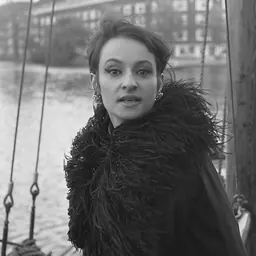

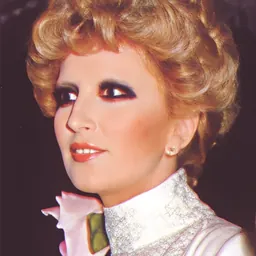
Related people
Same field, nearest in time
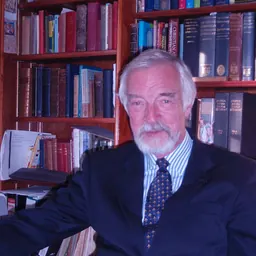

Contemporaries
People whose lives overlapped Friedrich Kittler's



Frequently asked questions
Who was Friedrich Kittler?
literary scholar and media theorist (1943–2011)
When was Friedrich Kittler born?
Friedrich Kittler was born on 12 June 1943 in Rochlitz.
When did Friedrich Kittler die?
Friedrich Kittler died on 18 October 2011 in Berlin.
What was Friedrich Kittler's occupation?
Friedrich Kittler was a literary historian, media scholar, historian, university teacher, literary scholar and philosopher.
What nationality was Friedrich Kittler?
Friedrich Kittler was German.
Sources & further reading
· Wikipedia: Friedrich Kittler
Cite this page
APA: Biography.guide. (2026). Friedrich Kittler. https://biography.guide/friedrich-kittler/
MLA: "Friedrich Kittler." Biography.guide, https://biography.guide/friedrich-kittler/.
Chicago: "Friedrich Kittler." Biography.guide. https://biography.guide/friedrich-kittler/.
Data last updated: 2026-09-20 · Spot an error? Report a correction.
Page generated 2026-09-27 05:30 UTC