
About Friedrich Grünanger
Lived 1856 – 1929 (aged 73). Friedrich Grünanger was a Hungarian and Austrian architect.
Friedrich Grünanger (25 January 1856 – 14 December 1929) was a Transylvanian Austrian architect who worked primarily in Bulgaria.
Born in Schäßburg in Austria-Hungary (today Sighişoara in Romania), Grünanger studied at the Academy of Fine Arts Vienna architecture school between 1877 and 1879, under Friedrich von Schmidt. As a style, he was a representative of the late historism, of the eclectic style, the Viennese Neo-Baroque and the Vienna Secession.
In 1879, he was appointed in the Direction of Public Buildings, part of the Bulgarian Ministry of Internal Affairs, and became Chief Architect of Razgrad, later court architect of Knyaz Alexander of Bulgaria and his successor Ferdinand. During his thirty years of work in Bulgaria, he designed and constructed numerous remarkable public and residential buildings, mainly in Sofia. In 1908 he returned to Austria-Hungary and retired in Salzburg, but briefly returned to Bulgaria between 1911 and 1914 until his work in the country was discontinued after World War I.
Works This is an incomplete list of selected works by Friedrich Grünanger. Razgrad Mausoleum of the Russian Warriors (1879–1880) Razgrad High School, today Exarch Joseph High School of Foreign Languages Rousse regional government building and palace of Knyaz Alexander (co-work), today the Rousse Regional History Museum (1879–1882); first governmental building in Bulgaria built for the purpose after the Liberation in 1878 first navy watchtower and meteorological station in Bulgaria (1883) Sofia Royal Palace of Bulgaria (today housing the National Art Gallery and the National Ethnographic Museum) (1880–1882). In 1893/4–1895 built the three-storey east wing and shaped the palace's current appearance two-storey private house with a mansard for Anna Pulieva (1899) Sarmadzhiev House: private house for Haralambi Sarmadzhiev (today Turkish ambassadorial residence) Sofia Spiritual Academy (today Sofia University Faculty of Theology); co-work with other architects Sofia Seminary with the St John of Rila Church (1902–1914) Sofia Synagogue (1904–1909) Sofia Mineral Baths (1904); preliminary design with arch. Petko Momchilov Defence and Staff College park (1906) Yablanski House: private house for Dimitar Yablanski (1907) (until 1993 Chinese Embassy, now a luxury club-restaurant) Varna the male high school Kyustendil Teachers' Institute (today town hall)
Gallery
Don’t just read it —
keep it.
Full-length biographies made to live with: read them, listen on the way to work, watch them tonight.
- E-book
- Audio
- Video
Instant download · yours to keep · every purchase keeps this site free
Important facts
People in Friedrich Grünanger's life
Named in this biography and alive at the same time
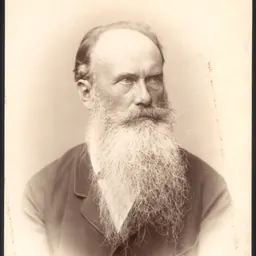

Related people
Same field, nearest in time

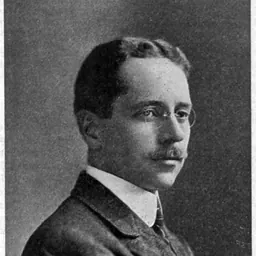


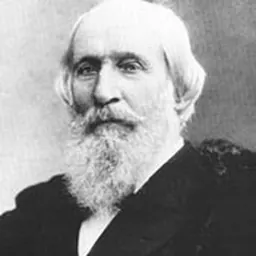
Contemporaries
People whose lives overlapped Friedrich Grünanger's
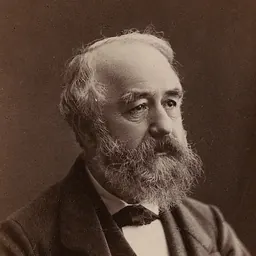




Frequently asked questions
Who was Friedrich Grünanger?
architect (1856-1929)
When was Friedrich Grünanger born?
Friedrich Grünanger was born on 25 January 1856 in Sighișoara.
When did Friedrich Grünanger die?
Friedrich Grünanger died on 14 December 1929 in Salzburg.
What was Friedrich Grünanger's occupation?
Friedrich Grünanger was an architect.
What nationality was Friedrich Grünanger?
Friedrich Grünanger was Hungarian and Austrian.
Sources & further reading
· Wikipedia: Friedrich Grünanger
· DBpedia: Friedrich Grünanger
Cite this page
APA: Biography.guide. (2026). Friedrich Grünanger. https://biography.guide/friedrich-grunanger/
MLA: "Friedrich Grünanger." Biography.guide, https://biography.guide/friedrich-grunanger/.
Chicago: "Friedrich Grünanger." Biography.guide. https://biography.guide/friedrich-grunanger/.
Data last updated: 2026-09-20 · Spot an error? Report a correction.
Page generated 2026-09-27 05:34 UTC