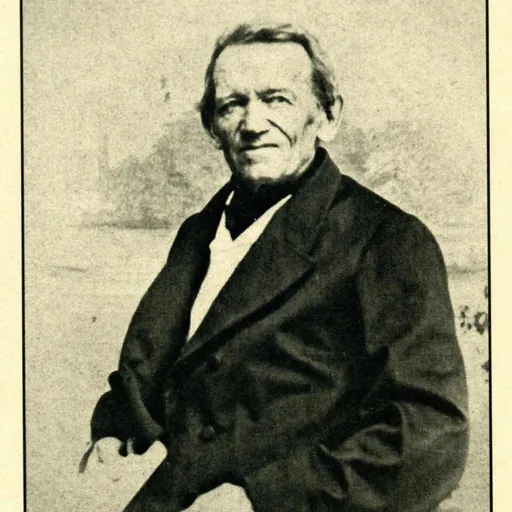
About Friedrich Albert Fallou
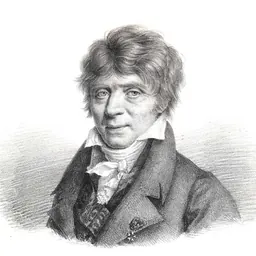
Lived 1794 – 1877 (aged 82). Friedrich Albert Fallou was a German jurist, lawyer, geologist and soil scientist.
Friedrich Albert Fallou (11 November 1794 – 6 September 1877) was a German lawyer who is considered one of the founders of modern soil science. While working as a lawyer and tax assessor, Fallou established himself as an independent scientist and a recognized authority in the natural history of farm and forest soil. In 1862, he proposed that soil was separate in nature from geology and, intent on establishing the study of soils as an independent science, Fallou introduced the term pedology .
Life Friedrich Albert Fallou came from an aristocratic French Huguenot family. He was the son of a judicial bailiff, and spent his childhood in Rochlitz and Grimma, where he studied at the Gymnasium St. Augustine. He never married. From 1814 to 1817, Fallou studied jurisprudence at the University of Leipzig. From 1818 to 1824, he worked as a lawyer in Colditz. In 1825, he was appointed town clerk of Waldheim and worked as an administrative officer at the City Court and a land value tax assessor. His interest in nature led him to study soils as an independent scholar. He also wrote geographic descriptions of Saxon regions and towns, which he published in the journal Saxonia, under the pseudonym "Baldwin from Eichberg". In 1833, he resigned as city clerk and again ran a practice as a lawyer and worked as a land evaluator until 1850. After that, Fallou devoted himself almost exclusively to geological, mineralogical, and pedological studies. In 1856, he moved to the Diedenmühle near Waldheim in Saxony, living here as an independent scientist until his death.
Work Working in soil evaluation for most of his professional life, Fallou became concerned with the declining soil quality in his region and developed a passionate interest in soil. In the 1830s, Fallou conducted geological, petrographic and mineralogical studies as an independent scholar. He had a particular interest in the granulite geology near Prachatice on the eastern edge of the Bohemian Forest. In the years after 1840, he devoted his time to the origin of agricultural and forest soils. His first major publication was a description of the rock formations of Muldengaues and their influence on vegetation, published in 1845. It received an award from the Princely Jablonowski'schen Society in Leipzig.
In 1853, he published his book The Arable lands of the Kingdom of Saxony, with a second edition in 1855. Through numerous study trips in Saxony and neighboring countries, Fallou recognized the need to make soil science knowledge applicable to agriculture and forestry. In the 1862 work, he presented a proposal for soil profile description, discussed the physical and chemical properties of soils, and proposed a classification of soils based on mineral properties. Based on these two works, Fallou is prominently mentioned as the first among the founders of modern soil science.
Fallou's subsequent works were The Land of the Kingdom of Saxony and its Surroundings ...(1869) and The Main Soil Types of the North and Baltic Countries of the German Empire Scientifically Considered" (1875). These, along with several articles published in Julius Adolph Stöckhardt's magazine (Journal for German Farmers), gained him recognition for his scientific advancements. Yarilov titled his 1904 article about Fallou in Pochvovedenie Friedrich Albert Fallou, Founder of Soil Science. Translation by Google Translate.
The science of soil science (pedology) is a natural description of the soil regardless of its relation to the plant world, and without worring about its utility for commercial purposes.
Agricultural soil science (agrology) is the knowledge of the soil in its relation to the plant and agricultural use. It has only to do with arable land suitable for agriculture, and in a way of speaking it is a kind of liturgy of the soil, for in order to grow usable plants upon it, it must first be artificially prepared; it does not permit any direct use, as rough stone does for building a house.
There is no more important object in nature, no object more worthy of contemplation, and if a famous philosopher and statesman of the past declares agriculture to be the worthy business of a free citizen (Cic. de off. I. 42.) it would also be an equally worthy business for him to get acquainted with the soil, without which agriculture is not conceivable. References the Cicero quote, (For of all gainful professions, nothing is better, nothing more pleasing, nothing more delightful, nothing better becomes a well-bred man than agriculture.) - Cicero De officiis (On Dutiable Action). Book I, Section 42. Translation by Cyrus R. Edmonds (1873), p.73
So far natural science has not confined itself only to those natural products which satisfy the true or imagined needs of men but extend over the whole innumerable host of beings; thus the soil, the birthplace, and the first basic condition of so many beings, can be a worthy task of a naturalist's investigation. But this dead rubble, this great rock ruin, now shrouded under a carpet of billowing seeds, offers no less food for thought than the relics of the previous world buried beneath it, the petrified skeletons of extinct animals and plant species. Ground and vaulted mountains stand before us, like a sphinx, inviting us to guess, and who should not rejoice if he can solve one of their riddles?
Works
Don’t just read it —
keep it.
Full-length biographies made to live with: read them, listen on the way to work, watch them tonight.
- E-book
- Audio
- Video
Instant download · yours to keep · every purchase keeps this site free
Important facts
People in Friedrich Albert Fallou's life
Named in this biography and alive at the same time

Related people
Same field, nearest in time


Contemporaries
People whose lives overlapped Friedrich Albert Fallou's





Frequently asked questions
Who was Friedrich Albert Fallou?
German jurist and lawyer (1794-1877)
When was Friedrich Albert Fallou born?
Friedrich Albert Fallou was born on 11 November 1794 in Zörbig.
When did Friedrich Albert Fallou die?
Friedrich Albert Fallou died on 6 September 1877 in Diedenhain.
What was Friedrich Albert Fallou's occupation?
Friedrich Albert Fallou was a jurist, lawyer, geologist and soil scientist.
What nationality was Friedrich Albert Fallou?
Friedrich Albert Fallou was German.
Sources & further reading
· Wikipedia: Friedrich Albert Fallou
· DBpedia: Friedrich Albert Fallou
Cite this page
APA: Biography.guide. (2026). Friedrich Albert Fallou. https://biography.guide/friedrich-albert-fallou/
MLA: "Friedrich Albert Fallou." Biography.guide, https://biography.guide/friedrich-albert-fallou/.
Chicago: "Friedrich Albert Fallou." Biography.guide. https://biography.guide/friedrich-albert-fallou/.
Data last updated: 2026-09-22 · Spot an error? Report a correction.
Page generated 2026-09-27 05:09 UTC