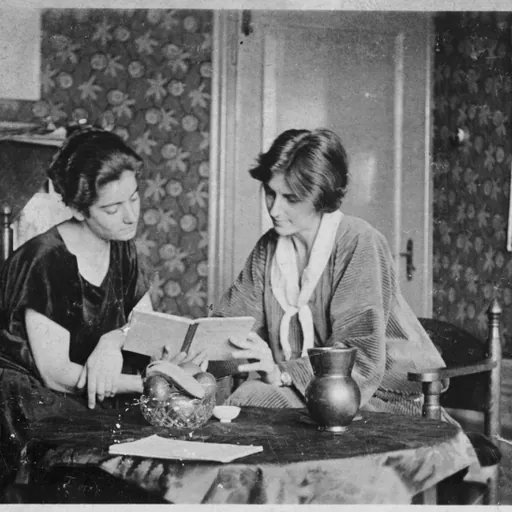
Frieda Belinfante
Dutch-American conductor and resistance fighter
About Frieda Belinfante
Lived 1904 – 1995 (aged 90). Frieda Belinfante was a Dutch conductor, cellist, resistance fighter and woman conductor.
Frieda Belinfante (May 10, 1904 – March 5, 1995) was a Dutch cellist and philharmonic conductor, a prominent lesbian, and a member of the Dutch resistance during World War II. After the war, Belinfante emigrated to the United States and continued her career in music. She was the founding artistic director and conductor of the Orange County Philharmonic.
Early life and education Belinfante was born 1904 in Amsterdam, the third of four children of Aron Belinfante and Georgine Antoinette Hesse. Her father was a prominent pianist and director of a music school in Amsterdam. According to Belinfante, her father was Jewish and her mother was Christian but her upbringing was secular. Belinfante held this position until 1941, and it made her the first woman in Europe to be artistic director and conductor of an ongoing professional orchestral ensemble. Concurrently, Belinfante made weekly appearances as guest conductor on the Dutch National Radio, and appeared as guest conductor with orchestras in the Netherlands and in Northern Europe. In the summer of 1939, Belinfante attended the master class of Dr. Hermann Scherchen in Neuchâtel, Switzerland, to perfect her conducting skills. In recognition of her abilities, Scherchen awarded her first prize over 12 professional male conductors also enrolled in that class; the prize also included a debut engagement with the Orchestre de la Suisse Romande in Montreux.
The Nazi occupation interrupted Belinfante's musical career, which she did not resume until after the Second World War.
Wartime activities Belinfante became a good friend of the artist Willem Arondeus, an openly gay man who was a leader of the Raad van Verzet (Resistance Council) in the Dutch resistance. She actively contributed to the resistance movement, mainly by forging personal documents for Jews and others wanted by the Gestapo. Together with Arondeus, she was part of the CKC resistance group that organised and executed the bombing of the population registry in Amsterdam on March 27, 1943, which destroyed thousands of files and hindered Nazi attempts to compare forged documents with documents in the registry.
The CKC group came under scrutiny by the Gestapo after the bombing, forcing Belifante and other members into hiding. While in hiding, Belinfante learned of the arrests and executions of the other CKC members, including Arondeus. Belinfante disguised herself as a man and lived with friends for 3 months
Orange County Philharmonic Belinfante emigrated to the United States in 1947, eventually settling in Laguna Beach, California, and joining the music faculty of UCLA in 1949. Desiring to continue her conducting activities, she formed an ad hoc group she named The Vine Street Players in 1953, an orchestral ensemble of colleagues from the local area universities as well as studio musicians from Hollywood.
Concerts by the Orange County Philharmonic Orchestra were free to the public, funded entirely by donations from sponsors and memberships. The orchestral musicians agreed to donate their time for rehearsals free of charge with the permission of their union local stewards, while receiving a fee for the performances as Belinfante herself did. Belinfante insisted on this arrangement with sponsors, and that all concerts remain free of charge for all future attendees. The founding board of directors adopted Belinfante's suggestions as their business plan with the stated mission of maintaining a resident professional orchestra in the county.
Under Belinfante's direction, the orchestra grew into a "B"-class musical institution taking into account its budget, programming and geographical penetration in the ensuing years. Its activities usually included a 4- to 6-program season in all major concert venues throughout the region, as well as youth concerts, cultural development programs and chamber music recitals in the community with principals of the orchestra and Belinfante assisting in several capacities. Soloists who were engaged to appear with the orchestra during the inaugural period included Lili Kraus, Leonard Pennario, Marni Nixon, Dorothy Warenskjold, and Mischa Elman. Belinfante appeared as soloist with the orchestra in the 1958–59 season, performing the Haydn Cello Concerto in C-major, Hob. VIIb/1. Throughout this period, she also appeared in numerous recitals locally and as guest conductor in engagements with European orchestras.
Belinfante's involvement with the Orange County Philharmonic came to an abrupt end in 1962 when her contract was not renewed. Financial pressures had been mounting because the musicians' union wanted the players to be paid for rehearsals. Additionally, board members and supporters from the community felt a male conductor would raise the stature of the orchestra and increase revenue. The organization became an impresario presenter starting with the 1962–63 season.
Critical reception Belinfante's recorded output was sparse and poorly maintained. None of the pre-war recorded radio performances survive, and only the very last recording of her American career is preserved in the archives. However, more than three decades of critical reviews exist internationally that document Belinfante's superlative musical gifts. Her conducting technique was noted for her command of period style, cohesive ensemble, clear and decisive baton technique, transparent ensemble textures, buoyant and propulsive rhythms, and conducting all performances without a score. As a soloist on the cello and viola da gamba, she was noted for her particular insight into the music of Johannes Brahms and Johann Sebastian Bach, especially the Suites for Unaccompanied Cello BWV 1007–1012. Belinfante's solo, concerto and chamber performances were characterized by a singular beauty of tone, faultless intonation and legato, complete technique, profound involvement with the music, and an expressive interpretation free of mannerism. Her repertoire spanned all periods and media including works from the Baroque to contemporary living composers of the period, especially those working in the Netherlands and France and in particular her close association with Dutch composer Henriëtte Bosmans. In 1994, The United States Holocaust Memorial Museum officially recognized Belinfante's contribution to the Dutch Resistance in World War II.
Belinfante died in 1995 from cancer, aged 90, in Santa Fe, New Mexico.
Don’t just read it —
keep it.
Full-length biographies made to live with: read them, listen on the way to work, watch them tonight.
- E-book
- Audio
- Video
Instant download · yours to keep · every purchase keeps this site free
Important facts
People in Frieda Belinfante's life
Named in this biography and alive at the same time
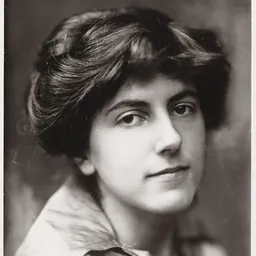


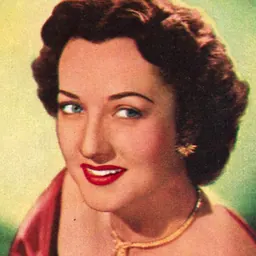
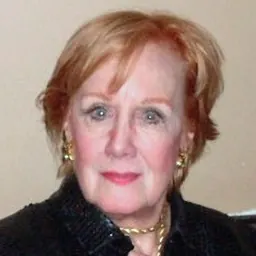


Related people
Same field, nearest in time


Contemporaries
People whose lives overlapped Frieda Belinfante's

Frequently asked questions
Who was Frieda Belinfante?
Dutch-American conductor and resistance fighter (1904-1995)
When was Frieda Belinfante born?
Frieda Belinfante was born on 10 May 1904 in Amsterdam.
When did Frieda Belinfante die?
Frieda Belinfante died on 5 March 1995 in Santa Fe.
What was Frieda Belinfante's occupation?
Frieda Belinfante was a conductor, cellist, resistance fighter and woman conductor.
What nationality was Frieda Belinfante?
Frieda Belinfante was Dutch.
Sources & further reading
· Wikipedia: Frieda Belinfante
Cite this page
APA: Biography.guide. (2026). Frieda Belinfante. https://biography.guide/frieda-belinfante/
MLA: "Frieda Belinfante." Biography.guide, https://biography.guide/frieda-belinfante/.
Chicago: "Frieda Belinfante." Biography.guide. https://biography.guide/frieda-belinfante/.
Data last updated: 2026-09-20 · Spot an error? Report a correction.
Portrait: Wikimedia Commons · author & licence
Page generated 2026-09-27 04:58 UTC