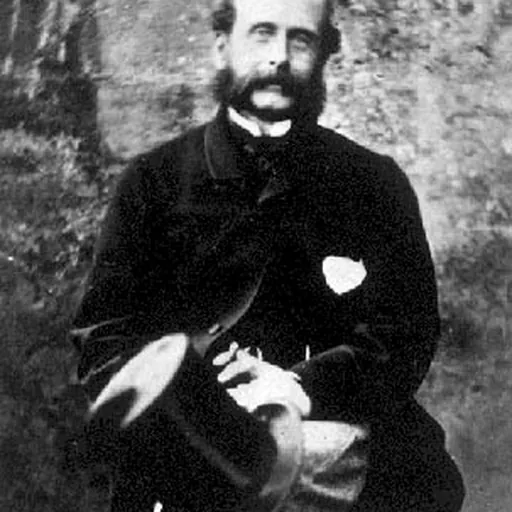
About Frederick Seymour
Lived 1820 – 1869 (aged 48). Frederick Seymour was a British politician and colonial Office.
Frederick Seymour (6 September 1820 – 10 June 1869) was a British colonial governor who was an illegitimate grandson of Francis Seymour-Conway, 2nd Marquess of Hertford. He was appointed to the Colonial Office by Prince Albert.
He served as Lieutenant-Governor of Honduras, and as Governor of the Colony of British Columbia, including after its union with the colony of Vancouver Island.
Family Frederick Seymour was born on 6 September 1820 to Henry Augustus Seymour and Margaret Williams, in Belfast, Northern Ireland. He was the fourth son of Henry Augustus and Margaret.
His father Henry Augustus Seymour, who was the illegitimate son of Francis Seymour-Conway, 2nd Marquess of Hertford, received his education at Harrow School, Pembroke College, Cambridge, and the Inns of Court. Henry was given family property in Ireland, a secure private income, and an office in the customs-service. However, his privilege ended with the succession of the 3rd Marquis of Hertford in 1822, after which he took his family to reside in Brussels, Belgium.
Frederick's eldest brother, Francis (later General Sir Francis Seymour, 1st Baronet), had a successful military career and, as a consequence of his friendship with Prince Albert, resided at Kensington Place until his death.
Entry into Colonial Office Frederick Seymour was two years old when his father lost his fortune, and he did not receive a privileged education nor an inheritance, unlike his older siblings. In 1842, as a consequence of Prince Albert's intervention, he obtained a junior appointment in the Colonial Service.
Seymour expressed his objective to develop mining infrastructure in his reports to Lord Cardwell. He developed the suspicion of Douglas's mercantile provenance that had characterised the founder of British Columbia, Richard Clement Moody, and Moody's wife Mary Susannah Hawks, and Moody's secretary freemason Robert Burnaby. and with employing administrators to "work a crooked policy against Moody" to "retard British Columbia and build up... the stronghold of Hudson's Bay interests" and their own "landed stake". Like Moody Seymour consequently dispatched a force of 28 men from New Westminster under Chartres Brew, who was Chief Inspector of Police.
The Union with Vancouver Island The Vancouver Island Assembly had become too great a cost for the British government, which looked to unite it with that of the mainland colony. The reduction of the mainland colony's funding by the failure of the private banking venture at the Cariboo mines in 1864 and the reduced number of miners in 1865 increased support in the mainland for the union. Indigenous Sto-lo and Salish groups were worried that the new governor would not maintain the accords that they had had with his predecessor Sir James Douglas, to whom the Sto:lo expressed their worries. Export-tax on the mined gold was insufficient, and $100,000
Places named for Seymour Mount Seymour is a peak, a provincial park, and ski hill located in the Coast Mountains northeast of Vancouver, British Columbia. There are two other, much lower, Mount Seymours; one on Quadra Island, offshore from the town of Campbell River, the other on Moresby Island in the Queen Charlotte Islands. There are two watercourses named the Seymour River. One flows from Mt. Seymour to Burrard Inlet, and the other into Shuswap Lake. Seymour Arm is an arm of Shuswap Lake, British Columbia. Seymour Inlet is located in a maze of inlets on the north flank of Queen Charlotte Strait. Frederick Sound is located on the northern British Columbia Coast opposite Haida Gwaii. There are two bands of mountains named the Seymour Range in British Columbia. One is located on Southern Vancouver Island, and the other north of Shuswap Lake in the upper reaches of the Seymour River, at the head of which there is a Seymour Pass. Seymour Street is a major north-south artery in downtown Vancouver, bounded to the south by the Granville Street Bridge, and to the north by Cordova Street. Seymour Landing on Seymour Bay, on the southeast coast of Bowen Island, just west of West Vancouver. Seymour Island, an islet in Sunderland Channel on the north coast of Hardwicke Island, in the Johnstone Strait area between Vancouver Island and the mainland to the north of it.
Don’t just read it —
keep it.
Full-length biographies made to live with: read them, listen on the way to work, watch them tonight.
- E-book
- Audio
- Video
Instant download · yours to keep · every purchase keeps this site free
Important facts
People in Frederick Seymour's life
Named in this biography and alive at the same time



Related people
Same field, nearest in time





Contemporaries
People whose lives overlapped Frederick Seymour's




Frequently asked questions
Who was Frederick Seymour?
British colonial governor (1820-1869)
When was Frederick Seymour born?
Frederick Seymour was born on 6 September 1820 in Belfast.
When did Frederick Seymour die?
Frederick Seymour died on 10 June 1869 in Bella Coola.
What was Frederick Seymour's occupation?
Frederick Seymour was a politician and colonial Office.
What nationality was Frederick Seymour?
Frederick Seymour was British.
Sources & further reading
· Wikipedia: Frederick Seymour
Cite this page
APA: Biography.guide. (2026). Frederick Seymour. https://biography.guide/frederick-seymour/
MLA: "Frederick Seymour." Biography.guide, https://biography.guide/frederick-seymour/.
Chicago: "Frederick Seymour." Biography.guide. https://biography.guide/frederick-seymour/.
Data last updated: 2026-09-20 · Spot an error? Report a correction.
Portrait: Wikimedia Commons · author & licence
Page generated 2026-09-27 04:57 UTC