
About Frederick Knefler
Lived 1824 – 1901 (aged 77). Frederick Knefler was a Hungarian and American soldier, jurist, carpenter and lawyer.
Frederick Knefler (April 12, 1833 – June 14, 1901) served in the Union Army in the American Civil War, joining as a first lieutenant in May 1861. He served as a staff officer and as colonel of the 79th Indiana Infantry Regiment and an acting brigade commander. In 1866, he was nominated and confirmed for appointment to the grade of brevet brigadier general of volunteers, to rank from March 13, 1865. His daughter married Edward Taussig and he was the grandfather of Joseph Taussig, the great-grandfather of Joseph K. Taussig Jr. and great-great-grandfather of Captain Joseph K. Taussig III USMC (born 1945).
Early life Frederick Knefler (Knoepfler Frigyes) was born in Arad, Hungary in 1833, the son of Nathan Knoepfler, a Hungarian Jew and a physician. He enlisted with his father in the revolutionary forces during the 1848-49 Hungarian War of Liberation. After the revolutionary forces were defeated, the entire Knoepfler family fled to the United States, first to New York, then to Indianapolis, Indiana. As one of the earliest Jewish families settling in Indianapolis, Dr. Knoepfler was one of the original founders of the Indianapolis Hebrew Congregation.
Knefler trained as a carpenter in New York, a trade he continued in Indianapolis as he studied law. He became assistant to the clerk of Marion County, Indiana, in which position he became acquainted with Lew Wallace.
Civil War service
11th Indiana Infantry Upon President Lincoln's proclamation calling for the raising of 75,000 troops after the firing on Fort Sumter, Governor Oliver Morton appointed Lew Wallace Adjutant-General with the task of raising Indiana's quota. Wallace, in turn, appointed Knefler as his principal assistant. After raising five regiments, Wallace requested and received command of the 11th Indiana Infantry Regiment, commissioning Knefler as a first lieutenant in it; he was promoted to captain on June 5, 1861.
The 11th Indiana Infantry was sent to the Washington, D.C., area, participated in several skirmishes, but missed the first battle of Bull Run. Their 3-month term of enlistment expired, the regiment was shipped back to Indianapolis and mustered out. When Wallace then formed a new 11th Indiana Infantry in August 1861, Knefler was commissioned a captain in it. Soon after, however, Wallace became a brigadier general and Knefler went with him as his assistant adjutant general.
Aide to General Lew Wallace Wallace's brigade was part of Grant's force in the capture of Fort Henry and Fort Donelson, playing a key part in preventing the Confederate forces from forcing an escape from Fort Donelson through the Union lines. Wallace's report of the battle stated that Knefler's “prompt and efficient service in the field” and his “courage and fidelity have earned my lasting gratitude.”
Knefler was also with Wallace in the Battle of Shiloh, and his loss of the messenger's written transcription of Grant's oral order during the battle probably prevented resolution of the dispute between the two generals over whether the ambiguity of the order or Wallace's actions caused his failure to reach the battle on the first day.
Colonel of 79th Indiana Infantry
After Wallace's removal from active service, Indiana governor Oliver Morton appointed Knefler the commanding colonel of the newly formed 79th Indiana Infantry Regiment in August 1862. Sent to join Buell's Army of the Ohio, his regiment, as part of the brigade led by Brigadier General Samuel Beatty, became involved in the battles of Stones River, Chickamauga, and Missionary Ridge. At Stones River, Knefler reported his regiment lost one-third of its 341 men, including one-half of its commissioned officers. The 79th Indiana captured a key battery during the first day of Chickamauga, but was cut in half in the Confederate breakthrough on the second day, Knefler's half attempting to regroup Beatty's brigade until withdrawn, the other half helping hold Snodgrass Hill until the Confederate charge was finally repulsed. In the battle of Missionary Ridge, Knefler was in command of the combined 79th Indiana and 86th Indiana infantry regiments that led the unexpected charge up the center of the ridge. General Beatty's report after the battle complimented Knefler for the charging of Missionary Ridge, and fellow colonel George Dick wrote that he “richly merits a commission as brigadier-general for his gallantry displayed in the charging and taking of Missionary Ridge.”
According to the Jewish-American History Foundation
Brevet brigadier general appointment On January 13, 1866, President Andrew Johnson nominated Knefler for appointment to the grade of brevet brigadier general of volunteers, to rank from March 13, 1865, and the United States Senate confirmed the appointment on March 12, 1866.
Post-war activities
Following the war, Knefler became a lawyer in Indianapolis, joining in partnership with former U. S. Attorney John Hanna. After his partner was elected in Congress in 1876, Knefler was appointed head of the pension office in Indianapolis by President Rutherford B. Hayes, where he served eight years. As president of the board of regents of Indiana's Soldiers and Sailors Monument, he oversaw the laying of the cornerstone in the center of Indianapolis on August 22, 1889, but died before its completion in 1902.
Frederick Knefler died on June 14, 1901, in Indianapolis, Indiana, and is buried Crown Hill Cemetery in Section 8, Lot 22.
Don’t just read it —
keep it.
Full-length biographies made to live with: read them, listen on the way to work, watch them tonight.
- E-book
- Audio
- Video
Instant download · yours to keep · every purchase keeps this site free
Important facts
People in Frederick Knefler's life
Named in this biography and alive at the same time
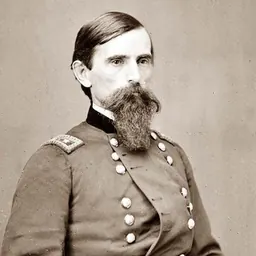



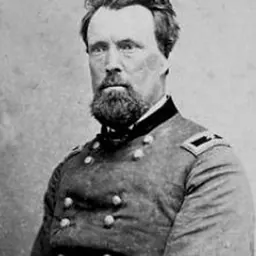
Related people
Same field, nearest in time
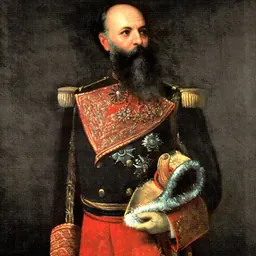
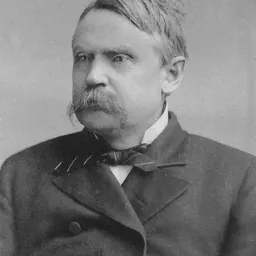


Contemporaries
People whose lives overlapped Frederick Knefler's


Frequently asked questions
Who was Frederick Knefler?
Union army general in the American Civil War (1833-1901)
When was Frederick Knefler born?
Frederick Knefler was born on 12 April 1824 in Arad.
When did Frederick Knefler die?
Frederick Knefler died on 14 June 1901 in Indianapolis.
What was Frederick Knefler's occupation?
Frederick Knefler was a soldier, jurist, carpenter and lawyer.
What nationality was Frederick Knefler?
Frederick Knefler was Hungarian and American.
Sources & further reading
· Wikipedia: Frederick Knefler
Cite this page
APA: Biography.guide. (2026). Frederick Knefler. https://biography.guide/frederick-knefler/
MLA: "Frederick Knefler." Biography.guide, https://biography.guide/frederick-knefler/.
Chicago: "Frederick Knefler." Biography.guide. https://biography.guide/frederick-knefler/.
Data last updated: 2026-09-26 · Spot an error? Report a correction.
Page generated 2026-09-27 05:16 UTC