
Frederick Joseph Lawton
American bureaucrat who served as the ninth Director of the Bureau of the Budget
About Frederick Joseph Lawton
Lived 1900 – 1975 (aged 75). Frederick Joseph Lawton was an American lawyer.
President Dwight D. Eisenhower awards Fredrick J. Lawton the President's Award for Distinguished Federal Civilian Service in 1961 Frederick Joseph Lawton (November 11, 1900 – November 16, 1975) was an American bureaucrat who served as the ninth Director of the Bureau of the Budget. Lawton was born in Washington, D.C., and became a lawyer and an accountant. He spent most of his professional career working with the government bureaucracy. He helped President Franklin D. Roosevelt wager with members of Congress to support the Fair Labor Standards Act. He first joined the Office of Management and Budget as an executive assistant in 1935. He also served as an adviser to Congress. In 1947, he became an administrative assistant to President Harry S. Truman. He was appointed to the post of Director of the Bureau of the Budget in 1950, and held the position until 1953. President Dwight D. Eisenhower appointed Lawton to a term on the United States Civil Service Commission after he left the Bureau; he served from 1953 to 1963.
His economic policy consisted of making budget cuts among various departments of the federal government. One of his primary contributions was in helping to re-design the Bureau of Internal Revenue, action which led to the creation of the Internal Revenue Service. Lawton advocated a civil service, rather than a patronage system for tax agents. He opposed a number of plans in Congress, including a fair trade bill and attempts to decentralize the federal offices in Washington, D.C., to other areas of the country.
Life Lawton was born in Washington, D.C., on November 11, 1900, and lived there throughout his life. He graduated from Georgetown University in 1920.
Lawton first meet President Harry S. Truman in 1938, during the consideration of the Roosevelt Reorganization Act in the United States Senate, in the cloakroom of the United States Capitol. Lawton landed the job of adviser to the Senate Select Committee when the Senate asked for a liaison and expert from the Budget Bureau; Lawton himself speculated that he received the job because his post did not have specific estimates assigned to it, leaving him free for new duties. In 1949, after one year as an administrative assistant, he became the assistant director of the Bureau of the Budget, He served as the Director of the Bureau from 1950 to 1953.
Actions and economic policy As Director, Lawton worked to cut departmental expenses in the federal budget. However, as assistant director, he argued strongly against calls from Congress for large-scale budget cuts, claiming that such a thing would not be possible because of "fixed" expenses like paying down the public debt and giving promised veteran's benefits. In the end, Lawton, under order of Congress, cut more than $500 million in operating costs within the government.
Lawton called for reform within the Bureau of Internal Revenue, claiming that its "magnitude and complexity" required an overhaul. His advocacy led the Bureau to be renamed the Internal Revenue Service, and a reorganization of the Bureau which established agents as career civil servants, rather than using the patronage system. Lawton supported a requested merger of Pan American World Airways and American Overseas Airlines, a plan that Truman initially opposed, but then passed over the recommendation of the Civil Aeronautics Board. Lawton vocally opposed plans to decentralize the federal offices in Washington, D.C., spreading them throughout the country so that an enemy attack would not cripple the entire national government. Lawton argued that there was a shortage of office space around the country that made the plans impossible to implement. Lawton often removed himself from debates, treating his job as a technical and administrative one. While he advocated fiscal restraint, he mostly found ways of carrying out Truman's policies, rather than arguing for them. He sought less publicity than his predecessors.
When President Dwight D. Eisenhower took office, Lawton remained skeptical that the Republican President could cut much money from the budget without completely overhauling then-current government programs. Despite this, Lawton played an active role in preparing his successor Joseph Dodge for his assignment.
Civil Service Commission After leaving the Bureau of Budget, Lawton became a member of the United States Civil Service Commission. He was appointed to a six-year term, but ultimately served from 1953 to 1963. Lawton died in 1975.
Don’t just read it —
keep it.
Full-length biographies made to live with: read them, listen on the way to work, watch them tonight.
- E-book
- Audio
- Video
Instant download · yours to keep · every purchase keeps this site free
Important facts
People in Frederick Joseph Lawton's life
Named in this biography and alive at the same time

Related people
Same field, nearest in time




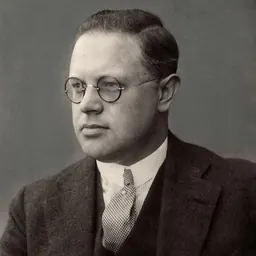

Contemporaries
People whose lives overlapped Frederick Joseph Lawton's
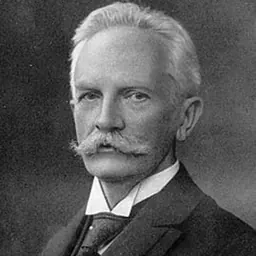


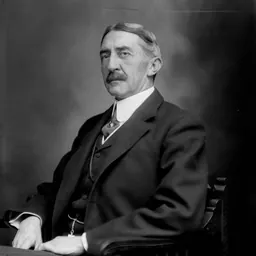

Frequently asked questions
Who was Frederick Joseph Lawton?
American bureaucrat who served as the ninth Director of the Bureau of the Budget
When was Frederick Joseph Lawton born?
Frederick Joseph Lawton was born on 11 November 1900 in Washington, D.C..
When did Frederick Joseph Lawton die?
Frederick Joseph Lawton died on 16 November 1975 in Washington, D.C..
What was Frederick Joseph Lawton's occupation?
Frederick Joseph Lawton was a lawyer.
What nationality was Frederick Joseph Lawton?
Frederick Joseph Lawton was American.
Sources & further reading
· Wikipedia: Frederick Joseph Lawton
Cite this page
APA: Biography.guide. (2026). Frederick Joseph Lawton. https://biography.guide/frederick-joseph-lawton/
MLA: "Frederick Joseph Lawton." Biography.guide, https://biography.guide/frederick-joseph-lawton/.
Chicago: "Frederick Joseph Lawton." Biography.guide. https://biography.guide/frederick-joseph-lawton/.
Data last updated: 2026-09-20 · Spot an error? Report a correction.
Page generated 2026-09-27 05:33 UTC