
About Frederick Hinde Zimmerman
Lived 1864 – 1924 (aged 59). Frederick Hinde Zimmerman was an American horse trainer, restaurateur, banker and real estate entrepreneur.
Frederick Hinde Zimmerman (October 17, 1864 – September 21, 1924) was an American banker, farmer, real estate entrepreneur, businessman, and hotel owner. Due to his large land holdings and expertise in farming, Zimmerman became a notable farmer, breeder, and real estate entrepreneur. Zimmerman's farm, originally purchased by his grandfather Thomas S. Hinde from the federal government in 1815, included the Grand Rapids Dam, Hanging Rock, and Buttercrust. His first experience running a business was in 1883 when he ran a grocery store in Fort Smith, Arkansas with his cousin Harry Hinde. Many of his businesses centered on his family farm, but in later years Zimmerman achieved success through his ownership and investment in mines, banks, and real estate. He also owned or invested in the Hanging Rock and Grand Rapids Dam Farm Company, the Grand Rapids Hotel Park Company, and the Wabash Bull-Frog Mines Company.
Zimmerman was among the fourth generation of the Hinde family in the United States that was begun by his great-grandfather Dr. Thomas Hinde. His grandfather Thomas S. Hinde was a prominent politician and Methodist minister who contributed to the development of Illinois, Indiana, and the spread of the Methodist faith. His father Jacob Zimmerman held various political offices in the state of Illinois and in his early years owned several prominent Democratic newspapers in Ohio and Illinois right before the Civil War. At the age of one, Zimmerman's mother died and he was sent to live with family in Ohio and did not see his father again until he was fourteen. Towards the end of his life, Zimmerman was elected to various positions of leadership in the Knights of Pythias and Illinois Farmers Institute. He was elected secretary of the Illinois Farmers Institute for multiple terms. During Zimmerman's life he managed banks, his family farm in Mount Carmel Precinct, Wabash County, Illinois, the Grand Rapids Hotel near the Grand Rapids Dam, and invested in numerous business ventures.
The Grand Rapids Hotel was one of his most notable accomplishments and soon after opening in 1922 attracted tourists from across the nation. The hotel was one of the largest resorts in the Wabash Valley and at one time had fishing, trap shoots, baseball, golf, boating, swimming, a restaurant, and other recreational activities. The hotel promoted the growth of the region by increasing the number of tourists and by hosting large-scale meetings and public events like celebrations at Hallowe'en, Christmas, and the Fourth of July. He died from complications of a broken hip that he suffered near the Grand Rapids Hotel in 1924 after falling out of his Model T automobile. Five years after Zimmerman died, the hotel was burned to the ground – in 1929 the hotel's manager, Glenn Goodart, caused a fire by dropping a blowtorch in the basement. The hotel was not rebuilt due to a lack of funds and the onset of the Great Depression.
Early years Frederick Hinde Zimmerman was born on his family farm in the Mount Carmel Precinct, Wabash County, Illinois on October 17, 1864. He was the second child of the Honorable Jacob Zimmerman, an Illinois congressman and politician from a wealthy family, and Belinda Hinde, a member of the prominent Hinde family and the daughter of Rev. Thomas S. Hinde, the founder of Mount Carmel. His parents met and were married in Marshall, Illinois while his father ran a newspaper and his mother lived with her sister Martha Hinde and her husband Judge Charles H. Constable. During the Civil War, Zimmerman's father and uncles grew tobacco and operated mills on their family's farm, a portion of which was located on the Wabash River and included Hanging Rock, Buttercrust (a natural sandbar on the Wabash River), and the Grand Rapids Dam. His mother's family were large landowners in Mount Carmel and Wabash County, and the majority of the land had been purchased by Thomas S. Hinde in 1815 from the federal government. Originally, the family farm had belonged to Zimmerman's mother and her siblings, but his father purchased their interests. Zimmerman's father was able to purchase the Hinde farm because he had become wealthy through his ownership of various newspapers in the preceding years. His father lived on the farm near the Grand Rapids Dam from 1860 until moving to a 160-acre farm in the southwestern part of Friendsville, Illinois in 1903. In later years, along with their uncle Charles T. Hinde, they invested in real estate and mines in New Mexico. The New Mexico properties only returned modest profits but were kept in the family until the 1950s.
Family and farming
After closing the grocery store in Arkansas in 1886, Zimmerman returned to the family farm and became a gentleman farmer. After Zimmerman returned, his father gave a small acreage of the Hinde farm to Zimmerman's half brother John H. Zimmerman, who raised pigs and farmed the acreage until he sold the property to Zimmerman several years later. encouraged Zimmerman to join the fraternal organization the Knights of Pythias. In 1906, Zimmerman became chancellor commander of the Knights of Pythias lodge in Wabash County, Illinois and was a captain in the uniform rank of the order. Meetings during his tenure as secretary averaged 350 participating members and a yearlong membership in 1901 cost $71.99. For a short time Zimmerman and his father raised registered Shropshire sheep primarily for meat, at the family farm near the Grand Rapids Dam. Some of their Shropshire sheep were listed on the American Shropshire Registry, which was a national register for the highest quality sheep of the breed. Zimmerman's son lived on the family farm his entire life and in later years was elected to various public offices in Wabash County Illinois. Like his father, he continued the tradition of raising specialty hogs and cattle. Both men continually expanded the family land holdings and diversified the farming operations. which he began investing in from August 1905. Zimmerman's father owned many coal mines in Illinois and Indiana, so in his later years, Zimmerman also invested in some of them. in the Midwest, and owned a substantial interest in The First National Bank in Mount Carmel, Illinois. Over the years Zimmerman often traveled to Coronado, California to visit Hinde.
When Charles T. Hinde died in 1915, he left Zimmerman and Harry Hinde a substantial portion of his estate. Adjusting for inflation, Zimmerman inherited millions from the estate. After the estate was settled in 1917, Zimmerman decided to use his portion of the money to establish a hotel and resort on the Hinde family farm next to the Grand Rapids Dam; before he could start, he had to wait for the conclusion of World War I.
Zimmerman chose O.L. Rapson, who had worked at the family farm and lived in a small house next to his, as The Grand Rapids Hotel's first manager. He was fired in 1924 after the sudden death of Zimmerman and replaced by Rapson's friend Glenn Goodart at the request of Zimmerman's children. In 1929, Goodart burned the hotel to the ground by dropping a blowtorch in its basement shop; it was not rebuilt due to the onset of the Great Depression and a lack of available funds.
Death A few weeks before Zimmerman's death in 1924, he suffered a stroke. He died after an eventful day at the annual fair in Mount Carmel as he was returning to his farm at the Grand Rapids Dam on September 21, 1924. Before returning to his residence, Zimmerman, with his children, stopped by the Grand Rapids Hotel to check on the daily business. As he exited the car driven by his son, he fell and broke his hip. Even though he was treated for his injuries by Dr. G.S. Couch, Zimmerman died the next day. According to his obituary, Zimmerman died of "hardening of the arteries." In his will, he left about seventy-five percent of his estate to his son and about twenty-five percent to his daughter. Some of the stock in The First National Bank in Mount Carmel that Zimmerman left to his daughter caused her financial hardships due to the bank's failure during the Great Depression.
Burial site Zimmerman is buried at Rose Hill Cemetery in Mount Carmel, Illinois, next to his father Jacob Zimmerman, his wife Agnes Zimmerman, and his longtime friend and farm hand Nick Garrett.
Don’t just read it —
keep it.
Full-length biographies made to live with: read them, listen on the way to work, watch them tonight.
- E-book
- Audio
- Video
Instant download · yours to keep · every purchase keeps this site free
Important facts
Family & relationships
People in Frederick Hinde Zimmerman's life
Named in this biography and alive at the same time
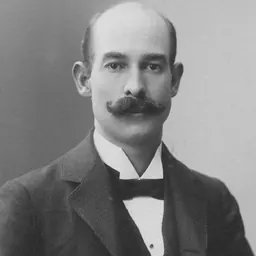



Related people
Same field, nearest in time

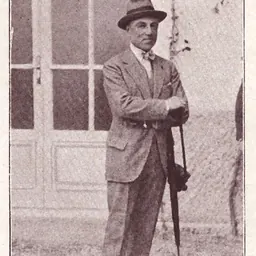
Contemporaries
People whose lives overlapped Frederick Hinde Zimmerman's

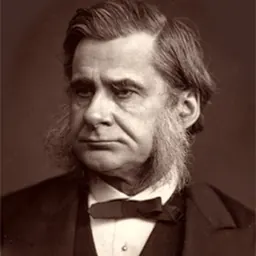

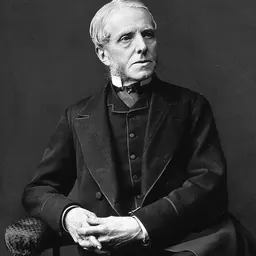


Frequently asked questions
Who was Frederick Hinde Zimmerman?
American businessman
When was Frederick Hinde Zimmerman born?
Frederick Hinde Zimmerman was born on 17 October 1864 in Mount Carmel.
When did Frederick Hinde Zimmerman die?
Frederick Hinde Zimmerman died on 21 September 1924 in Grand Rapids Hotel.
What was Frederick Hinde Zimmerman's occupation?
Frederick Hinde Zimmerman was a horse trainer, restaurateur, banker and real estate entrepreneur.
What nationality was Frederick Hinde Zimmerman?
Frederick Hinde Zimmerman was American.
Sources & further reading
· Wikipedia: Frederick Hinde Zimmerman
· DBpedia: Frederick Hinde Zimmerman
Cite this page
APA: Biography.guide. (2026). Frederick Hinde Zimmerman. https://biography.guide/frederick-hinde-zimmerman/
MLA: "Frederick Hinde Zimmerman." Biography.guide, https://biography.guide/frederick-hinde-zimmerman/.
Chicago: "Frederick Hinde Zimmerman." Biography.guide. https://biography.guide/frederick-hinde-zimmerman/.
Data last updated: 2026-09-24 · Spot an error? Report a correction.
Page generated 2026-09-27 05:03 UTC