
About Frederick Charles Victor Laws
Lived 1887 – 1975 (aged 87–88). Frederick Charles Victor Laws was a British aircraft pilot.
Group Captain Frederick Charles Victor Laws (29 November 1887 – 27 October 1975), was an officer in the Royal Air Force, an aerial surveyor, and the founder and most prominent pioneer of British aerial reconnaissance.
Early military service Laws enlisted into the Coldstream Guards on 22 February 1905, and was stationed in Egypt and Sudan until 1912. He supplemented his income by taking photographs with his Kodak Bullseye box camera and selling them to his fellow soldiers. He later applied for an assignment to the signalling section, mainly in order to obtain access to the unit's darkroom facilities, and also experimented with communicating with aircraft by heliograph.
Laws returned to England in 1912, and in December "presented himself for a trade test at the headquarters of the Military Wing of the [just created] Royal Flying Corps, then located at South Farnborough." He passed and was graded air mechanic 1st class, but he "had a feeling that he knew more about the subject than did his examiner." Within months, Laws was promoted to sergeant and put in charge of the photographic section of his squadron.
Laws was first posted to the No. 1 Balloon Company and began to take aerial photographs from the Army airship Beta. Laws discovered that vertical photos taken with 60% overlap could be used to create a stereoscopic effect when viewed in a stereoscope, thus creating a perception of depth that could aid in cartography and in intelligence derived from aerial images.
Next year, Laws took similar photos from kites, Bleriot and Farman aircraft and other types just then being completed by the Royal Aircraft Factory at Farnborough. He also conducted camera experiments at the second RFC site at Salisbury Plain. As dirigibles were then allocated to the Royal Navy, Laws was chosen to help form an aerial reconnaissance unit of fixed-wing aircraft, at that time consisting in part of B.E.2 biplanes from the Royal Aircraft Factory. This No. 2 (Aeroplane) Company later became No. 3 Squadron RFC, the first heavier-than-air British unit.
First World War
Still, in 1914, the British entered into aerial reconnaissance in World War I with no credible heavier-than-air capability. The shortage was in optics and cameras as well as aircraft and pilots. Laws and his collaborators first created the A-camera, then later the L-camera (for Laws), which became the standard British airborne camera, usually fixed on the side of the fuselage pointing down. With Lieutenant John Moore-Brabazon, another aviation pioneer, Laws built the L/B camera for special situations, introduced late in the war.
Laws went to France with No. 3 Squadron RFC and organized the air reconnaissance sections. In February 1915 he was posted to the Experimental Photographic Section, 1st Wing, and also qualified as an observer and pilot. posted to the RFC School of Photography at Farnborough. and on 22 December 1916 he was appointed a Park Commander with the temporary rank of major, and served at the Headquarters of the Royal Flying Corps on the Western Front until the armistice. Two weeks later, on 15 January, he married Madeleine Grace Mathews Withers at St. Michael's Church, Chester Square, London.
Inter-war career
On 1 August 1919 Laws was granted a permanent commission in the RAF with the rank of major (squadron leader), resigning his army commission the same day. He served in the Directorate of Research at the Air Ministry from 1919 to 1923, Disappointed with the peacetime eclipse of his speciality, Laws was placed on the retired list at his own request on 1 September 1933.
In 1933–34, he was expedition leader of the aerial mapping of Western Australia for the H. Hemmings company, an enormous task using two DH.84 Dragons. He also worked for the Western Mining Corporation of Australia up to 1936, doing aerial survey work, and was a director of the camera manufacturers Williamsons from 1937 to 1939. On 19 September he was made a Commander of the Order of the British Empire, in recognition "...of services in planning the landings in Normandy..." In October 1945 he was made an Officer of the Legion of Merit by the United States of America. Laws reverted to the retired list on 12 May 1946, retaining the rank of group captain.
Post-war career In peacetime, Laws established himself as a leader in commercial air survey. He served as managing director of Fairey Air Surveys and the Photo Finish Recording Company from 1947 to 1963.
Laws authored several articles and treatises on aerial photography.
Don’t just read it —
keep it.
Full-length biographies made to live with: read them, listen on the way to work, watch them tonight.
- E-book
- Audio
- Video
Instant download · yours to keep · every purchase keeps this site free
Important facts
People in Frederick Charles Victor Laws's life
Named in this biography and alive at the same time



Related people
Same field, nearest in time

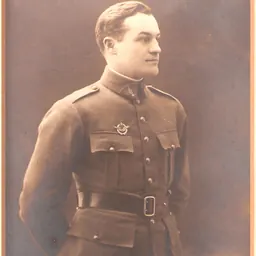
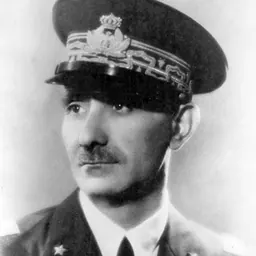
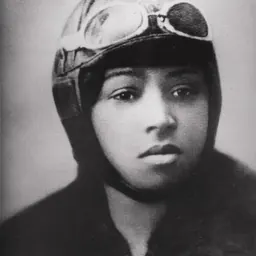
Contemporaries
People whose lives overlapped Frederick Charles Victor Laws's



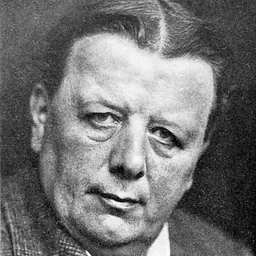
Frequently asked questions
Who was Frederick Charles Victor Laws?
British RAF officer (1887-1975)
When was Frederick Charles Victor Laws born?
Frederick Charles Victor Laws was born in 1887 in Thetford.
When did Frederick Charles Victor Laws die?
Frederick Charles Victor Laws died in 1975.
What was Frederick Charles Victor Laws's occupation?
Frederick Charles Victor Laws was an aircraft pilot.
What nationality was Frederick Charles Victor Laws?
Frederick Charles Victor Laws was British.
Sources & further reading
· Wikipedia: Frederick Charles Victor Laws
· DBpedia: Frederick Charles Victor Laws
Cite this page
APA: Biography.guide. (2026). Frederick Charles Victor Laws. https://biography.guide/frederick-charles-victor-laws/
MLA: "Frederick Charles Victor Laws." Biography.guide, https://biography.guide/frederick-charles-victor-laws/.
Chicago: "Frederick Charles Victor Laws." Biography.guide. https://biography.guide/frederick-charles-victor-laws/.
Data last updated: 2026-09-20 · Spot an error? Report a correction.
Page generated 2026-09-27 05:15 UTC