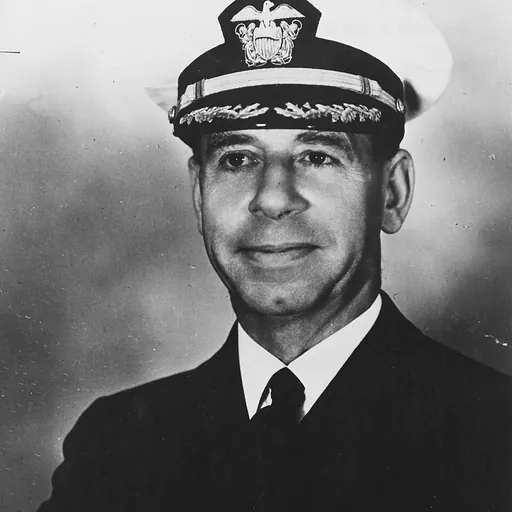
Frederick C. Sherman
United States Navy admiral, aviator and submarine commander
About Frederick C. Sherman
Lived 1888 – 1957 (aged 69). Frederick C. Sherman was an American military officer and submariner.
Frederick Carl Sherman (27 May 1888 – 27 July 1957) was a highly decorated admiral of the United States Navy during World War II.
Early life Sherman was born in Port Huron, Michigan on 27 May 1888. His grandfather, Loren Sherman, was the longtime editor and publisher of The Daily Times in Port Huron. His father, Frederick Ward Sherman, sold the newspaper in 1907 and moved to California, where he was editor and publisher of The Daily Independent in Santa Barbara in 1911.
Naval career Sherman graduated from the United States Naval Academy in 1910. He served as commanding officer of submarines and during World War I.
After becoming a naval aviator, Sherman served as executive officer of in 1937, and of Naval Air Station San Diego to 1938. He commanded from 1940 until her loss in the Battle of the Coral Sea. Captain Sherman was the last man to leave the sinking ship. His wife wrote a book titled Admiral Wags which told the story of the family cocker spaniel who accompanied Sherman during his command of Lexington. The dog can be seen in war footage used in the John Wayne movie In Harm's Way. Promoted to rear admiral, Sherman served as assistant chief of staff to Commander in Chief Atlantic Fleet, Admiral Ernest King until the end of 1942. He served in the Fast Carrier Task Force, as Commander, Carrier Division 2 in 1943, and as Commander, Task Group 38.3 in 1944–45.
Sherman was a three-time recipient of the Navy Cross. Promoted to vice admiral in 1945, he became Commander, United States Fifth Fleet before retiring in 1947. Upon retirement, he was promoted to admiral on the retired list.
Later life and legacy Sherman wrote Combat Command, a history of the Pacific Theater of World War II, drawing on his personal experiences. Combat Command was published in 1950 by E.P. Dutton Inc, and again by Bantam Books in 1982.
Sherman appeared on the Groucho Marx radio game show You Bet Your Life on January 4, 1950, where he mentioned his greatest thrill as being on the bridge of the in Tokyo Bay, watching the Japanese sign surrender terms at the end of World War II. He and a recent naval recruit contested the major prize of $1000 but were unsuccessful.
Sherman died on 27 July 1957 in San Diego, California. The Frederick C. Sherman Field on nearby San Clemente Island was dedicated in his honor on 11 January 1961.
Decorations Here is the ribbon bar of Vice Admiral Frederick C. Sherman:
Don’t just read it —
keep it.
Full-length biographies made to live with: read them, listen on the way to work, watch them tonight.
- E-book
- Audio
- Video
Instant download · yours to keep · every purchase keeps this site free
Important facts
People in Frederick C. Sherman's life
Named in this biography and alive at the same time




Related people
Same field, nearest in time



Contemporaries
People whose lives overlapped Frederick C. Sherman's


Frequently asked questions
Who was Frederick C. Sherman?
United States Navy admiral, aviator and submarine commander (1888–1957)
When was Frederick C. Sherman born?
Frederick C. Sherman was born on 27 May 1888 in Michigan.
When did Frederick C. Sherman die?
Frederick C. Sherman died on 27 July 1957 in San Diego.
What was Frederick C. Sherman's occupation?
Frederick C. Sherman was a military officer and submariner.
What nationality was Frederick C. Sherman?
Frederick C. Sherman was American.
Sources & further reading
· Wikipedia: Frederick C. Sherman
· DBpedia: Frederick C. Sherman
Cite this page
APA: Biography.guide. (2026). Frederick C. Sherman. https://biography.guide/frederick-c-sherman/
MLA: "Frederick C. Sherman." Biography.guide, https://biography.guide/frederick-c-sherman/.
Chicago: "Frederick C. Sherman." Biography.guide. https://biography.guide/frederick-c-sherman/.
Data last updated: 2026-09-21 · Spot an error? Report a correction.
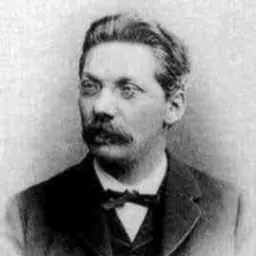
Portrait: Wikimedia Commons · author & licence
Page generated 2026-09-27 05:00 UTC