
Frederick Balsir Chatterton
Manager of the Theatre Royal, Drury Lane
About Frederick Balsir Chatterton
Lived 1834 – 1886 (aged 51–52).
Frederick Balsir Chatterton, known as F. B. Chatterton (17 September 1834– 18 February 1886) was a 19th-century British theatre manager and impresario who was lessee of the Theatre Royal in London's Drury Lane from 1866 to 1879. He is credited with originating the famous quote, "Shakespeare spelt ruin and Byron bankruptcy".
Early life
He was born in London in 1834, the son of Edward Andrew Chatterton (c1809–1875), and his wife Amelia née Field (c1810–1886). He came from a musical family: his grandfather John Chatterton was 'professor of music' at Portsmouth and who with his wife Mary née Callow had eight sons and three daughters. Earlier in life John Chatterton had inherited and spent a large fortune and not wanting the same thing to happen to his sons decided that at least three of them should become successful harpists. Two, the oldest and youngest - John Balsir Chatterton and Frederick Chatterton, followed their father's wishes. However, Edward Andrew Chatterton, the second son and Frederick Balsir Chatterton's father, did not wish to follow his father's plan and instead became, at various times, a music publisher, a seller of musical instruments and a box book-keeper at Sadler's Wells Theatre. Edward Chatterton wished for a better career for his own son and wanted him to follow the family tradition of harp-playing, and with whom he had at least two daughters and a son. Frederick Chatterton then took over the management of the Theatre Royal in Rochester in Kent for the 1860–61 season but this was a financial disaster and leaving his with so little money that in January 1861 he had to walk back to London. Later in 1861 he rejoined Falconer at the Lyceum, whose 1861 play Peep O'Day played at the theatre from November 1861 to December 1862 - the longest run known in London up to that time. Despite this success in 1863 the owner of the Lyceum gave the lease to the French actor Charles Fechter and dispensed with the services of Falconer and Chatterton. Chatterton hired the Shakespearian actor Samuel Phelps as leading actor and director of productions at Drury Lane. In October 1863 Phelps opened in an adaptation of Byron's Manfred, which ran for nearly 100 performances. Chatterton added:
I was now able to realise the dream of my life — to restore Old Drury to its position as the home of the poetic drama, from which it had been deposed by E. T. Smith.
In March 1864 Phelps appeared as Falstaff Henry IV, Part 1, Chatterton's first Shakespearian production. It has been claimed that Chatterton hired Phelps for a weekly salary of £80, a figure which does not match Chatterton's comment that Phelps was "the greatest and cheapest feature we ever had." Edward Stirling states that Phelps received £80 and at other times £100 a week, but it is unclear if he did so throughout his entire run.
By this time Chatterton was managing the Theatre Royal single-handed, his partner Falconer never having had any sense of business and who was also drinking heavily. In March 1864 the two became joint lessees with an equal share of the profits. In 1866 the partners had a disagreement, following which Falconer was declared bankrupt and Chatterton took over as sole lessee, opening on 23 September 1866 with Samuel Phelps in King John. However, putting on Shakespeare plays did not show a profit so at the end of the 1866–7 season Chatterton put on The Great City, a melodrama about life in contemporary London by Andrew Halliday which ran for 102 performances. by producing extravagant stage versions of the works of Sir Walter Scott adapted by Halliday. The first was The Fortunes of Nigel, produced on-stage as King of Scots and which opened on 27 September 1868 with Samuel Phelps as James I. Proving a financial success, it was followed by further Halliday adaptations of Scott including Amy Robsart (1870 based on Kenilworth; and Rebecca (1871) adapted from Ivanhoe, all of which proved popular with audiences. In August 1869 Chatterton produced the melodrama Formosa by Dion Boucicault. Including a scene of the Oxford and Cambridge boat race onstage it ran for 117 performances. However, although successful the play proved controversial, mainly because one of the female characters was said to have been based on an actual London prostitute. Boucicault kept publicity going for the play by writing pseudonymous letters to the newspapers criticising his own play. Responding to the criticism in a letter published in The Times - ostensibly written by Chatterton but actually written by Boucicault - 'Chatterton' pointed out that in his experience of running the Theatre Royal, "Shakespeare spelt ruin and Byron bankruptcy". This generated fresh publicity that Chatterton was not fit to be managing what was widely regarded as Britain's national theatre.
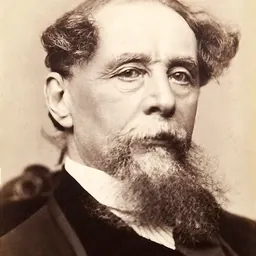
Last years For the rest of his life Chatterton lived in increasing financial difficulty and frequently relied on the charity of members of the theatrical community. For the 1879–80 season the Gatti Brothers made him manager of the Theatre Royal in Covent Garden but heavy snowstorms kept audiences away and the pantomime failed. Chatterton then argued with the Gattis over the terms of his benefit and left Covent Garden. He became manager of Sadler's Wells Theatre but here too his management failed. For a period he was reduced to teaching elocution and acting and gave public readings of the works of Charles Dickens, but largely he relied on benefit performances for financial support.
His biography Shakespeare Spelt Ruin: The Life of Frederick Balsir Chatterton, Drury Lane's Last Bankrupt by Robert Whelan was published in 2019.
Don’t just read it —
keep it.
Full-length biographies made to live with: read them, listen on the way to work, watch them tonight.
- E-book
- Audio
- Video
Instant download · yours to keep · every purchase keeps this site free
Important facts
People in Frederick Balsir Chatterton's life
Named in this biography and alive at the same time





Contemporaries
People whose lives overlapped Frederick Balsir Chatterton's





Frequently asked questions
Who was Frederick Balsir Chatterton?
Manager of the Theatre Royal, Drury Lane (1834–1886)
When was Frederick Balsir Chatterton born?
Frederick Balsir Chatterton was born in 1834.
When did Frederick Balsir Chatterton die?
Frederick Balsir Chatterton died in 1886.
Sources & further reading
· Wikipedia: Frederick Balsir Chatterton
Cite this page
APA: Biography.guide. (2026). Frederick Balsir Chatterton. https://biography.guide/frederick-balsir-chatterton/
MLA: "Frederick Balsir Chatterton." Biography.guide, https://biography.guide/frederick-balsir-chatterton/.
Chicago: "Frederick Balsir Chatterton." Biography.guide. https://biography.guide/frederick-balsir-chatterton/.
Data last updated: 2026-09-20 · Spot an error? Report a correction.
Page generated 2026-09-27 05:33 UTC