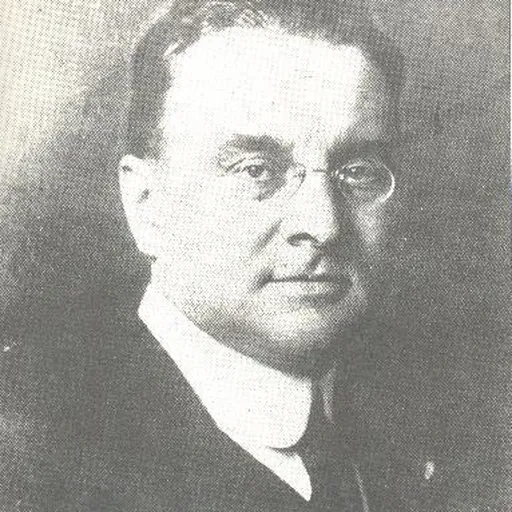
About Frederick Arthur McKenzie
Lived 1869 – 1931 (aged 61–62). Frederick Arthur McKenzie was a journalist and writer.
Frederick Arthur MacKenzie (1869–1931) was a Canadian journalist that covered several geopolitical developments in East Asia in the early 20th century. He was one of the few Western journalists to cover the Russo-Japanese War from the Japanese side and the Korean resistance against Japan during the Japanese occupation of Korea.
He briefly contributed to the Pall Mall Gazette, and then for several years he worked with the Daily Mail as a travelling correspondent in East Asia. His last book was on religious persecution in Soviet Russia.
In 2014, he was posthumously awarded the Order of Merit for National Foundation by the Korean Government.
Career
Russo-Japanese War As a war correspondent for the Daily Mail, Frederick A. MacKenzie registered the Russo-Japanese War. During these years, he travelled to Korea and Manchuria with American writers Jack London
MacKenzie exalted the Japanese soldiers that fought in the war. He praised their education and observed the soft treatment given to captured Russian officers. He also remarked about the ability of Japanese soldiers to stand prolonged exertion.
Covering Korean resistance alt=Korean Rebels of the Righteous Army. Photo taken by F. A. McKenzie. Korean Rebels of the Righteous Army. Photo taken by F. A. MacKenzie. MacKenzie returned to England after the Russo-Japanese War, but he visited Korea again to cover the Japanese intervention in the peninsula. He stayed in the Korean Empire for almost two years, from the summer of 1906 to the end of 1907. During that time, he wrote about King Sunjong's coronation ceremony in July 1907, the righteous armies, and British journalist Ernest Thomas Bethell's deportation.
Frederick MacKenzie eyewitnessed the abuse of Japanese forces on his way to Icheon, despite Japan's attempts to obstruct the work of foreign journalists. He went to Chungju, Chungcheongbuk-do Province, where he met the righteous army soldiers in person.
MacKenzie took the only remaining photos of the righteous armies of Korea. He described their integrants as an example of what patriotism was, with "sparkling eyes and smiles". American Invaders, 1902 From Tokyo to Tiflis: Uncensored Letters from the War, Hurst and Blackett, 1905 The Unveiled East, Hutchinson & Co., London, 1907 The Tragedy of Korea, 1908 The Colonial Policy of Japan in Korea, 1906 The Peace Conference - The Claim of the Korean People and National Petition, April 1919 Korea's Fight For Freedom, 1920 Pussyfoot Johnson: Crusader, Reformer, a Man Among Men, 1920 (about William E. Johnson) .
Don’t just read it —
keep it.
Full-length biographies made to live with: read them, listen on the way to work, watch them tonight.
- E-book
- Audio
- Video
Instant download · yours to keep · every purchase keeps this site free
Important facts
People in Frederick Arthur McKenzie's life
Named in this biography and alive at the same time
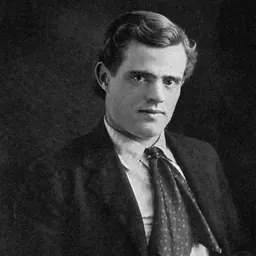


Related people
Same field, nearest in time
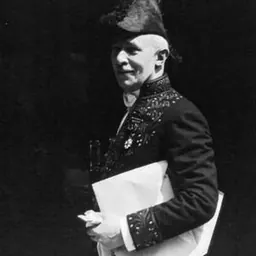
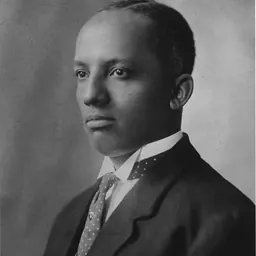


Contemporaries
People whose lives overlapped Frederick Arthur McKenzie's



Frequently asked questions
Who was Frederick Arthur McKenzie?
Canadian journalist (1869–1931)
When was Frederick Arthur McKenzie born?
Frederick Arthur McKenzie was born in 1869 in Quebec.
When did Frederick Arthur McKenzie die?
Frederick Arthur McKenzie died in 1931.
What was Frederick Arthur McKenzie's occupation?
Frederick Arthur McKenzie was a journalist and writer.
Sources & further reading
· Wikipedia: Frederick Arthur McKenzie
· DBpedia: Frederick Arthur MacKenzie
Cite this page
APA: Biography.guide. (2026). Frederick Arthur McKenzie. https://biography.guide/frederick-arthur-mckenzie/
MLA: "Frederick Arthur McKenzie." Biography.guide, https://biography.guide/frederick-arthur-mckenzie/.
Chicago: "Frederick Arthur McKenzie." Biography.guide. https://biography.guide/frederick-arthur-mckenzie/.
Data last updated: 2026-09-21 · Spot an error? Report a correction.
Portrait: Wikimedia Commons · author & licence
Page generated 2026-09-27 05:01 UTC