
About Frederick Akbar Mahomed
Lived 1849 – 1884 (aged 35). Frederick Akbar Mahomed was a physician.
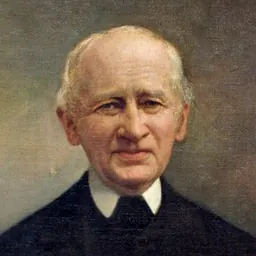
Frederick Henry Horatio Akbar Mahomed (11 April 1849 – 22 November 1884) was an internationally known British physician from Brighton, England.
Family and personal life Frederick Henry Horatio Akbar Mahomed was born on 11 April 1849 in Brighton. He was the eldest son of Frederick Mahomed (1818–1888) and his second wife, Sarah Hodgkinson (1816–1905). He was also the grandson of the pioneering Indian traveller, author and entrepreneur Sake Dean Mahomed who was born in the city of Patna. Frederick Akbar Mahomed's father, Frederick Mahomed, ran a fencing, gymnastics and callisthenics academy in Hove, which included boxing instruction. attributing this to a confusion of Mahomed's father Frederick with his uncle, Arthur. Mahomed had three brothers (Arthur George Suleiman, James Deen Kerriman and Henry), and one sister (Adeline). He was educated privately in Brighton prior to attending medical school.
On June 14, 1873, at the parish church of St Nicholas', Brighton, Mahomed married Ellen (Nellie) Chalk. The couple had two children, a son, Archibald in 1874 and a daughter, Ellen in 1876. Only a month after the birth of Ellen in 1876, his wife, Ellen, died suddenly of sepsis and Mahomed and his family moved in with his uncle, Horatio, also a widower, in Seymour Street near Portman Square, London. They lived at 12 St Thomas Street, close to Guy's Hospital. The couple had two daughters, Dorothy in 1880, and Janet in 1881, and a son, Humphry in 1883. In 1884 the family moved from St Thomas' Street into a six-story Georgian house at 24 Manchester Square. Sadly, later that year, Mahomed contracted typhoid fever, presumably from a patient at the London Fever Hospital, where he was working. He died on 22 November 1884 from an intestinal hemorrhage and a perforated intestine. On his death a subscription was set up to assist his family and several notable physicians, including Sir William Gull, Sir Samuel Wilks, Sir James Paget and Elizabeth Garrett Anderson, contributed. His oldest son, Archibald, later became a doctor, and in 1914 Archibald and the rest of the family changed their name to Deane (possibly acknowledging Frederick's grandfather's name, Deen) to lessen the impact of the xenophobia and racial prejudice associated with the outbreak of the World War I. He was an outstanding student and, in 1871, won the student Pupils' Physical Society prize for his work on the sphygmograph, having been runner-up the previous year. Following his graduation in the same year, Mahomed took up an appointment at the Central London Sick Asylum, where he worked with Sir William Broadbent, who became a strong supporter and friend. Mahomed used the new sphygmograph to measure arterial tension (blood pressure) in Bright's disease and a range of other conditions, including pregnancy, scarlet fever, gout, alcohol and lead poisoning. He found that in some individuals blood pressure was elevated before there was evidence of kidney disease, assessed by measurement of protein in the urine (proteinuria). He also made the association between the elevated blood pressure and various post-mortem changes, including enlargement of the heart (cardiac hypertrophy), thickening and fibrosis of the arterial wall, aneurysm formation, and damage to the microcirculation (arterio-capillary fibrosis). In effect, Mahomed was describing most of the key pathological effects of essential hypertension for the first time. Initially he termed this condition "Bright's disease without albuminuria" but later he described it as “high pressure diathesis”. His description of the condition is worth citing:‘…the existence of this abnormally high pressure does not necessarily mean disease, but only a tendency towards disease. It is a functional condition, not necessarily a permanent one, though it is generally more or less so in these individuals. These persons appear to pass on through life pretty much as others do… As age advances the enemy gains accessions of strength; perhaps the mode of life assists him—good living and alcoholic beverages make secure his position, or head work, mental anxiety, hurried meals, constant excitement, inappropriate or badly cooked food, or any other of the common but undesirable circumstances of everyday life, tend to intensify the existing condition, or, if not previously present, perhaps produce it. Now under this greatly increased arterial pressure, hearts begin to hypertrophy and arteries to thicken; what has previously been a functional condition tends to become more of the nature of an organic one…’ He wrote to the British Medical Journal to advocate undertaking the comprehensive systematic documentation of disease in Britain; he termed this idea, Collective Investigation. Mahomed’s proposals were warmly supported by Sir George Murray Humphry, the President of the British Medical Association, and a Collective Investigation Committee was formed in 1881 with Mahomed as secretary. Around this time Mahomed became acquainted with the British polymath, Francis Galton, who shared an interest in factors predisposing to disease. Mahomed and Galton collaborated to produce composite photographs of over 400 patients with phthisis (tuberculosis), which they compared with composite photographs based on 200 individuals without evidence of phthisis to test whether, as was widely believed, appearance or looks indicated a predisposition to disease. They found no evidence of a characteristic facial appearance associated with tuberculosis beyond some evidence of emaciation.
In 1882 Mahomed advocated expanding Collective Investigation to include a general collection of detailed family life histories:
Contribution Michael F. O'Rourke summarizes the contributions of Frederick Akbar Mahomed as follows:
Don’t just read it —
keep it.
Full-length biographies made to live with: read them, listen on the way to work, watch them tonight.
- E-book
- Audio
- Video
Instant download · yours to keep · every purchase keeps this site free
Important facts
People in Frederick Akbar Mahomed's life
Named in this biography and alive at the same time



Related people
Same field, nearest in time



Contemporaries
People whose lives overlapped Frederick Akbar Mahomed's



Frequently asked questions
Who was Frederick Akbar Mahomed?
British doctor (1849–1884)
When was Frederick Akbar Mahomed born?
Frederick Akbar Mahomed was born on 11 April 1849 in Brighton.
When did Frederick Akbar Mahomed die?
Frederick Akbar Mahomed died on 22 November 1884.
What was Frederick Akbar Mahomed's occupation?
Frederick Akbar Mahomed was a physician.
Sources & further reading
· Wikipedia: Frederick Akbar Mahomed
· DBpedia: Frederick Akbar Mahomed
Cite this page
APA: Biography.guide. (2026). Frederick Akbar Mahomed. https://biography.guide/frederick-akbar-mahomed/
MLA: "Frederick Akbar Mahomed." Biography.guide, https://biography.guide/frederick-akbar-mahomed/.
Chicago: "Frederick Akbar Mahomed." Biography.guide. https://biography.guide/frederick-akbar-mahomed/.
Data last updated: 2026-09-24 · Spot an error? Report a correction.
Page generated 2026-09-27 05:06 UTC