
About Fray Martín de Murúa
Lived 1525 – 1618 (aged 92–93). Fray Martín de Murúa was a Spanish historian, monk, cleric and chronicler.
Martín de Murúa, O. de M., ( in Gipuzkoa, Spain – in Spain) was a Basque Mercedarian friar and chronicler of the Spanish conquest of the Americas. He is primarily known for his work Historia general del Piru (written ), which is considered the earliest illustrated history of Peru.
Murúa's career in Peru Murúa volunteered to serve in the missions of New Spain, where he was sent by his superiors and arrived in Peru in the early 1580s. He is known to have lived in the Curahuasi Valley around that period. He later traveled throughout the Viceroyalty of Peru as a missionary, serving in the proximities of Lake Titicaca and Cuzco, where he came to know some features of the inhabitants of the former Inca Empire well. From about 1595 to 1601 his residence was at the Mercedarian Monastery of St. John Lateran in Arequipa.
In addition to his missionary work, Murúa gathered data to write a history of the Andean past. He was assisted in his translation of the date from the Quechua language by a native Inca nobleman Felipe Guamán Poma de Ayala (also known as Guamán Poma), who provided over 100 illustrations of great historical significance for the work, but who was later highly critical of Murúa's depiction of Inca history in his own writings.
In 1611, Murúa made the decision to return to Spain. He chose, however, not to take the usual route, by way of Panama. Instead, he traveled across the Amazon Forest, crossing the Andes, arriving in La Plata (today Sucre). After a lengthy stay, from there he went on to Potosí and then to the Tucumán region. All along the way, he took the opportunity to have the local religious and government authorities review his work for comment and correction. He eventually passed through Córdoba and arrived in Buenos Aires, from which he set sail for Spain in 1615.
The following year, while living in Madrid, Murúa received the necessary authorizations from both his Order and the king to publish his chronicle, entitled Historia general del Piru. The work covers Peru's pre-Columbian and early Spanish colonial history. In his Historia, Murúa wrote of the presence of a number of mythological creatures in South America, such as Amazons and giants, which gave rise to the names of many geographical landmarks of the continent.
The Galvin and Getty manuscripts Illustration made by Martín de Murúa showing the Sapa Inca Pachakutiq worshipping Inti (sun God) in the Coricancha, in his second chronicle Libro segundo, del gobierno que los Yngas tubieron en este reino y ritos y ceremonias que guardaban. (Second book, of the government that the Incas had in this kingdom and rites and ceremonies that they kept.), manuscript completed in 1613 . There exist two versions of the Historia general del Piru: the Galvin Murúa (also known as the "Loyola Murúa") and the Getty Murúa (also known as the "Wellington Murúa"). The former is kept in a private collection in Ireland while the latter is at the Getty Research Institute in Los Angeles, California. The original as well as a facsimile of the Galvin Murúa are available at the Getty Center for consultation by qualified scholars.
The Galvin Murúa dates from the 1580s and was completed around 1600. This first version of the chronicle was compiled in Peru by Murúa with the assistance of local scribes and Indigenous artists (one of whom was Felipe Guaman Poma de Ayala). By the 18th century, the Galvin Murúa ended up in the possession of the Jesuit College in Alcalá de Henares, Spain. Between 1879 and 1900, the manuscript was housed in a Jesuit enclave in Poyanne, France. Its association with the Jesuits gave the manuscript its title the "Loyola Murúa" (after St. Ignatius of Loyola, founder of the Jesuit Order). In the 1950s, the manuscript was bought by a rare bookseller in San Francisco, California and resold to the late John Galvin (d. 1996), a European aristocrat and private collector. The text remains in the hands of the Galvin family in County Meath, Ireland.
The Getty Murúa dates from 1615 to 1616 and was the second version of the chronicle. Most of the text was compiled in Peru and present-day Bolivia, although it was most likely re-edited in Spain. This version received the final approbation for printing, however for unknown reasons it remained unpublished during the seventeenth century. Once in Spain, the manuscript was somehow acquired by Castilian statesman and bibliophile Lorenzo Ramirez de Prado. After Ramirez's death in 1658, it was incorporated into the library of the Colegio Mayor de Cuenca in Salamanca and finally the private library of King Charles IV of Spain in 1802. As a result of the Peninsular War, it came into the possession of Arthur Wellesley, 1st Duke of Wellington. Thus the manuscript acquired the title the "Wellington Murúa." It was later sold at auction to a collector in Cologne, Germany, changing hands once more before its "rediscovery" by Manuel Ballesteros Gaibrois in the early 1950s. Ballesteros Gaibrois published a two volume edition of Historia general del Piru in 1962 and 1964. In 1983, the manuscript was sold to the Getty Research Institute. Since then it has been known as the "Getty Murúa."
Research has proven that several images (including two by Guaman Poma) from the Galvin Murúa were removed and pasted into the Getty Murúa, although overall the Galvin Murúa contains more images than its counterpart. The images in both manuscripts were colored using paints, dyes, and silver from the Americas and Europe. An exhaustive study of both manuscripts was funded by the Getty Research Institute in 2007–2008.
Murúa's Historia general del Piru (1616)
Murúa's chronicle is divided into three books. The following is the complete title of the work:
Historia General del Pirú. Origen y descen dencia de los Incas, donde se trata de las guerras civiles Ingas como de la entrada de los españoles Descripción de las ciudades y lugares del, con otras cosas notables, compuesto por el Muy rdo. Fr. Martín de Murúa, elector genl. del orden de nra. Sa de las mds. Rra de captious, comor y cura de Hunata.
The first book is divided into 92 chapters and contains the following:
(I) Libro del Origen y descendencia de los Ingas. Señores deste Reyno del Pirú donde se ponen las conquistas que hizieron de differentes probinc ias Y Naciones y Guerras civiles hasta la entra da De los Españoles, con su modo de governar cond ción y trato y la descripción de las más prinsi pales Ciudades y Villas de esta amplisima provincia.
The second book has 40 chapters and includes the following:
(II) Libro segundo, del gobierno que los Yngas tubieron en este reino y ritos y ce remonias que gardaban.
Finally, the third book contains the following in 31 chapters:
(III) Libro tersero, donde se trata, en general, y particular deste reino del Pirú, y las ciudades prins ipales y villas.
Murúa worked closely with indigenous peoples in compiling his text, incorporating their testimonies and oral accounts of Inca culture and political history into Historia general del Piru. The most striking feature of the chronicle is its numerous illustrations, which include portraits of Inca nobility and depictions of traditional ceremonies. These images blend European and indigenous artistic traditions.
Murúa and Guamán Poma Drawing (ca. 1615) by Guamán Poma de Ayala depicting the friar Morúa beating a native worker. The superimposed legend says: FRAILE MERZENARIO MORVA. son tan bravos y justicieros y mal trata a los yndios y haze trauajar con un palo en este reyno en las dotrinas no ay rremedio. (MERCENARIAN FRIAR MORÚA. are so brave and righteous (righteous or avengers) and he mistreat the Indians and he make them work with a stick in this kingdom in the doctrines there is no remedy.), El primer nueva corónica y buen gobierno. There is strong evidence that the chroniclers Guamán Poma and Martín de Murúa met and there was a close collaboration between them that later ended in rupture.
Don’t just read it —
keep it.
Full-length biographies made to live with: read them, listen on the way to work, watch them tonight.
- E-book
- Audio
- Video
Instant download · yours to keep · every purchase keeps this site free
Important facts
People in Fray Martín de Murúa's life
Named in this biography and alive at the same time
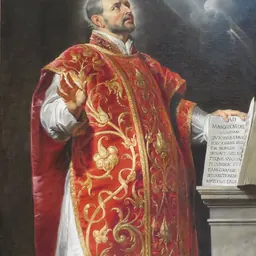
Related people
Same field, nearest in time

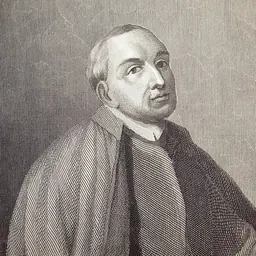

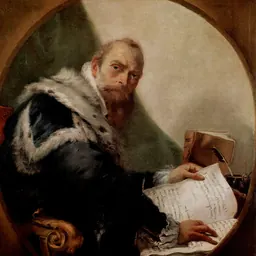
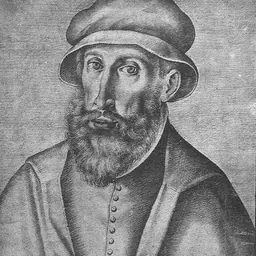
Contemporaries
People whose lives overlapped Fray Martín de Murúa's


Frequently asked questions
Who was Fray Martín de Murúa?
Spanish Mercedarian friar and missionary (1525–1618)
When was Fray Martín de Murúa born?
Fray Martín de Murúa was born in 1525 in Gipuzkoa.
When did Fray Martín de Murúa die?
Fray Martín de Murúa died in 1618 in Madrid.
What was Fray Martín de Murúa's occupation?
Fray Martín de Murúa was a historian, monk, cleric and chronicler.
What nationality was Fray Martín de Murúa?
Fray Martín de Murúa was Spanish.
Sources & further reading
· Wikipedia: Fray Martín de Murúa
Cite this page
APA: Biography.guide. (2026). Fray Martín de Murúa. https://biography.guide/fray-martin-de-murua/
MLA: "Fray Martín de Murúa." Biography.guide, https://biography.guide/fray-martin-de-murua/.
Chicago: "Fray Martín de Murúa." Biography.guide. https://biography.guide/fray-martin-de-murua/.
Data last updated: 2026-09-25 · Spot an error? Report a correction.
Page generated 2026-09-27 05:13 UTC