
Fraser Stoddart
Scottish chemist and Nobel Laureate in 2016 for the design and synthesis of molecular machines
About Fraser Stoddart
Lived 1942 – 2024 (aged 82). Fraser Stoddart was an American and British chemist and university teacher, known for Chemical Topology, Cyclodextrin Chemistry and Metal-Organic Frameworks.
Early life and education Fraser Stoddart was born in Edinburgh, Scotland, on 24 May 1942, He was brought up as a tenant farmer on Edgelaw Farm, a small community consisting of three families. Sir Fraser professed a passion for jigsaw puzzles and construction toys in his formative years, which he believed was the basis for his interest in molecular construction.
Stoddart received early schooling at the local village school in Carrington, Midlothian, before going on to Melville College in Edinburgh. He started at the University of Edinburgh in 1960 where he initially studied chemistry, physics and mathematics. for research on natural gums in Acacias supervised by Sir Edmund Langley Hirst and D M W Anderson
Career In 1967, Stoddart went to Queen's University (Canada) as a National Research Council Postdoctoral Fellow. In 1970 he moved to the University of Sheffield as an Imperial Chemical Industries (ICI) Research Fellow, before joining the academic staff as a lecturer in chemistry. In early 1978 he was a Science Research Council Senior Visiting Fellow at the University of California, Los Angeles (UCLA) Department of Chemistry and Biochemistry. Later in 1978, he was transferred to the ICI Corporate Laboratory in Runcorn, England where he first started investigating the mechanically interlocked molecules that would eventually become molecular machines. At the end of the three year secondment he returned to Sheffield for his research into stereochemistry beyond the molecule. In 1990, he moved to the Chair of Organic Chemistry at the University of Birmingham and was Head of the School of Chemistry there (1993–97) before moving to UCLA as the Saul Winstein Professor of Chemistry in 1997, succeeding Nobel laureate Donald Cram.
In 2008, Stoddart established the Mechanostereochemistry Group and was named Board of Trustees Professor in Chemistry at Northwestern University. He went on to be the Director of the Center for the Chemistry of Integrated Systems (CCIS) at Northwestern University in 2010.
In 2017, Stoddart was appointed a part-time position at the University of New South Wales to establish his New Chemistry initiative at the UNSW School of Chemistry.
In 2019, Stoddart introduced a skincare brand called Noble Panacea.
In 2021, Stoddart co-founded a startup called H2MOF, dedicated to solving the challenges associated with hydrogen storage and transportation.
In 2023, Stoddart joined the University of Hong Kong as Chair Professor of Chemistry. His group reported the synthesis of an advanced mechanically interlocked molecular architecture called molecular Borromean rings through the use of dynamic covalent chemistry. The efficient procedures developed to synthesize these molecular architectures was applied to the construction of molecular switches that operate based on the movement of the various components with respect to one another. These interlocked molecules have potential uses as molecular sensors, actuators, amplifiers, and molecular switches, and can be controlled chemically, electrically, and optically.
His work bridged the gap between chemistry and the scientific and engineering challenges of nanoelectromechanical systems." He has demonstrated that such devices can be fabricated using a combination of the bottom-up approach of molecular self-assembly and a top-down approach of lithography and microfabrication.
Presentation style
Stoddart's papers and other material are instantly recognizable due to a distinctive "cartoon"-style of representation he developed beginning in the late 1980s. A solid circle is often placed in the middle of the aromatic rings of the molecular structures he has reported, and different colours to highlight different parts of the molecules. The different colours usually correspond to the different parts of a cartoon representation of the molecule, but are also used to represent specific molecular properties (blue, for example, is used to represent electron-poor recognition units while red is used to represent the corresponding electron-rich recognition units). The distinctive colouring has led to coining the term 'little blue box' for the cyclophane cyclobis(paraquat-p-phenylene); an important π-acceptor used to synthesize mechanically bonded structures.
ISI ratings Stoddart had an h-index of 168. As of 2023 he had published more than 1200 publications.
Personal life and death Stoddart was an American and British citizen. He was married to Norma Agnes Scholan from 1968
On 30 December 2024, Stoddart died from cardiac arrest at a hotel in Melbourne, Australia, where he was visiting his daughter, at the age of 82.
Philanthropy The Fraser and Norma Stoddart Prize for PhD students was established at their alma mater, the University of Edinburgh. It was first awarded in 2013.
Awards and honours Stoddart was appointed a Knight Bachelor in the New Year's Honours December 2006, by Queen Elizabeth II for Services to Chemistry and Molecular Nanotechnology.
In 2007, he received the Albert Einstein World Award of Science in recognition for his outstanding and pioneering work in molecular recognition and self-assembly, and the introduction of quick and efficient template-directed synthetic routes to mechanically interlocked molecular compounds, which have changed the way chemists think about molecular switches and machines.
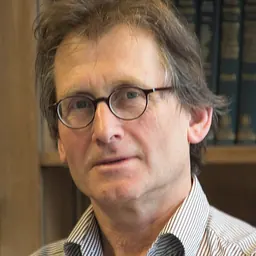
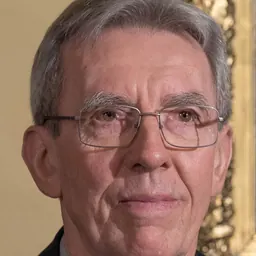
In 2016, he shared the Nobel Prize in Chemistry together with Ben Feringa and Jean-Pierre Sauvage for the design and synthesis of molecular machines. 2012 Fellowship, American Academy of Arts and Sciences, US 2011 Honorary Fellowship, Royal Society of Chemistry, UK 2008 Honorary Fellowship, Royal Society of Edinburgh, UK 2006 Appointed Knight Bachelor by HM Queen Elizabeth II, UK 2005 Fellowship, American Association for the Advancement of Science, US 1999 Fellowship, Academy of Sciences Leopoldina, Germany 1994 Elected a Fellow of the Royal Society of London, UK 2016 Nobel Prize in Chemistry 2016 Haworth Memorial Lectureship, Royal Society of Chemistry 2014 Centenary Prize Winner, Royal Society of Chemistry 2012 Distinguished Citizen Award, Illinois Saint Andrew Society, Chicago, US 2010 Royal Medal of the Royal Society of Edinburgh presented by Duke of Edinburgh 2008 Davy Medal of the Royal Society of London 2008 American Chemical Society Arthur C. Cope Award 2007 Feynman Prize in Nanotechnology (Experimental) 2007 Albert Einstein World Award of Science 2007 King Faisal International Prize in Science 2004 Nagoya Gold Medal in Organic Chemistry 1999 American Chemical Society Arthur C Cope Scholar Award 1993 International Izatt-Christensen Award in Macrocyclic Chemistry
Don’t just read it —
keep it.
Full-length biographies made to live with: read them, listen on the way to work, watch them tonight.
- E-book
- Audio
- Video
Instant download · yours to keep · every purchase keeps this site free
Important facts
People in Fraser Stoddart's life
Named in this biography and alive at the same time



Related people
Same field, nearest in time




Contemporaries
People whose lives overlapped Fraser Stoddart's



Frequently asked questions
Who was Fraser Stoddart?
Scottish chemist and Nobel Laureate in 2016 for the design and synthesis of molecular machines
When was Fraser Stoddart born?
Fraser Stoddart was born on 24 May 1942 in Edinburgh.
When did Fraser Stoddart die?
Fraser Stoddart died on 30 December 2024 in Melbourne.
What was Fraser Stoddart's occupation?
Fraser Stoddart was a chemist and university teacher.
What was Fraser Stoddart known for?
Fraser Stoddart was known for Chemical Topology, Cyclodextrin Chemistry, Metal-Organic Frameworks, Molecular shuttle, Molecular switch and Stereochemistry.
What nationality was Fraser Stoddart?
Fraser Stoddart was American and British.
Sources & further reading
Cite this page
APA: Biography.guide. (2026). Fraser Stoddart. https://biography.guide/fraser-stoddart/
MLA: "Fraser Stoddart." Biography.guide, https://biography.guide/fraser-stoddart/.
Chicago: "Fraser Stoddart." Biography.guide. https://biography.guide/fraser-stoddart/.
Data last updated: 2026-09-20 · Spot an error? Report a correction.
Page generated 2026-09-27 05:33 UTC