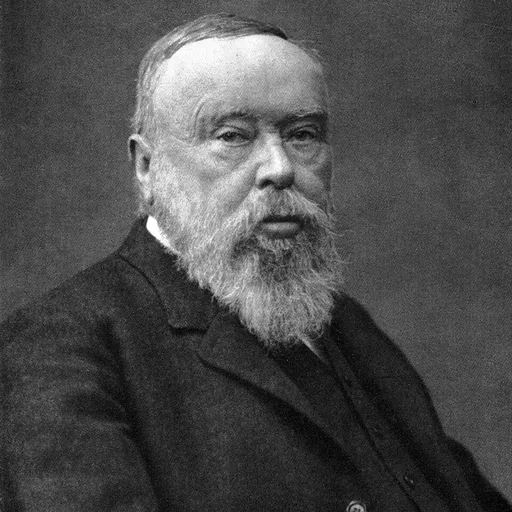
About Franz Schütte
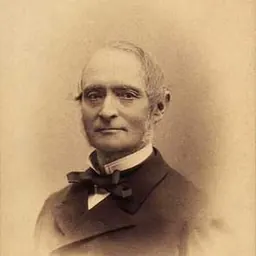
Lived 1836 – 1911 (aged 74). Franz Schütte was a German merchant and entrepreneur.
Franz Ernst Schütte (21 November 1836 – 1 February 1911) was a German entrepreneur-businessman who during his lifetime became celebrated for the extent of his wealth.
Although his business activities extended across several different sectors, including shipbuilding and land reclamation-development, it was on account of his oil importing activities, which included the establishment of the "Deutsch-Amerikanische Petroleum Gesellschaft" (DAPG / "German-American Petroleum Company") in 1890, that Schütte acquired the popular soubriquet "The Petroleum King". (The DAPG company was renamed "Esso AG" in 1950.)
In his home city Schütte is also remembered as a massively effective Bremen benefactor, both through his own donations and through his effectiveness as a fund raiser among fellow members of the city's business elite, during what was a period of unprecedented commercial expansion. The city owes its "new" city hall and its Botanical Gardens to his philanthropy, along with the rebuilding between 1888 and 1901 of the west end of Bremen Cathedral in the confident "Gothic revival" style favoured for prestigious public buildings in central and western Europe during this period.
Provenance and early years Franz Schütte was born in Bremen, the son of businessman Albrecht Nicolaus Schütte (1799–1862) by his marriage to the lawyer's daughter Louise Regine Walte (1812–1869). Franz was the eldest of his parents' five recorded children. He completed a commercial apprenticeship with the tobacco company Lüttge und Horst, and then, accompanied by his younger brother Carl, undertook a length stay in the United States in order further to expand his and his brother's business knowledge and understanding. The brothers now took over at "Handelshaus Albt. Nic. Schütte & Sohn".
The rise of "The Petroleum King" The company had made its first foray into importing and marketing petroleum – at that time principally used as a lighting fuel and lubricant - from Pennsylvania in 1858. During 1863 and 1864 the focus of the entire business switched to petroleum importation. The market grew rapidly: within it "Handelshaus Albt. Nic. Schütte & Sohn" also grew, becoming, the most important petroleum trading company in Germany by the end of the century. By 1889 there were fifteen oil tankers, and the traditional practice of storing petroleum in barrels in warehouses had been superseded by the use of large purpose-built oil-reservoirs. Over time competitors would adopt similar practices, but throughout the 1890s (and in many respects for much longer) the business retained a massive competitive advantage over putative competitors. The capital investment necessary was massive, but once the investment had been made, the company seems to have been extraordinarily lucrative for its owners, both in Germany and internationally. The DAPG company was renamed "Esso AG" in 1950. The next year saw the foundation in Venice of the "Società italo-americana del petrolio" (SIAP) by Benedetto Walter, jointly with Rockefeller. Three years later the "Petroleum Import Compagnie" (PICO) company was established with equivalent objectives in Zürich. The German and Italian companies both held significant shareholdings in the Swiss company, and all three worked closely together. The ownership structures of these and other companies set up with financial backing from Rockefeller, becoming increasingly complex between 1890 and 1910 in ways that combined cross-shareholdings with increasingly effective centralised coordination from New Jersey. Italian, Swiss and German companies would all be rebranded during the twentieth century with the "Esso" name.
Shipbuilding and related enterprises In 1893 Schütte purchased the Shipyard at Vegesack which had been set up after 1805 by Johann Lange. With others, he used the site to set up what now became the "Bremer Vulkan Schiffbau und Maschinenfabrik in Vegesack" with an initial share capital of 300,000 marks. The new company was added as a Public Limited Company the Bremen companies register on 23 October 1893. Franz Schütte was the largest investor, with 20% of the share capital. Another major shareholder, with 8% of the company, was the ambitious engineer Victor Nawatzki, who was installed to run the business as "Generaldirektor", a position he would fill with conspicuous success through two decades of profitable expansion before assuming the chairmanship of the supervisory board. Schütte himself held the chairmanship of the supervisory board during the early years. The business remained profitable through much of the twentieth century, but then, following two decades of mergers, acquisitions and increasingly frantic restructuring across the European shipbuilding sector, collapsed in a high-profile bankruptcy in 1996/97.
Other businesses Schütte founded in the 1890s included the "Bremen-Vegesacker-Heringsfischereigesellschaft". In 1896 he teamed up with Friedrich Bischoff to set up the Argo Steamship company which concentrated on routes connecting Bremen with Scandinavia and the Levant. In 1899 Bremer Vulkan delivered Argo's first passenger ship, the eleven-passenger steam yacht Andrej Perwoswannij, designed and built for a long-term charter to the imperial Russian government.
Political involvement and other activities Schütte joined the Bremen Chamber of Commerce in 1869, serving as its "Präses" (president) between 1876 and 1878. He used this as an opportunity to focus on the transport challenges facing Bremen and northern Germany more broadly.
In 1881 he took on the role of "Bauherr" for building and maintenance of the city's churches and especially, in this instance, for the cathedral, which had become degraded, through the passage of time, and through neglect. He pushed through a number of important restoration projects, securing the necessary funding and then personally overseeing planning and construction in respect of the more important ones.
Schütte became a member of the executive committee for the association looking after the city's parks and other open important spaces in 1876. Between 1877 and 1911 he chaired the association.
For not quite twelve years, between 1867 and 1878, he served as a member of the Bremen state parliament ("Bürgerschaft"). Three years after unification, in 1874, he also became Bremen's representative at the "Hanseatische Handelsstand" trade bureau, which now lobbied the government in Berlin to sustain that commitment to the international free trade under which the northern sea ports had prospered under the North German Confederation.
Bremen benefactor Construction of the two towers at the west end of Bremen Cathedral and the repainting and decoration of the building's interior were funded by Schütte, partly out of his own pocket and partly through his fundraising activities. The stump of the south tower, which had collapsed in 1638, was completely removed in order that a stable replacement tower could be erected. It is thought some of the lower portions of the north tower were probably retained, with only the higher part of the tower needing to be rebuilt. The restoration was based on surviving images and technical drawings from the seventeenth century, but a certain amount of interpretation was also involved. Between 1888 and 1901 Schütte devoted considerable time and energy to funding and oversight of the restoration and reconstruction project.
In 1904 Schütte made a plot of land of slightly more than by the Osterdeich available for a term of 25 years for the creation of a Botanical Garden alongside the river on the edge of the city. The garden was set out by the young botanist Friedrich August Georg Bitter and the Swiss horticulturalist Ernst Nußbaumer. It opened in 1905 to widespread acclaim, with Bitter as its first director. Bitter later moved on to a professorship in Botany at Göttingen while Nußbaumer stayed in Bremen to progress the project. Unfortunately progress was halted and maintenance was neglected during the First World War: in 1923 - twelve years after the death of the original benefactor - the city took over the funding for its maintenance. Twelve years after that, in 1935, the Botanical Garden was relocated entirety to its present site, where it had been expanded to its present 3extent by approximately 1950.
In 1891 Schütte submitted proposals for the construction of a new and enlarged city hall. He commissioned detailed plans from Max Salzmann, the architect who, having won a competition for the contract, was already working on the comprehensive restoration of the northern facade of the city's cathedral across the former market square from the proposed site of the city hall extension. These plans were never implemented, so Schütte took a more direct approach with the senators. He purchased the plot of land in question from the city authorities for 2,500,000 marks, but included in the purchase contract the express condition that the city authorities must use the money to build the new administrative building as an extension to the existing city hall. Construction took place, following extensive wrangling, between 1909 and completion in 1913.
Schütte also took the lead, alongside the city's mayor Alfred Dominicus Pauli, in fund-raising for Bremen's Bismarck monument. A committee created to oversee the project held its first meeting just three weeks after the former Chancellor's death in 1898. When 207,000 Marks that had been collected were lost because of a bank collapse it was Schütte, supported by senators and fellow merchants, who managed within 48 hours to amass a sum equivalent to the monies lost through the failure of the "Stephan Lürman & Sohn" bank. He also commissioned and donated various slightly more discreetly located monumental fountains and statues to the city such as the Turmbläserbrunnen (loosely, "hornblowers fountain") by the cathedral and the "Rosselenker" (statue of a naked man with a horse) commissioned from Tuaillon, and placed by the city's medieval ramparts (now a focus of a city park).
Despite the extent of his charitable giving while alive, Schütte still died a formidably wealthy man. There is no mention in sources of his having married or fathered any children, though by the time of his death he had nieces and nephews in abundance. Five years after he died, in 1916, his heirs set up the "Franz Schütte Foundation" which continues to fund a range of education and arts-related projects, targeting in particular young people with exceptional talents but without the money necessary to develop these properly.
1901: Bremen Medal of Honour in gold. The tree-lined Franz-Schütte-Allee (street) in Bremen-Oberneuland is named in his honour.
Don’t just read it —
keep it.
Full-length biographies made to live with: read them, listen on the way to work, watch them tonight.
- E-book
- Audio
- Video
Instant download · yours to keep · every purchase keeps this site free
Important facts
People in Franz Schütte's life
Named in this biography and alive at the same time

Related people
Same field, nearest in time


Contemporaries
People whose lives overlapped Franz Schütte's




Frequently asked questions
Who was Franz Schütte?
German merchant and entrepreneur (1836-1911)
When was Franz Schütte born?
Franz Schütte was born on 21 November 1836 in Bremen.
When did Franz Schütte die?
Franz Schütte died on 11 February 1911 in Bremen.
What was Franz Schütte's occupation?
Franz Schütte was a merchant and entrepreneur.
What nationality was Franz Schütte?
Franz Schütte was German.
Sources & further reading
· DBpedia: Franz Ernst Schütte
Cite this page
APA: Biography.guide. (2026). Franz Schütte. https://biography.guide/franz-schutte/
MLA: "Franz Schütte." Biography.guide, https://biography.guide/franz-schutte/.
Chicago: "Franz Schütte." Biography.guide. https://biography.guide/franz-schutte/.
Data last updated: 2026-09-22 · Spot an error? Report a correction.
Portrait: Wikimedia Commons · author & licence
Page generated 2026-09-27 05:03 UTC