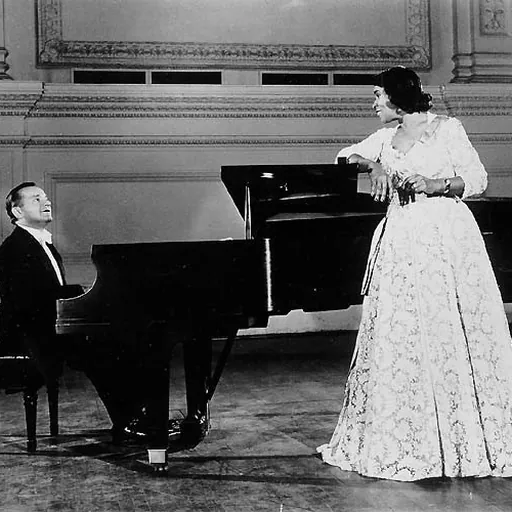
About Franz Rupp
Lived 1901 – 1992 (aged 91). Franz Rupp was a German pianist, music educator and musician.
Franz Rupp (February 24, 1901 – May 27, 1992) was a German-American pianist and accompanist.
Life Rupp was born in the town of Schongau, Bavaria, the son of Ludwig and Lina Rupp, née Gartner. In 1912 his father was transferred to the revenue office in Munich. Rupp studied at the Akademie der Tonkunst in Munich from 1916 – 1922. Among his teachers were August Schmid-Lindner, Friedrich Klose und Walter Courvoisier. In 1920 he undertook his first American tour with the violinist Willy Burmester. From 1926 he lived in Berlin and established his reputation as an accompanist. He married Warsaw-born opera singer Stephanie Schwarz in 1930. From 1927 to 1934 he was the constant accompanist of the famous German baritone Heinrich Schlusnus, but he fell out with him when the singer made a career under the National Socialists. As Rupp's wife was Jewish he was no longer allowed to perform in public. But he accompanied the outstanding Austrian violinist and composer Fritz Kreisler, with whom he went to tour South America in 1935. Kreisler recorded Beethoven’s complete violin sonatas with Rupp in London in 1935/36.
Rupp also accompanied singers Lotte Lehmann, Sigrid Onégin, Maria Stader and Beniamino Gigli, and was a highly esteemed chamber musician who, among others, performed with cellist Emanuel Feuermann and violist William Primrose. He also played as a soloist with various German conductors, among them Wilhelm Furtwängler.
In 1938 he moved to New York and soon became the permanent accompanist of contralto Marian Anderson, until her retirement from the stage in 1965. Anderson gives credit to Franz and Stephanie Rupp in her autobiography My Lord, What a Morning.
Rupp taught at the Curtis Institute of Music in Philadelphia from 1945 to 1952, and again from 1968.
After the death of his first wife, Rupp married Sylvia Stone in 1976.
His last recording, more than forty years after the famous recording with Fritz Kreisler, was Beethoven's 10 violin sonatas again, this time with the Japanese violinist Takaya Urakawa.
His last public performance took place at the Lockenhaus Festival in Austria in 1985 when he accompanied violist Rivka Golani. Rupp lived in Manhattan until his death at the age of 91. He is survived by his second wife Sylvia.
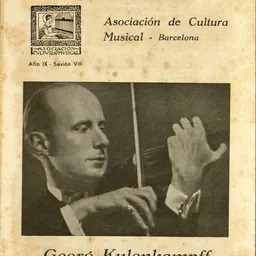
Recordings Isaac Albeniz, Tango from Suite España, op. 165, Georg Kulenkampff, violin, Franz Rupp, piano, Telefunken master 19191 Ludwig van Beethoven, violin sonatas, Fritz Kreisler, violin, Franz Rupp, piano; HMV D.B 2554-2560, "The Beethoven Violin Sonata Society", 7 records Johannes Brahms, Gestillte Sehnsucht and Geistliches Wiegenlied, Op. 91, Marian Anderson, contralto, William Primrose, viola, Franz Rupp, piano; 2-RCA Victor M 882 (78) Carry Me Back to Old Virginny, Marian Anderson, contralto, Gregor Piatigorsky, cello, Franz Rupp, piano Georg Friedrich Handel, Caro Mio Ben/Largo from Xerxes, Heinrich Schlusnus, baritone, Franz Rupp, organ, Julius Prüwer, conductor Staatsoper Berlin; Grammophon (66984) Franz Liszt, Die drei Zigeuner and O komm im Traum, Theodor Scheidl, baritone, Franz Rupp, piano Jules Massenet, Élégie, Marian Anderson, contralto, William Primrose viola, Franz Rupp, piano; Victor 10-1122 in set M 986 (78) Felix Mendelssohn-Bartoldy, Sonata no 2 in D major for Violoncello and piano, op. 58, Emanuel Feuermann violoncello, Franz Rupp, piano Wolfgang Amadeus Mozart, Adagio E major, KV 261, Georg Kulenkampff, violin, Franz Rupp, piano; Grammophon 67156 Sergei Rachmaninoff, In the Silent Night, Marian Anderson, contralto, William Primrose, viola, Franz Rupp, piano; Victor 10-1122 in set M 986 (78) Franz Schubert, Quintett A major D 667, Franz Rupp piano, Wilhelm Stross violin, Valentin Hartl, viola, Anton Walter, cello, Ludwig Jäger, Bass; Telefunken E 2113/15 Franz Schubert, An die Musik, Heinrich Schlusnus, baritone, Franz Rupp, piano; Polydor 62644 Franz Schubert, Frühlingstraum and Gretchen am Spinnrade, Hertha Glatz, contralto, Franz Rupp, piano, 15247 Victor Robert Schumann, Die Lotosblume", op 25, No 7, Franz Völker, tenor, Franz Rupp, piano Richard Strauß, Allerseelen, op 10, no 8, Franz Völker, tenor, Franz Rupp, piano Richard Strauß, op. 29, 1, Traum durch die Dämmerung and op. 28, 1, Freundliche Vision, Heinrich Schlusnus, baritone, Franz Rupp piano; Grammophon 90167
Don’t just read it —
keep it.
Full-length biographies made to live with: read them, listen on the way to work, watch them tonight.
- E-book
- Audio
- Video
Instant download · yours to keep · every purchase keeps this site free
Important facts
People in Franz Rupp's life
Named in this biography and alive at the same time


Related people
Same field, nearest in time
Contemporaries
People whose lives overlapped Franz Rupp's


Frequently asked questions
Who was Franz Rupp?
German-American pianist
When was Franz Rupp born?
Franz Rupp was born on 24 February 1901.
When did Franz Rupp die?
Franz Rupp died on 27 May 1992 in Manhattan.
What was Franz Rupp's occupation?
Franz Rupp was a pianist, music educator and musician.
What nationality was Franz Rupp?
Franz Rupp was German.
Sources & further reading
Cite this page
APA: Biography.guide. (2026). Franz Rupp. https://biography.guide/franz-rupp/
MLA: "Franz Rupp." Biography.guide, https://biography.guide/franz-rupp/.
Chicago: "Franz Rupp." Biography.guide. https://biography.guide/franz-rupp/.
Data last updated: 2026-09-21 · Spot an error? Report a correction.
Portrait: Wikimedia Commons · author & licence
Page generated 2026-09-27 04:59 UTC