
About Franz-Olivier Giesbert
Born 1949. Franz-Olivier Giesbert is a French and American journalist, editorial director, novelist and biographer.
Franz-Olivier Giesbert (born January 18, 1949) is an American-born French journalist, author, and television presenter.
After serving as editor-in-chief of Le Nouvel Observateur (a French weekly newsmagazine), editorial director of Le Figaro (one of France's leading daily newspapers), and then director of Le Point (a major French right-wing weekly), he was editorial director of La Provence (a regional daily based in Marseille) from 2017 to 2021. A columnist for Le Point, he also sits on the editorial board of the prestigious Revue des Deux Mondes (a long-running French literary and cultural review).
Early life Franz-Olivier Giesbert's American father was a painter and G.I. during D-Day, and his mother, a philosophy teacher, was from Normandy, France. After the Second World War, his parents went to live in Delaware in the United States, where he was born. At the age of nine, he discovered Ninety-Three by Victor Hugo in a library; he then avidly read all of Hugo's books and those of Honoré de Balzac. At nine, he decided to become a writer and began writing essays, pastiches, and novels. . After some hesitation, he accepted dual citizenship, reasoning that refusing it would have felt like a betrayal of his paternal ancestors ), Henry de Montherlant, Jules Romains (nominated for the Nobel Prize in Literature sixteen times ), Maurice Genevoix (who was a WW1 veteran), Alain Robbe-Grillet and others. In 1971, he joined Le Nouvel Observateur as a journalist in the political department and then became a senior reporter. In 1985, Giesbert became the editorial director of the Nouvel Observateur.
In 1997, Giesbert hosted the cable television weekly literary program Le Gai Savoir (The Cheerful Knowledge) broadcast on Paris Première. In recognition for his work with Le Gai Savoir, he received the Prix Richelieu from the Defense of the French language association, which rewards journalists for the quality of their language.
From 1998 to 2000, Giesbert was editorial director of Le Figaro.
Giesbert was chief executive officer of Le Point from 2000 until 18 January 2014; he remained an adviser to the magazine, continuing to write editorials and articles.
From 2011 to 2015, he hosted (The Big Questions), a debate program broadcast on France 5.
From 2012, he also hosted the monthly show Le Monde d'Après (The World After) featuring several guests discussing current news, broadcast on France 3.
In 2013, he wrote the scenario of a documentary about his relationship with the former president of France: Nicolas Sarkozy, secrets d'une présidence (Nicolas Sarkozy, secrets of a presidency).
In May 2016, Giesbert was awarded the newly created Récamier Prize for his novel, L'Arracheuse de dents (The puller of teeth).
On 25 March 2023, he was awarded the Prix du livre politique (Political book prize) for his novel entitled Histoire intime de la Ve République: La belle époque (Intimate history of the Fifth Republic: The beautiful era).
Controversies In 2007, he wrote the biography of Marseille's (in)famous mobster Jacky le Mat, L'Immortel, adapted by Richard Berry.
In 2018, he was attacked by Asia Argento and Marlène Schiappa for claiming that actresses who accused Harvey Weinstein of sexual assault had to know what they were getting into. This was decried as gaslighting, slut shaming and victim blaming.
In 2021, the pedophile writer Gabriel Matzneff described Giesbert as an unwavering support.
Giesbert was criticized by Laure Adler for complaining that people didn't speak French at the Marseille train station.
Selected novels L'Affreux (The Awful), Grasset, 1992 (Grand prix du roman de l'Académie française, 1992) La Souille (The Taint), Grasset, 1995 (Prix Interallié, 1995) Un très grand amour (A very great love), Gallimard, 2010 (Prix Alain Duménil, 2010) La cuisinière d'Himmler (Himmler's cook), Gallimard, 2013 (Globe de Cristal Awards winner, 2014)
Don’t just read it —
keep it.
Full-length biographies made to live with: read them, listen on the way to work, watch them tonight.
- E-book
- Audio
- Video
Instant download · yours to keep · every purchase keeps this site free
Important facts
People in Franz-Olivier Giesbert's life
Named in this biography and alive at the same time
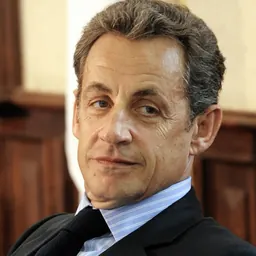

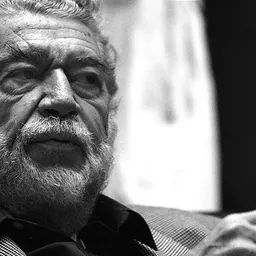


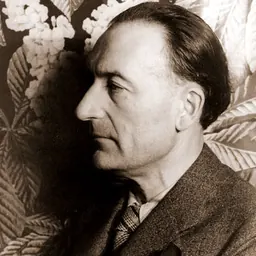

Related people
Same field, nearest in time
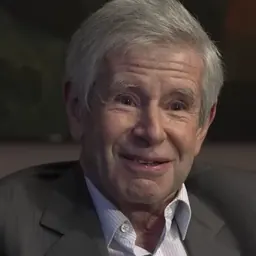


Contemporaries
People whose lives overlapped Franz-Olivier Giesbert's

Frequently asked questions
Who is Franz-Olivier Giesbert?
French journalist
When was Franz-Olivier Giesbert born?
Franz-Olivier Giesbert was born on 18 January 1949 in Wilmington.
What is Franz-Olivier Giesbert's occupation?
Franz-Olivier Giesbert is a journalist, editorial director, novelist and biographer.
What nationality is Franz-Olivier Giesbert?
Franz-Olivier Giesbert is French and American.
Sources & further reading
· Wikipedia: Franz-Olivier Giesbert
· DBpedia: Franz-Olivier Giesbert
Cite this page
APA: Biography.guide. (2026). Franz-Olivier Giesbert. https://biography.guide/franz-olivier-giesbert/
MLA: "Franz-Olivier Giesbert." Biography.guide, https://biography.guide/franz-olivier-giesbert/.
Chicago: "Franz-Olivier Giesbert." Biography.guide. https://biography.guide/franz-olivier-giesbert/.
Data last updated: 2026-09-22 · Spot an error? Report a correction.
Page generated 2026-09-27 05:25 UTC