
About Franz Leschnitzer
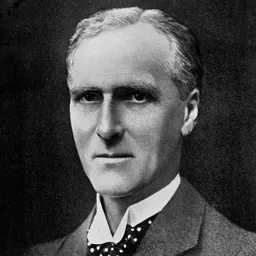
Lived 1905 – 1967 (aged 62). Franz Leschnitzer was a German writer and translator.
Franz Leschnitzer (12 February 1905 – 16 May 1967) was a German journalist-commentator, author and peace activist. In view of his Jewish provenance and communist politics, he was obliged to escape the country during 1933, and while living in Moscow was formally deprived, in absentia, of his German citizenship in 1939. He lived in the Soviet Union between 1933 and 1959, supporting himself as a political journalist and through teaching work in Moscow and Tashkent.
Life Provenance and early years Franz Leschnitzer was born into a family of Jewish intellectuals in Posen, which at the time of his birth (and indeed till 1920) was part of Germany. Oscar Leschnitzer (1864–1934), his father, was a pharmacist who relocated with his family to Berlin in 1910. Franz had an elder brother, Adolf Leschnitzer, who would emigrate to New York where for twenty years he was employed as a professor at the "City College".
Antimilitarism While still at school, in 1922, Franz Leschnitzer became a member of the German Peace Society. In 1926 he joined the "Revolutionary Pacifists' Group", newly founded that year by Kurt Hiller. Since even before 1914 there had been a conspicuous overlap in Germany between anti-militarism and what became communism. It was in that context that in 1927 Leschnitzer joined the "Red Students' Group". He was an early member of the "League of Proletarian-Revolutionary writers" in 1928. Franz Leschnitzer joined the Communist Party itself in October 1931. During and after 1925 he also became a regular contributor to the satirical weekly "Der Drache" and to other radical and pacifist political journals including "Die Neue Generation" and "Die Friedenswarte". In August 1932 and December 1932 he participated at the anti-war congresses in Amsterdam and Paris.
In 1934 Leschnitzer became a member of the newly launched Union of Soviet Writers. Two years later, in 1936, the semi-official comment that a German language "Literary-Historical Reading Book" for school use which he had compiled jointly with Jolan Kelen-Fried was underpinned by "vulgar sociological tendencies" served as a salutary reminder that published work in Moscow could always be subjected to a certain level of ill-defined and unpredictable supervision. In November 1939 news was sent through from Germany that the German government had deprived him of his German citizenship "in absentia". The Soviet government left Moscow only in October 1941, by which time millions of Soviet civilians, some in response to government orders and others on their own initiatives, had also relocated to the east. It was also in October 1941 that Franz Leschnitzer was evacuated ending up, like most of Moscow's many German political refugees, in Tashkent. Between February 1942 and April 1943 Leschnitzer was employed as a teacher at the foreign languages division of the "Military Academy of Armoured Troops" ("Военная Академия Бронетанковых Войск"), a prestigious army college for mechanised and motorised warfare - notably involving the use of tanks - which had also relocated from Moscow to Tashkent.
Don’t just read it —
keep it.
Full-length biographies made to live with: read them, listen on the way to work, watch them tonight.
- E-book
- Audio
- Video
Instant download · yours to keep · every purchase keeps this site free
Important facts
People in Franz Leschnitzer's life
Named in this biography and alive at the same time

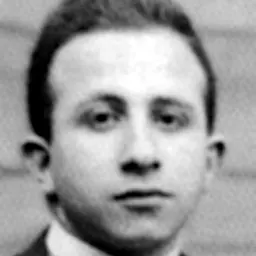
Related people
Same field, nearest in time




Contemporaries
People whose lives overlapped Franz Leschnitzer's
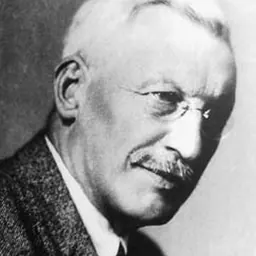

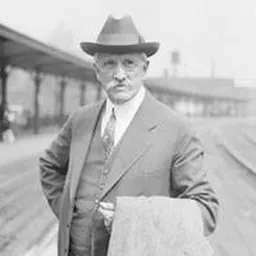

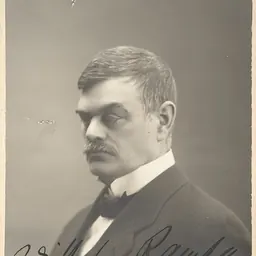
Frequently asked questions
Who was Franz Leschnitzer?
German writer and translator (1905-1967)
When was Franz Leschnitzer born?
Franz Leschnitzer was born on 12 February 1905 in Poznań.
When did Franz Leschnitzer die?
Franz Leschnitzer died on 16 May 1967 in East Berlin.
What was Franz Leschnitzer's occupation?
Franz Leschnitzer was a writer and translator.
What nationality was Franz Leschnitzer?
Franz Leschnitzer was German.
Sources & further reading
· Wikipedia: Franz Leschnitzer
Cite this page
APA: Biography.guide. (2026). Franz Leschnitzer. https://biography.guide/franz-leschnitzer/
MLA: "Franz Leschnitzer." Biography.guide, https://biography.guide/franz-leschnitzer/.
Chicago: "Franz Leschnitzer." Biography.guide. https://biography.guide/franz-leschnitzer/.
Data last updated: 2026-09-22 · Spot an error? Report a correction.
Page generated 2026-09-27 05:22 UTC