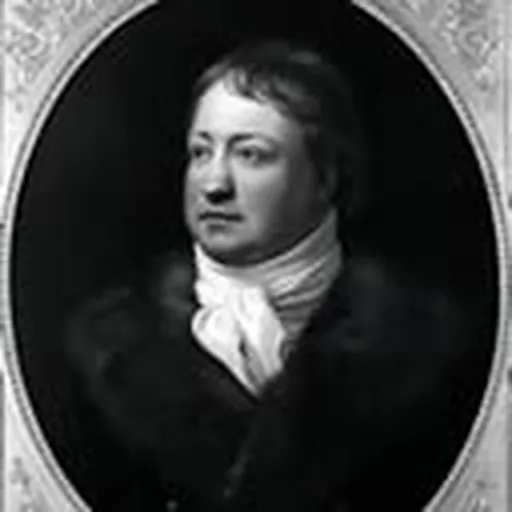
Franz Erwein von Schonborn-Wiesentheid
German art collector
About Franz Erwein von Schonborn-Wiesentheid
Lived 1776 – 1840 (aged 64). Franz Erwein von Schonborn-Wiesentheid was a jurist, art collector and politician.
Franz Erwein, 1st Count of Schönborn-Wiesentheid (4 April 1776 – 15 December 1840) was a German art collector and politician from the House of Schönborn.
Early life His parents were the Hugo Damian Erwein von Schönborn-Wiesentheid (1738–1817), a chamberlain and member of the counsel from Aschaffenburg, and his wife Maria Anna (1746–1817), who had been countess of Stadion zu Thannhausen und Warthausen.
On his wife's death in 1813, Schönborn moved to Schloss Gaibach, rebuilding it between 1800 and 1830. He also added a park in the English style, in which he built a Constitution Column. The column was designed by Schönborn's friend Leo von Klenze and commemorated Maximilian I Joseph's 1818 grant of a Constitution to the Kingdom of Bavaria. In 1828 he also completed a Constitution Hall in the castle, painted at von Klenze's suggestion by Carl Heinrich Hermann and Jakob Götzenberger, two of Peter von Cornelius's pupils. Schönborn's collection ranked alongside Ludwig's own as two of the most notable ones in southern Germany.
As a state counselor of Bavaria, Schönborn was a member of the state's Imperial Council from 1819 until his death. He sometimes served as Vice President of the Privy Council, in which capacity he represented the Council at the 1819 funeral of Anton Eggstein, the first Bavarian member of parliament to die in office. Schönborn was also hereditarily appointed as a member of the first chamber of the Nassau Landstände according to the Nassau Ducal Edict of 29 October 1831. He was elected from 1832 to 1837.
Personal life On 29 July 1802, he married Countess Fernandine of Westphalia zu Fürstenberg (1781–1813). Fernandine, who was from Hildesheim, was the daughter of the Imperial Count Clemens August von Westphalen zu Fürstenberg (sole heir of his maternal great-uncle, Prince-Bishop of Paderborn William Anton of Asseburg, and his paternal uncle, Prince-Bishop of Hildesheim Friedrich Wilhelm of Westphalia) and Countess Maria Antonia Waldbott von Bassenheim. and was succeeded by his eldest son, Hugo.
Don’t just read it —
keep it.
Full-length biographies made to live with: read them, listen on the way to work, watch them tonight.
- E-book
- Audio
- Video
Instant download · yours to keep · every purchase keeps this site free
Important facts
People in Franz Erwein von Schonborn-Wiesentheid's life
Named in this biography and alive at the same time


Related people
Same field, nearest in time
Contemporaries
People whose lives overlapped Franz Erwein von Schonborn-Wiesentheid's

Frequently asked questions
Who was Franz Erwein von Schonborn-Wiesentheid?
German art collector (1776-1840)
When was Franz Erwein von Schonborn-Wiesentheid born?
Franz Erwein von Schonborn-Wiesentheid was born on 7 April 1776 in Mainz.
When did Franz Erwein von Schonborn-Wiesentheid die?
Franz Erwein von Schonborn-Wiesentheid died on 15 December 1840 in Frankfurt.
What was Franz Erwein von Schonborn-Wiesentheid's occupation?
Franz Erwein von Schonborn-Wiesentheid was a jurist, art collector and politician.
What nationality was Franz Erwein von Schonborn-Wiesentheid?
Franz Erwein von Schonborn-Wiesentheid's recorded nationality: Electorate of Mainz.
Sources & further reading
· Wikipedia: Franz Erwein von Schonborn-Wiesentheid
· DBpedia: Franz Erwein von Schönborn-Wiesentheid
Cite this page
APA: Biography.guide. (2026). Franz Erwein von Schonborn-Wiesentheid. https://biography.guide/franz-erwein-von-schonborn-wiesentheid/
MLA: "Franz Erwein von Schonborn-Wiesentheid." Biography.guide, https://biography.guide/franz-erwein-von-schonborn-wiesentheid/.
Chicago: "Franz Erwein von Schonborn-Wiesentheid." Biography.guide. https://biography.guide/franz-erwein-von-schonborn-wiesentheid/.
Data last updated: 2026-09-25 · Spot an error? Report a correction.
Portrait: Wikimedia Commons · author & licence
Page generated 2026-10-04 09:22 UTC