
Frank Tousey
American book publisher (1853–1902), among the top five of dime novels in the late 1800s and early 1900s.
About Frank Tousey
Lived 1853 – 1902 (aged 48–49). Frank Tousey was an American publisher.
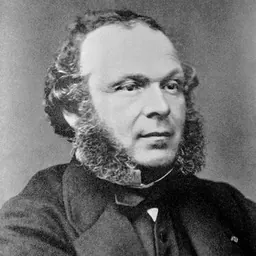
Frank Tousey (1853–1902) was among the top five publishers of dime novels in the late 19th-century and early 20th-century. Based in New York, his sensationalism drew a large audience of youth, hungry for scenes of daring and tormented heroes and damsels in distress. Of particular notice in his approach to the 'blood and thunder' genre were the vivid cover illustrations of his dime novels, which were consistently larger and more thrilling than previous publications. Although focused on fictional weeklies, Tousey managed a variety of materials over time, including some handbooks, gossip sheets, and even a newspaper on current events in the Spanish–American War.
Early life Frank Tousey was born in Brooklyn, New York on May 24, 1853. Son of George G. Tousey (1825–1869) and Elizabeth Corks (1846–1903), Frank was one of six children, with two older brothers (John W. Tousey, 1847–1862; George C. Tousey, 1848–1898) and three younger (Edward F. Tousey, 1855–?; DeWitt Tousey, 1858–1858; Sinclair Tousey Jr., 1862–1915). His uncle, Sinclair Tousey, poses some significance to Frank's later career in publishing. Sinclair Tousey is best known as the founder and president of the American News Company (1864) and as an extraordinarily powerful and rich player in the field of American publishing, based on his quasi-monopoly over text distribution in the country.
Career
Frank began his career in publishing in 1872 by working with Norman Munro, a Canadian-born publisher with questionable principles. In 1877, Tousey split from Munro and relocated to no. 116 Nassau Street, taking with him Munro's highly successful editor, George Small, whom Norman had originally stolen from his brother and publishing rival, George Munro., The images themselves used the same technique which had earlier granted Munro's stories superiority: a divergence from good and safe to dreadful and shocking. While Munro's novels featured a shift to more criminal, youthful protagonists, Tousey and Small's front-page pictures exhibited terrifying scenes of aliens, monsters, torture, and overall horror.
Facing a variety of financial troubles and ultimately, bankruptcy, Munro sold his popular papers Our Boys and Boys of New York, along with 138 issues of the New York Boys' Library to Tousey and Small in 1878. Starting with the first issue (No. 153, July 20, 1878) under the management of Tousey and Small, Boys of New York incorporated New York Boys Weekly. In likewise fashion, Our Boys merged with Young Men of America for the latter's issue No. 43, July 4, 1878. Simply put, after combining these four periodicals, only Boys of New York, originally of Munro, and Young Men of America, the brain child of Tousey and Small, continued with their published names. The new owners also renamed the New York Boys' Library as the Wide Awake Library. Without Munro's inspiring rivalry, and thus any substantial competition, Tousey's sensationalism diminished slightly over the next decade.
In 1879, George Small faded from the limelight of these notable novels. At the start of this year, Small relinquished his partnership with Tousey, although he remained involved in Tousey's papers until the end of his days.
Following Small's withdrawal, Tousey attempted a new project: American Life. This illustrated paper was intended to cater to a higher class audience, but the venture was a dismal failure. It was a short-lived success. Suffering financial strain, Tousey relocated to North Moore Street and began publishing the Brookside novels. Following review in the Tombs, Tousey was required to destroy the plates in order to avoid further prosecution.
A year later, on March 14, 1885, Tousey made an assignment to Stillman R. Walker. Further trouble came from the Knights of Labor, an organization which induced many newsdealers to boycott the sale of Tousey's publications. Certainly, the stories and illustrations in Tousey's dime novels are said to rival Jules Verne for imagination and to have provided the pioneer boy inventors who would lead to Tom Swift. Not only first on the scene, Tousey also became a major source of output for the James tales in dime novels. He even created a series called James Boys Weekly, and his works exhibited both the fictional character and real life events.
Don’t just read it —
keep it.
Full-length biographies made to live with: read them, listen on the way to work, watch them tonight.
- E-book
- Audio
- Video
Instant download · yours to keep · every purchase keeps this site free
Important facts
People in Frank Tousey's life
Named in this biography and alive at the same time



Related people
Same field, nearest in time

Contemporaries
People whose lives overlapped Frank Tousey's
Frequently asked questions
Who was Frank Tousey?
American book publisher (1853–1902), among the top five of dime novels in the late 1800s and early 1900s.
When was Frank Tousey born?
Frank Tousey was born in 1853.
When did Frank Tousey die?
Frank Tousey died in 1902.
What was Frank Tousey's occupation?
Frank Tousey was a publisher.
What nationality was Frank Tousey?
Frank Tousey was American.
Sources & further reading
Cite this page
APA: Biography.guide. (2026). Frank Tousey. https://biography.guide/frank-tousey/
MLA: "Frank Tousey." Biography.guide, https://biography.guide/frank-tousey/.
Chicago: "Frank Tousey." Biography.guide. https://biography.guide/frank-tousey/.
Data last updated: 2026-09-20 · Spot an error? Report a correction.
Page generated 2026-09-27 05:02 UTC