
About Frank Rose
Lived 1909 – 1988 (aged 78). Frank Rose was a British chemist.
Francis Leslie Rose (27 June 1909 – 3 March 1988) was a British chemist.
Francis Leslie Rose (always known as Frank Rose) was born in Lincoln on 27 June 1909, the second son of Frederick Will Rose, a clerk to a firm of solicitors in Lincoln, and Elisabeth Ann (née Watts). Coming from a family with many church choristers, he taught himself to play the piano, and soon became “accompanist in chief”. He joined the choir of St Martin's Church, Lincoln at age 6, and also taught himself to play the organ. Rose was later to be appointed organist and choirmaster at Ruskington before going up to university.
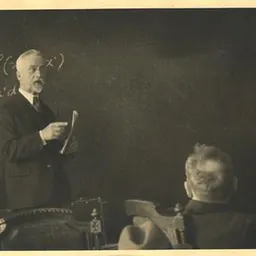
Education Rose attended St Faith’s Primary School and Christ’s Hospital Continuation School before gaining a scholarship at age 9 to Lincoln City School. He was much influenced by the senior chemistry master there. At age 16 he was interviewed by Professor Frederic Kipping, FRS at Nottingham, and offered a place in two years’ time. He gained a first class degree, largely thanks to the quality of Kipping’s teaching.
Scientific career Rose stayed on at Nottingham for his PhD, during which time he attracted the attention of the Dyestuffs Division of ICI. They wanted new types of intermediate for direct azo dyes, a problem which Rose solved in 1932 with a method suitable for large scale manufacture. This success led to his being recruited that year by ICI. Four years later the management decided that they would enter the pharmaceuticals field, and Rose was to be part of the group. “From that time until his death 52 years later Rose was entirely consumed by his love for the biological activity of chemicals.”
The initial task was to find a patentable analog of Prontosil, which was in turn developed by Bayer as a patentable prodrug of sulfonamide, and Rose developed sulphamezathine. After the start of WWII Rose's section was tasked to manufacture drugs made exclusively in Germany (like was made during WWI with arsphenamine), including antimalarial medications pamaquine and mepacrine, with a great success. As a result, in 1945 ICI introduced paludrine, and only much later it was found that an oxidative cyclization of this prodrug led to the active dihydrotriazine derivative cycloguanil (the mechanism of its work is still debated).
He was elected a Fellow of the Royal Society in 1957 when his candidacy citation read: Distinguished for his researches in organic chemistry with particular reference to chemotherapy. As leader of the Medicinal Chemicals Section of Imperial Chemical Industries Ltd. (Dyestuffs Division) he, with his colleague, the late Dr. F.H.S. Curd, was responsible for the brilliant series of researches culminating in the discovery of the antimalarial drug paludrine, His contributions throughout have been marked by skill in experimentation and by the originality of his concepts of the relation between chemical structure and pharmacological action, concepts which have paved the way for his numerous successes in the field of chemotherapy, e.g. synthesis of paludrine, and of the trypanocide antrycide.
He won their Leverhulme Prize in 1975,
Family Frank Rose first met his future wife, Ailsa Buckley, when they were both in Llandudno in 1930. They married in Lincoln in 1935. Their first child, Anne, died soon after birth in 1937. Their son, Peter, born four years later, turned out to be a good organist, but chose to become a geographer. Later, though, he moved to St John's College School and again became involved in cathedral music.
Francis Leslie Rose died in the town of his birth on 3 March 1988. His ashes are in the Garden of Remembrance at Macclesfield Crematorium. Ailsa died in 1999.
Don’t just read it —
keep it.
Full-length biographies made to live with: read them, listen on the way to work, watch them tonight.
- E-book
- Audio
- Video
Instant download · yours to keep · every purchase keeps this site free
Important facts
People in Frank Rose's life
Named in this biography and alive at the same time

Related people
Same field, nearest in time



Contemporaries
People whose lives overlapped Frank Rose's



Frequently asked questions
Who was Frank Rose?
British chemist
When was Frank Rose born?
Frank Rose was born on 27 June 1909 in Lincoln.
When did Frank Rose die?
Frank Rose died on 3 March 1988 in Lincoln.
What was Frank Rose's occupation?
Frank Rose was a chemist.
What nationality was Frank Rose?
Frank Rose was British.
Sources & further reading
· DBpedia: Frank Rose (chemist)
Cite this page
APA: Biography.guide. (2026). Frank Rose. https://biography.guide/frank-rose/
MLA: "Frank Rose." Biography.guide, https://biography.guide/frank-rose/.
Chicago: "Frank Rose." Biography.guide. https://biography.guide/frank-rose/.
Data last updated: 2026-09-20 · Spot an error? Report a correction.
Page generated 2026-09-27 05:02 UTC