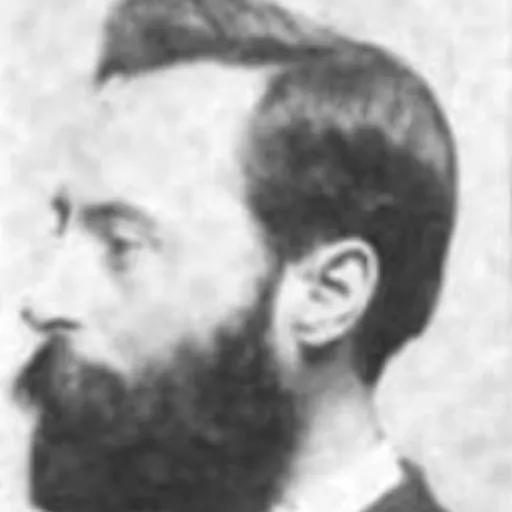
About Frank Parsons
Lived 1854 – 1908 (aged 53). Frank Parsons was an American writer.
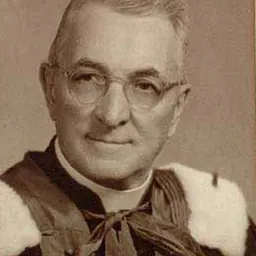
Frank Parsons (November 14, 1854 – September 26, 1908) was an American professor, social reformer, and public intellectual. Although he was educated as an engineer at Cornell University, he passed the Massachusetts state bar examination and became a lawyer in 1881. Parsons was a lecturer at Boston University School of Law for more than a decade and taught at Kansas State Agricultural College from 1897 to 1899. As a leading social commentator of the Progressive Era, Parsons authored a dozen books and more than 125 magazine and journal articles on a wide range of reform topics, including currency reform, regulation of monopolies, municipal ownership, establishment of direct democracy, and other matters. Parsons is also widely regarded as the father of the vocational guidance movement.
Biography
Early years
Frank Parsons was born on November 14, 1854, in Mount Holly, New Jersey, the son of an Anglo-Saxon family with American antecedents dating back to the time of the American Revolution. The family was highly intellectual in proclivity, with a number of physicians, lawyers, and teachers dotting the family tree, particularly on Frank's mother's side. Instead, Parsons was employed by the publishing firm of Little, Brown and Company as a writer of law textbooks. He joined the staff of Kansas State Agricultural College in 1897, in the wake of a Populist electoral victory in that state and the advent of a new liberal administration at the college. He produced several influential books, including tomes on monetary reform (Rational Money, 1898), market dysfunction in the communications industry (The Telegraph Monopoly, 1899), public ownership of monopoly industries (The City for the People, 1899), substitution of democracy for oligarchy (Direct Legislation, 1900), and the abuses of the railroad industry (The Trusts, the Railroads, and the People, 1906).
In December 1895, Parsons ran for Mayor of Boston, as the candidate for the Municipal Reform Party—"a fusion of prohibitionists, labor, populists, and socialists". He finished last in a field of three, with 0.8% of the vote.
In addition to his steady stream of books and pamphlets, Parsons wrote extensively for the periodical press, contributing more than 125 articles to B.O. Flower's progressive monthly, The Arena and other publications. In the course of his life, Parsons was recognized as a national expert on public ownership of utilities. In 1906, he was commissioned by the National Civic Federation to travel to Great Britain to study the incidence of municipal ownership and its outcomes in that country.
Parsons also served as dean of the extension division of Ruskin College in Trenton, Missouri.
Death and legacy
Frank Parsons died September 26, 1908, in Boston, Massachusetts. He was 53 years old at the time of his death.
A memorial service in Parsons' honor was held October 25, 1908, at the People's Church in Washington, D.C. In the eulogy by Rev. Alexander Kent, Parson's was remembered as a consistent analyst striving to advance the general weal:
There were few men whose ability was so completely devoted to the public good.... The problem of human betterment was always uppermost in his thought. He was continually at work tracing the evils from which men suffer to their source, and showing how they might be avoided or at least greatly lessened. He was a consistent opponent of that individualism which pits men against each other in the struggle for existence, and an earnest advocate of that individuality that fits men for useful membership in the social body, and so draws them together in mutual fellowship and service.
Parsons' papers are housed at Yale University Library in New Haven, Connecticut.
The posthumous publication in 1911 of Parson's manuscript, Choosing a Vocation, and its so-called "talent-matching approach" proved to be massively influential with a generation of educationalists. Parson's book remains regarded as a classic in the field and Parsons is still in the 21st Century remembered as "the founder of the vocational guidance movement."
Works
The World's Best Books. Boston: Little, Brown and Co., 1889. The Philosophy of Mutualism. Philadelphia: Bureau of Nationalist Literature, n.d. (c. 1894). Public Ownership of Monopolies (c.1894) The Wanamaker Conference; or, John Wanamaker and the Nationalist. Philadelphia: Frederick A. Bisbee, n.d. (c. 1895). Rational Money: A National Currency Intelligently Regulated in Reference to the Multiple Standard. Philadelphia: C.F. Taylor, 1898. The Drift of Our Time. Chicago: Charles H. Kerr & Co., December 1899. The Telegraph Monopoly. Philadelphia: C.F. Taylor, 1899. Direct Legislation; or, The Veto Power in the Hands of the People. Philadelphia: C.F. Taylor, Jan. 1900. The City for the People; or, The Municipalization of the City Government and of Local Franchises. Philadelphia: C.F. Taylor, 1900. The Story of New Zealand: A History of New Zealand from the Earliest Times to the Present, with Special Reference to the Political, Industrial and Social Development of the Island Commonwealth... Philadelphia: C.F. Taylor, 1904. The Railways, the Trusts, and the People. Philadelphia: C.F. Taylor, 1905. The Heart of the Railroad Problem: The History of Railway Discrimination in the United States, the Chief Efforts at Control and the Remedies Proposed with Hints from Other Countries. Boston: Little, Brown and Co., 1906. Choosing a Vocation. Boston: Houghton Mifflin Co., 1909. —Posthumously published. Legal Doctrine and Social Progress. New York: B.W. Huebsch, 1911. —Posthumously published.
Don’t just read it —
keep it.
Full-length biographies made to live with: read them, listen on the way to work, watch them tonight.
- E-book
- Audio
- Video
Instant download · yours to keep · every purchase keeps this site free
Important facts
People in Frank Parsons's life
Named in this biography and alive at the same time


Related people
Same field, nearest in time

Contemporaries
People whose lives overlapped Frank Parsons's





Frequently asked questions
Who was Frank Parsons?
American social reformer (1854-1908)
When was Frank Parsons born?
Frank Parsons was born on 14 November 1854 in Mount Holly.
When did Frank Parsons die?
Frank Parsons died on 26 September 1908 in Boston.
What was Frank Parsons's occupation?
Frank Parsons was a writer.
What nationality was Frank Parsons?
Frank Parsons was American.
Sources & further reading
· DBpedia: Frank Parsons (social reformer)
Cite this page
APA: Biography.guide. (2026). Frank Parsons. https://biography.guide/frank-parsons-writer/
MLA: "Frank Parsons." Biography.guide, https://biography.guide/frank-parsons-writer/.
Chicago: "Frank Parsons." Biography.guide. https://biography.guide/frank-parsons-writer/.
Data last updated: 2026-09-22 · Spot an error? Report a correction.
Portrait: Wikimedia Commons · author & licence
Page generated 2026-09-27 05:01 UTC