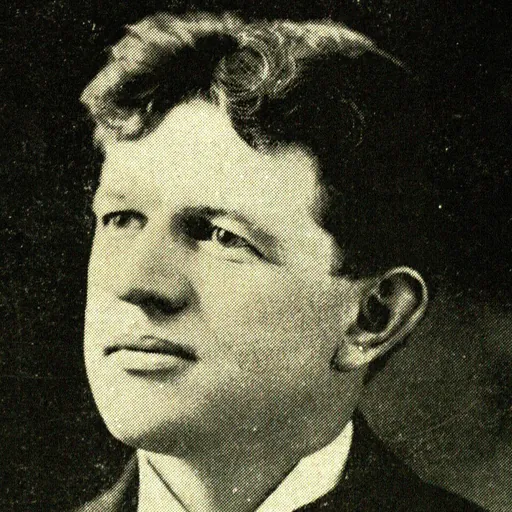
About Frank Packard
Lived 1866 – 1923 (aged 57). Frank Packard was an American architect.
Frank L. Packard (June 11, 1866 October 26, 1923) was a prominent architect in Ohio. Many of his works were under the firm Yost & Packard, a company co-owned by Joseph W. Yost.
Life and career Frank Lucius Packard was born June 11, 1866, in Delaware, Ohio, to Alvaro Harrison Packard and Miranda (Black) Packard. He attended the Delaware public schools and worked as a drafter for local architect and engineer F. A. Gartner. He was further educated at the Ohio State University in Columbus and the Massachusetts Institute of Technology in Boston, graduating from the latter in 1887. After two years working for Babb, Cook & Willard in New York City, he returned to Columbus and opened his own office. In 1892 he merged his office with that of Joseph W. Yost, forming the firm of Yost & Packard. At that time, both architects were engaged in major Ohio State University projects, Packard as architect of Hayes Hall and Yost as the architect of Orton Hall. In 1900 the partnership was dissolved when Yost relocated to New York City. Packard worked as a private practitioner for the remainder of his life.
Packard was active in Republican politics and was well–connected to powerful Republican politicians, including Warren G. Harding. In 1903 Packard was responsible for the design of the large front porch of Harding's Marion residence, the Harding Home, from which he conducted his Front porch campaign in 1920. In 1922 Harding, as President, appointed Packard architect of the United States pavilion at the Independence Centenary International Exposition in Rio de Janeiro in Brazil. This building was designed to be reused as the United States Embassy to Brazil after the fair.
Packard joined the American Institute of Architects as a Fellow in 1895. He was among the founders of the Columbus Society of Architects in 1908 and AIA Columbus in 1913. For many years Packard was a member of the Board of Directors of the Columbus Chamber of Commerce. He was president of both organizations for the year 1919-20. Following his death, Packard's associates at AIA Columbus organized the Allied Architects Association to complete the project.
Personal life Packard was married in 1892 to Eva Lena Elliott of Columbus. They had no children. Packard died suddenly on October 26, 1923, at the age of 57.
Legacy In his private practice, Packard was associated with several other professionals, including architect Ralph Snyder, engineer Edward F. Babbitt and superintendent Lorenzo D. Mathews. After Packard's death these associates reorganized the firm as Snyder, Babbitt & Mathews. It became Snyder & Babbitt in 1925 and was dissolved in 1929. Ralph Snyder continued in private practice for at least a few years. Major works by these firms include the Columbus Dispatch Building, built in 1925, and the Huntington National Bank Building, built in 1926.
Many buildings designed by Packard, independently and with Yost, have been listed on the United States National Register of Historic Places. Others contribute to listed historic districts.
The three partners of Richards, McCarty & Bulford, the most prominent architecture firm in Columbus after Packard's death, all worked for Yost & Packard.
Projects Yost & Packard
Individual projects
Joseph Addison Crowell House, East Ludington St. Iron Mountain, MI, (Spring 1884) Shepard Street School, 106 Short St, Gahanna, Ohio (1889, NRHP 1979) * Fair Avenue School, 1395 Fair Avenue, Columbus, Ohio (1890) Central High School (1862-1928) addition (1891) Frank L. Beam house, Mount Vernon, Ohio (1900–01) Clay County Courthouse (former), Main St, Clay, West Virginia (1902, NRHP 1979) Ellis Hall, Ohio University, Athens, Ohio (1902 et seq.) Huntington Chapel, Green Lawn Cemetery, Columbus, Ohio (1902) William C. Miller house, 473 Hudson Ave, Newark, Ohio (1902) Monnett Memorial M. E. Chapel, 999 OH–98, Bucyrus, Ohio (1902–04, NRHP 1986) Columbus Savings and Trust Building, 8 E Long St, Columbus, Ohio (1904–05, NRHP 1977) Charles H. Lindenberg house, 1234 E Broad St, Columbus, Ohio (1904, NRHP 1972) Scripps Hall, Ohio University, Athens, Ohio (1904) Franklin County Memorial Hall, 280 E Broad St, Columbus, Ohio (1905–06) Columbus Gas and Fuel Company, 135 N. Front St., Columbus, Ohio (1906, demolished) East Broad Street Presbyterian Church alterations, 760 E Broad St, Columbus, Ohio (1907–08, NRHP 1987) Richard Caslow house, 116 E Columbus St, Canal Winchester, Ohio (1908) Alumni Hall, Miami University, Oxford, Ohio (1909–10) William H. Thomas house, 406 Duhring Ave, Bramwell, West Virginia (1909–12) Bishop Hall, Miami University, Oxford, Ohio (1911–12) Gordy Hall, Ohio University, Athens, Ohio (1911) Mitchell Hall, Wilberforce University (former campus), Wilberforce, Ohio (1912, destroyed 1974) Emery Hall, Wilberforce University (former campus), Wilberforce, Ohio (1913, NRHP 2005) Tupper Hall, Ohio University, Athens, Ohio (1913) Athletic Club of Columbus, 136 E Broad St, Columbus, Ohio (1915, NRHP 2011) Clark County Memorial Hall, 300 W Main St, Springfield, Ohio (1915–16, demolished 2010) Lindley Hall, Ohio University, Athens, Ohio (1915) Holzer Hospital (former), 553 Second Ave, Gallipolis, Ohio (1916–17) Bundy Hall, Wilberforce University (former campus), Wilberforce, Ohio (1917, destroyed 1974) Seneca Hotel, 367 E Broad St, Columbus, Ohio (1917, NRHP 1983) Montgomery Hall, Muskingum University, New Concord, Ohio (1921) United States Embassy, Av Presidente Wilson 147, Rio de Janeiro, Brazil (1922, demolished) Bentley Hall, Ohio University, Athens, Ohio (1923–24) Granville Inn, 314 E Broadway, Granville, Ohio (1923–24) Hocking County Courthouse, 5 E Main St, Logan, Ohio (1923–25) North High School, 100 E Arcadia Ave, Columbus, Ohio (1923–24, NRHP 1987) Yuster Building, 150 E Broad St, Columbus, Ohio (1923–24, NRHP 2017)
Snyder, Babbitt & Mathews and Snyder & Babbitt Columbus Dispatch Building, 34 S 3rd St, Columbus, Ohio (1925) Huntington National Bank Building, 17 S High St, Columbus, Ohio (1926)
Don’t just read it —
keep it.
Full-length biographies made to live with: read them, listen on the way to work, watch them tonight.
- E-book
- Audio
- Video
Instant download · yours to keep · every purchase keeps this site free
Important facts
People in Frank Packard's life
Named in this biography and alive at the same time


Related people
Same field, nearest in time


Contemporaries
People whose lives overlapped Frank Packard's



Frequently asked questions
Who was Frank Packard?
American architect
When was Frank Packard born?
Frank Packard was born on 11 June 1866 in Delaware, Ohio.
When did Frank Packard die?
Frank Packard died on 26 October 1923 in Columbus, Ohio.
What was Frank Packard's occupation?
Frank Packard was an architect.
What nationality was Frank Packard?
Frank Packard was American.
Sources & further reading
Cite this page
APA: Biography.guide. (2026). Frank Packard. https://biography.guide/frank-packard/
MLA: "Frank Packard." Biography.guide, https://biography.guide/frank-packard/.
Chicago: "Frank Packard." Biography.guide. https://biography.guide/frank-packard/.
Data last updated: 2026-09-22 · Spot an error? Report a correction.
Portrait: Wikimedia Commons · author & licence
Page generated 2026-09-27 05:04 UTC