
Frank McIntyre
United States Army general, chief of the Bureau of Insular Affairs
About Frank McIntyre
Lived 1865 – 1944 (aged 79). Frank McIntyre was an American military officer.
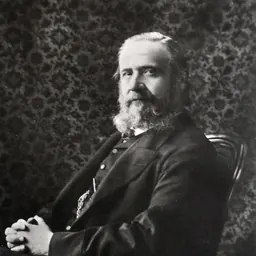
Frank McIntyre (January 5, 1865 – February 16, 1944) was an American military officer who served for many years as Chief of the Bureau of Insular Affairs, responsible for federal administration of the Philippines and Puerto Rico.
Early life and ancestry Frank McIntyre was born to Dennis and Mary Gaughan McIntyre in Montgomery, Alabama. He had three brothers, James, John, and Cornelius Patrick, and four sisters, Mary, Catherine, Ellen, and Nora. Dennis McIntyre came to America in the 1850s and was a railroad car inspector for the West Point and Alabama Railroad. He settled first in Georgia, where he met his wife, and the family had moved to Alabama by 1860, when they are listed in census records. Dennis is listed on the roster of the Montgomery County Home Guard, CSA, in 1864. His wife Mary was originally from Crossmolina County Mayo, where many Gaughans reside. She moved to Georgia in the 1850s to join her brother, Patrick Gaughan. Patrick later moved to Camden, Arkansas. He enlisted in the 33rd Arkansas Infantry Regiment, CSA, in 1863. The surname McIntyre is a Scottish Highland name (also spelled MacIntyre) that means "son of the carpenter" or wright. The Gaelic original is Mac an-T Saoir. McIntyres were originally to be found in Lorne where they possessed the lands of Glenoe from the 13th century until the early 19th century. According to family tradition, the MacIntyres/McIntyres came originally from the Hebrides. In the 13th century, they sailed from their ancestral home carrying a white cow, and settled on the mainland at Glen Noe by Ben Cruachan. On the mainland the MacIntyres/McIntyres were hereditary foresters to the lords of Lorne. For many years, they paid the Campbells of Glenorchy a symbolic rent of a white calf and a snowball for their Glen Noe lands. During the 18th century, the rent was commuted to cash, then progressively raised. Donald, the 4th MacIntyre chief, could not pay so he emigrated to Canada. His brother and successor Captain Donald MacIntyre the fifth chief, tried but failed to make ends meet and the Glen Noe lands were lost two hundred years ago, in 1808. The present Clan Chief is Donald MacIntyre of Glenoe.
Frank McIntyre was a grandson of James and Norah McIntyre of The Brockey, Killybegs County Donegal, Ireland. His grandmother was Norah Cannon, the daughter of Dennis and Jane Cannon (née McBraerty) of Killybegs, County Donegal. Her sister Mary Cannon married Thomas Murrin of Croaghlin (1804–1882) Banagh barony, Killybegs, County Donegal, their daughter Jane Murrin (1829–1903) married Charles Dawson Lea (1819–1883) in 1851. Their son John Edward Dawson Lea (1859–1929) married Hannora McIntyre his cousin, who died on 10 October 1938. John and Hannorah lived at Rathmines, Dublin, and Aileach House, Killybegs, County Donegal, where his cousin and sister-in-law Agnes McIntyre also lived and where she died on 5 February 1990, aged 92. Agnes and Hannorah McIntyre were first cousins of General Frank McIntyre and Judge Patrick McIntyre. On the distaff side their first cousin was Séamus Hegarty, D.D. an Irish Roman Catholic prelate, who served as Bishop of Raphoe from 1982 to 1994, then as Bishop of Derry from 1994 to 2011. Agnes and Hannorah were the daughters of John and Mary McIntyre née Carr, and like Frank the grandchildren of James and Nora McIntyre, Nora being a Cannon.
The Cannons are descended from two of Ireland's most renowned Kings: Conn of the Hundred Battles and Niall of the Nine Hostages. The O'Cannons have been described as "Ancient Princes of Tir Connaill" and "Valiant Chiefs". However their 350-year dynasty in Tir Connaill ended in 1250. Their ancient territory would seem to have been Tir Aeda (now the barony of Tirhigh) after the deaths of Rory O' Canannain and his son Niall O'Canannain in 1250, the sept declined greatly in power. Brian O'Neill died ten years later in 1260, he had supported an O'Canannain claimant to Tir Conaill i.e. to the Kingdom of Tir Conaill (Tirconnell). The personal name Canannain is a diminutive of Cano meaning 'wolf cub'. Canannain was fifth in descent from Flaithbertach mac Loingsig (died 765), high-king of Ireland; they were the descendants of Neill of the Nine Hostages (Irish: Niall Noigiallach) who died c. 405 by his son, Conall Gulban who gave his name to Tir Conaill, the Land of Conall, now County Donegal.
Ui Canannain was the ancestral name of the Cannons and Tir Connaill (all of County Donegal and part of County Londonderry) was the "Land of the Cannons". By the early 17th century the name Ui Canannain had been anglicised to O'Cannon. Further anglicisation took place during the Penal laws in the late 18th and early 19th centuries and the name in County Donegal became Cannon. In the early 1880s, there were just 200 families bearing the Cannon surname living in County Donegal, who were mainly tenant farmers. The Cannons/O'Canannains, were of the ancient sept of Cenell Conaill, a branch of the northern Ui Neill and descend from Ruaidri ua Canannain (died 30 November 950) King of Cenel Conaill, and grandson of Canannain, who flourished in the second half of the 9th century. One of Neill's most famous descendants was George Washington, the first President of the United States of America. The site of the ancient seat of the O'Canannains was near Letterkenny the largest town of County Donegal, which is said on good authority to represent the hillside of the O'Cannons (English translation).
Education Frank McIntyre was educated in public and private schools in Montgomery and at The University of Alabama from 1880 to 1882. While a student in Tuscaloosa, his professors noted his talents and recommended him for his home district's vacancy to West Point. McIntyre successfully passed a competitive examination and was enrolled at the United States Military Academy in the Fall of 1882. The son of Irish immigrants never forgot his roots. In a 1938 letter to his classmates at West Point, McIntyre reflected "I can never forget the unsolicited kindness of these professors at the University [of Alabama] to a young boy without influence and with not the slightest obligation on their part. Their action reflects one phase of the spirit of Alabama. How could I forget it?" McIntyre graduated from West Point in 1886, ranked tenth in his class. A classmate and roommate of McIntyre was General John J. Pershing.
Don’t just read it —
keep it.
Full-length biographies made to live with: read them, listen on the way to work, watch them tonight.
- E-book
- Audio
- Video
Instant download · yours to keep · every purchase keeps this site free
Important facts
People in Frank McIntyre's life
Named in this biography and alive at the same time








Related people
Same field, nearest in time


Contemporaries
People whose lives overlapped Frank McIntyre's

Frequently asked questions
Who was Frank McIntyre?
United States Army general, chief of the Bureau of Insular Affairs
When was Frank McIntyre born?
Frank McIntyre was born on 5 January 1865 in Montgomery.
When did Frank McIntyre die?
Frank McIntyre died on 16 February 1944 in Miami Beach.
What was Frank McIntyre's occupation?
Frank McIntyre was a military officer.
What nationality was Frank McIntyre?
Frank McIntyre was American.
Sources & further reading
· DBpedia: Frank McIntyre (military officer)
Cite this page
APA: Biography.guide. (2026). Frank McIntyre. https://biography.guide/frank-mcintyre-military-officer/
MLA: "Frank McIntyre." Biography.guide, https://biography.guide/frank-mcintyre-military-officer/.
Chicago: "Frank McIntyre." Biography.guide. https://biography.guide/frank-mcintyre-military-officer/.
Data last updated: 2026-09-20 · Spot an error? Report a correction.
Page generated 2026-09-27 05:21 UTC