
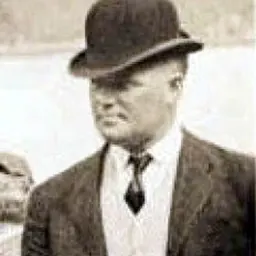
Frank J. Wilson
Director of the United States Secret Service
About Frank J. Wilson
Lived 1887 – 1970 (aged 83). Frank J. Wilson was an American u.S. Secret Service agent.
Frank John Wilson (May 19, 1887 – June 22, 1970) was best known as the Chief of the United States Secret Service and a former agent of the Treasury Department's Bureau of Internal Revenue, later known as the Internal Revenue Service. Wilson notably contributed in the prosecution of Chicago mobster Al Capone in 1931, and as a federal representative in the Lindbergh kidnapping case.
Early life Frank J. Wilson was born in Buffalo, New York, on May 19, 1887. During World War I Wilson served for the United States Army for a brief stint before being honorably discharged in 1919 due to poor eyesight. In the same year Wilson became the Chief New York State Investigator for the United States Food and Drug Administration. This was short lived as Wilson then worked for the Department of Justice Fair Price Commission in 1920. In the same year Wilson took the opportunity to work for the United States Department of the Treasury as part of the Internal Revenue Bureau's intelligence unit until 1936. During this time Wilson helped on the Al Capone investigation, the Lindbergh kidnapping, and the Huey Long assassination. Overall, not much is known about Wilson's early life other than his career due to lack of information.
Capone investigation Upon joining the United States Treasury Department's Intelligence Unit in 1920, the former accountant Wilson would earn a reputation throughout Prohibition as a thorough, if not obsessive, investigator of tax returns and income."[Wilson] fears nothing that walks. He will sit quietly looking at books eighteen hours a day, seven days a week, forever, if he wants to find something in those books." - Elmer L. Irey "[Wilson] sweats ice water" - Suspect who was interrogated by Frank J. WilsonIn January 1929, an investigation conducted by Prohibition agents under Alexander Jamie (including Jamie's brother-in-law, Eliot Ness) into bootlegging in Chicago Heights uncovered evidence indicating that Al Capone's brother Ralph had not paid taxes on a sizable illegal income. The 1927 Supreme Court decision in United States v. Sullivan having already established that any criminal activities that yield an income are subject to income taxes, the Intelligence Unit of the Bureau of Internal Revenue headed by Elmer L. Irey began to build tax evasion cases against leading figures in the Chicago Outfit, with the ultimate goal of convicting Al Capone. In April 1930, their efforts resulted in Ralph Capone's conviction for tax fraud, but the Intelligence Unit still lacked enough evidence to build a case against his brother Al.
In March 1930, attorney Frank J. Loesch of the Chicago Crime Commission asked President Herbert Hoover to take down Al Capone, adding additional impetus to the Intelligence Unit's efforts. Tax investigators in Chicago suspected that a large amount of Capone's income came from his interest in a race track for dogs, called the Hawthorne Kennel Club, in Cicero, run by a lawyer named E. J. O'Hare. In May 1930, Irey sent Frank J. Wilson, then 42, to lead the investigation into linking Capone to taxable income through his dealings with O'Hare.
After the Treasury Department finally got all the evidence they needed to put an end to Capone, in March and June 1931 a grand jury met in court to decide his fate. The result was that Capone was indicted on 23 counts of tax evasion of over $250,000 of income from 1924 to 1929. Capone was proven guilty and was given an 11-year prison sentence and fined $300,000 in court costs. This was considered an astronomical price to pay for a tax evader at the time. Capone after serving his 11-year sentence at Alcatraz, was released and suffered from syphilis in the brain which led to his death in 1947 at age 48. Without the efforts of Wilson and his team Capone may never have been stopped, or his reign of terror could have gone on much longer. Other sources credit Elmer Irey.
In 1936, Wilson was named chief of the Secret Service and, resisting attempts by J. Edgar Hoover to transfer the Secret Service to the Justice Department under the jurisdiction of the FBI during the early 1940s, he had nearly eliminated the production and distribution of counterfeit money through a nationwide education program called "Know Your Money" by the time of his retirement in 1947. During his administration, he also initiated practices in presidential security which have since become standard procedure.
An article he wrote, Undercover Man: He Trapped Capone, was the basis for the 1949 film The Undercover Man. In the Brian De Palma 1987 film The Untouchables, the character Oscar Wallace (played by Charles Martin Smith) is loosely based upon Wilson.
On top of writing Undercover Man: He Trapped Capone in 1949, Wilson also wrote other books. In 1940 his first book was The Archives, and in 1945 he wrote Doubtful Dollars both of which have to do with his illustrious career.
Wilson died at the Georgetown University Hospital in Washington, D.C. on June 22, 1970, at the age of 83.
Don’t just read it —
keep it.
Full-length biographies made to live with: read them, listen on the way to work, watch them tonight.
- E-book
- Audio
- Video
Instant download · yours to keep · every purchase keeps this site free
Important facts
People in Frank J. Wilson's life
Named in this biography and alive at the same time
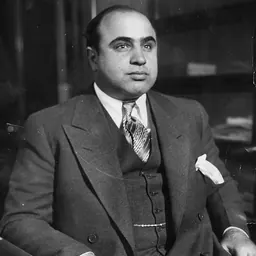
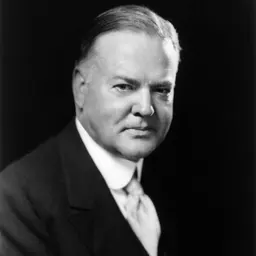

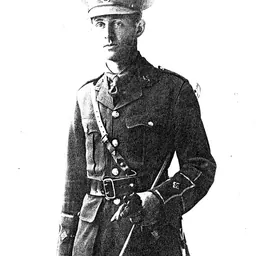

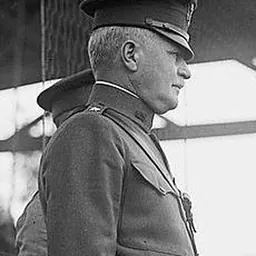

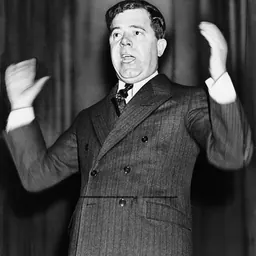
Related people
Same field, nearest in time

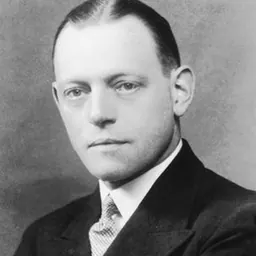

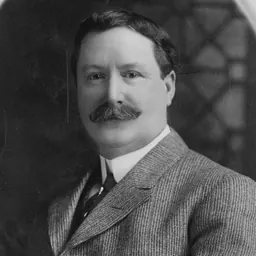
Contemporaries
People whose lives overlapped Frank J. Wilson's





Frequently asked questions
Who was Frank J. Wilson?
director of the United States Secret Service (1887-1970)
When was Frank J. Wilson born?
Frank J. Wilson was born on 19 May 1887 in Buffalo.
When did Frank J. Wilson die?
Frank J. Wilson died on 22 June 1970 in Washington, D.C..
What was Frank J. Wilson's occupation?
Frank J. Wilson was an u.S. Secret Service agent.
What nationality was Frank J. Wilson?
Frank J. Wilson was American.
Sources & further reading
Cite this page
APA: Biography.guide. (2026). Frank J. Wilson. https://biography.guide/frank-j-wilson/
MLA: "Frank J. Wilson." Biography.guide, https://biography.guide/frank-j-wilson/.
Chicago: "Frank J. Wilson." Biography.guide. https://biography.guide/frank-j-wilson/.
Data last updated: 2026-09-20 · Spot an error? Report a correction.
Page generated 2026-09-27 05:29 UTC