
About Frank Gallagher
Lived 1903 – 1962 (aged 58–59). Frank Gallagher was an Irish journalist.
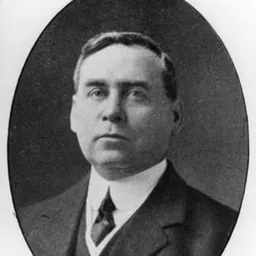
Francis David Gallagher (1893–1962), also known by the pseudonym David Hogan, was an Irish journalist, author and Volunteer. Born in Cork, he was the son of James J. Gallagher, secretary to Dwyer & Co. Ltd. He was educated at Presentation Brothers College, Cork, Cork and for a short period at University College Cork.
Journalist As a young journalist, Gallagher was initially employed as London correspondent of William O'Brien's Cork Free Press, subsequently its final editor, though himself a separatist, personally admired O'Brien. The paper suffered closure in 1916 soon after the appointment of Lord Decies as Chief Press Censor for Ireland. Decies warned the press to be careful about what they published. Such warnings had little effect when dealing with such papers as the Cork Free Press. It was suppressed after Gallagher accused the British authorities of lying about the conditions and situation of Irish Republican prisoners in the Frongoch internment camp. Gallagher also contributed to the nationalist newspaper New Ireland.
Volunteer Following the Easter Rising of 1916, he joined the IRA, becoming an Officer in the 3rd battalion of the Dublin Brigade. Gallagher collaborated with Erskine Childers to publish the Irish Bulletin alongside the Republican publicity staff and fought alongside Éamon de Valera during the Irish War of Independence. Gallagher served as director of publicity for Sinn Féin in the days leading up to their landslide victory in the 1918 United Kingdom general election in Ireland Gallagher and Robert Brennan were the significant contributors to the Irish Bulletin which was produced at this time. He wrote several short stories for de Valera under various pseudonyms. Gallagher served long stints in prison due to his IRA involvement and went on many hunger strikes (the shortest lasting three days, the longest 41). In the 1920s Gallagher and thousands of other Irish Republican prisoners went on hunger strike to protest their internment without charges/trials and prison conditions. (See: 1923 Irish hunger strikes). Gallagher led approximately 100 interned men on a successful 14 day hunger strike demanding Prisoner of War status or release (they were released). In his day to day journal while on hunger strike, Gallagher writes about his motivations on the first day of the strike (April 5, 1920) in Mountjoy Prison on (Easter Monday): "There is a queer happiness in me. If it were not so quiet in this cell and in the whole jail, I would sing and call out in sheer gaiety of spirit...The fight is on, the fight that now can have but one ending...triumph and freedom, something done for liberty and the rights of all men."
Later life In December 1931, Gallagher was prosecuted by an Irish Free State Military tribunal for Seditious libel for publishing articles alleging Gardaí had mistreated the opponents (i.e. Anti-Treaty republicans) of the Irish Free State government, this was facilitated by Amendment No. 17 of Constitution of the Irish Free State, he was convicted and fined £50.
Prior to the establishment of Fianna Fáil, in the 1920s Gallagher contributed to An Phoblacht, the weekly newspaper of the Republican movement. He was subsequently de Valera's director of publicity and editor of The Irish Press
From 1954 he worked at the National Library of Ireland up until his death on 16 July 1962, at which time he was working on a biography of de Valera. Portions of it were published posthumously as The Anglo-Irish Treaty (1965). Gallagher's implacable hostility to the Anglo-Irish Treaty inevitably colours his analysis; but despite his belief that de Valera was entirely in the right in the ensuing conflict, he makes impressive efforts to be fair to those who negotiated the Treaty, especially Arthur Griffith. He published Days of Fear (1928) and under the pseudonym 'David Hogan', The Four Glorious Years (1953).
Don’t just read it —
keep it.
Full-length biographies made to live with: read them, listen on the way to work, watch them tonight.
- E-book
- Audio
- Video
Instant download · yours to keep · every purchase keeps this site free
Important facts
People in Frank Gallagher's life
Named in this biography and alive at the same time

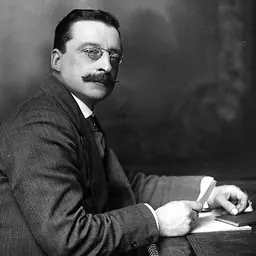
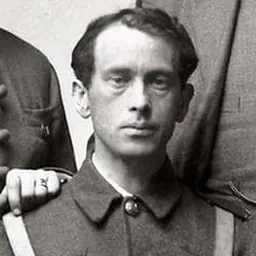
Related people
Same field, nearest in time




Contemporaries
People whose lives overlapped Frank Gallagher's

Frequently asked questions
Who was Frank Gallagher?
Irish journalist, author, volunteer (1893–1962)
When was Frank Gallagher born?
Frank Gallagher was born in 1903.
When did Frank Gallagher die?
Frank Gallagher died in 1962.
What was Frank Gallagher's occupation?
Frank Gallagher was a journalist.
What nationality was Frank Gallagher?
Frank Gallagher was Irish.
Sources & further reading
· DBpedia: Frank Gallagher (author)
Cite this page
APA: Biography.guide. (2026). Frank Gallagher. https://biography.guide/frank-gallagher-journalist/
MLA: "Frank Gallagher." Biography.guide, https://biography.guide/frank-gallagher-journalist/.
Chicago: "Frank Gallagher." Biography.guide. https://biography.guide/frank-gallagher-journalist/.
Data last updated: 2026-09-20 · Spot an error? Report a correction.
Page generated 2026-09-27 05:05 UTC