
Frank Finkel
American soldier
About Frank Finkel
Lived 1854 – 1930 (aged 76). Frank Finkel was an American.
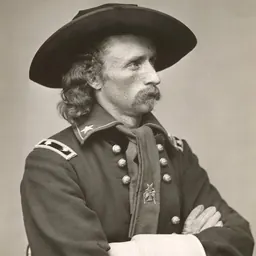
Frank Finkel (January 29, 1854 – August 28, 1930) was an American who rose to prominence late in his life and after his death for his claims to being the only survivor of George Armstrong Custer's famed "Last Stand" at the Battle of the Little Bighorn on June 25, 1876. Historians disagree over whether Finkel's claim is accurate; although he provided several details that would only have been known by someone who was at Little Bighorn, there are inconsistencies in his accounts of events.
Finkel was born in Ohio to German immigrant parents in 1854. He and others claimed that he enlisted in the United States Army in the early 1870s and served under George Custer during the Great Sioux War of 1876. During the Battle of the Little Bighorn, Finkel claims he was wounded early in the fighting and his horse bolted from the battle. After being nursed back to health, he traveled to St. Louis, then settled in Columbia County, Washington. Over the next 40 years, he amassed a significant estate as a farmer in the town of Dayton and came to be regarded as one of Dayton's "pioneers". Sometime around 1920, he began telling companions that he survived the Battle of the Little Bighorn, and for the next several years recounted his alleged experiences in the battle.
Historians who support Finkel's claim argue that several details in Finkel's account could only be known by someone who was at Little Bighorn, including details of events in the battle that were not widely known until after Finkel's death, and the location and quantity of streams of potable water in the area. Those who disagree with Finkel's claim argue that records at the time do not indicate the existence of Frank Finkel and that the United States Army knows the fate of all the people who have been suggested as possible false names for Finkel.
Early life Frank Finkel is believed to have been born in Marietta, Ohio to Peter and Magdalena Finkel. His father was a German immigrant who owned a farm with six sons and a daughter. His family spoke German at home, and Peter sent his children to public schools. Frank Finkel grew up bilingual and fully literate. Peter Finkel died in 1868. Koster also uncovered a document revealing that Finkel's widow believed he enlisted in September 1874 in Iowa, under the alias "Frank Hall". At the time of the Battle of the Little Bighorn he was second sergeant of C Company of the 7th Cavalry under the command of Tom Custer.
Don’t just read it —
keep it.
Full-length biographies made to live with: read them, listen on the way to work, watch them tonight.
- E-book
- Audio
- Video
Instant download · yours to keep · every purchase keeps this site free
Important facts
People in Frank Finkel's life
Named in this biography and alive at the same time


Contemporaries
People whose lives overlapped Frank Finkel's





Frequently asked questions
Who was Frank Finkel?
American soldier (1854–1930)
When was Frank Finkel born?
Frank Finkel was born on 29 January 1854 in Washington County.
When did Frank Finkel die?
Frank Finkel died on 28 August 1930 in Dayton.
What nationality was Frank Finkel?
Frank Finkel was American.
Sources & further reading
Cite this page
APA: Biography.guide. (2026). Frank Finkel. https://biography.guide/frank-finkel/
MLA: "Frank Finkel." Biography.guide, https://biography.guide/frank-finkel/.
Chicago: "Frank Finkel." Biography.guide. https://biography.guide/frank-finkel/.
Data last updated: 2026-09-20 · Spot an error? Report a correction.
Page generated 2026-09-27 05:28 UTC