
About Frank Anthony
Lived 1908 – 1993 (aged 85). Frank Anthony was an Indian lawyer, politician and advocate.
Frank Anthony (25 September 1908 – 3 December 1993) was a leader of the Anglo-Indian and Christian community in India, and was until his death the Anglo-Indian nominated representative in the Parliament of India except during the 6th and 9th Lok Sabha. He served as the president of the All India Anglo-Indian Association.
Frank Anthony was a part of the constituent assembly that wrote the Constitution of India.
Early life and education Anthony was born in Jubbulpore (now called Jabalpur) on 25 September 1908. Anthony was educated at Christ Church High School and Robertson College in Jabalpur. He studied at Nagpur University, and Inner Temple in London and became a barrister. Louis D'Silva and M. Ezra Sargunam stated that "Frank Anthony had a brilliant academic career" and he was the winner of the Viceroy's All-India Gold Medal for English.
Role in Constituent Assembly In 1942–46, he was a member of the Central Legislative Assembly, and later a member of the Constituent Assembly of India during 1946–50 and represented the Anglo-Indian community in assembly. He was also temporary vice president of Constituent Assembly and was a part of the Advisory Committee and Sub-committee on Minorities.
Career In 1942, Anthony was elected the president-in-chief of the community of the All India Anglo-Indian Association. He opposed the partition of India on the grounds that it would jeopardise the interests of the minority communities. First, Anthony argued that in the proposed area of Pakistan there would still be a considerable number of non-Muslims, and a large number of Muslims would also remain in India. Hence, he argued, ‘the minorities problem after the division of India would be as acute, perhaps much more acute, in both Pakistan and Hindustan as it is today.’ Secondly, he pointed out that the Muslim League plan would ‘lead to the Balkanising of India,’ potentially ‘emasculating’ India as an ‘international power.’ Anthony’s third argument was that India was unlike Europe and so there was no basis for division as India had achieved ‘a basic ethnic and cultural unity.’ Lastly, Anthony maintained that the division of India would lead to war between the two countries and the ‘propagation of narrow and fanatical economic and political ideologies. the hatred was really started by Jinnah, there's no doubt about it. ...The 80% of illiterate people ... the killings in Calcutta ... [were] something indescribable. There we had the largest number of Anglo-Indians, about 30,000, but ... Anglo-Indians were not touched ... My Anglo-Indian Association saved thousands of Hindus. Went into the Muslim localities ... gave them ... food, and ... brought some of them out ... but nobody touched them.
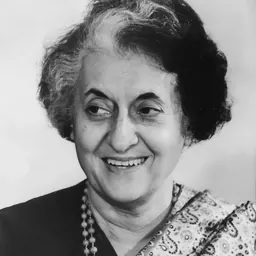
After Anthony retired from practising as a lawyer, Nehru in 1952 asked him to go to Peshawar to defend Mehr Chand Khanna, the ex-finance minister of the North-West Frontier Province. In those days, no Hindu lawyer would go to Peshawar. Following Anthony's discussions with the chief minister, Khanna was released. In October 1946, he was one of India's delegates at the United Nations. In 1948 and 1957, he represented India at the Commonwealth Parliamentary Conference. In 1978, Anthony assisted the Nehru family when Indira Gandhi was arrested.
Anthony's greatest contribution was in the field of Anglo-Indian and Christian education. In 1947, he was elected chairman of the Inter-State Board of Anglo-Indian Education. He was also the Founder-Chairman of the All India Anglo-Indian Educational Trust which, today, owns and administers six schools named after him, including The Frank Anthony Public School, New Delhi, The Frank Anthony Public School, Bengaluru, The Frank Anthony Public School, Kolkata and three Frank Anthony Junior Schools in the cities of Bangalore, Kolkata and Delhi. These schools took as inspiration the model of the long-established English public school. In the words of Alan Basil de Lastic, the former Archbishop of Delhi, Frank Anthony "always stood for the Christian right to education".
Anthony was also the chairman of the ICSE Council. He was a member of the Church of North India, a United Protestant denomination of Christianity.
Death Frank Anthony died on 2 December 1993 of cardiac arrest. On 3 December 1993, the Indian Parliament adjourned after mourning his death. His funeral liturgy was presided over by Pritam Santram, a bishop of the Church of North India; Alan Basil de Lastic, the Roman Catholic Archbishop of Delhi was present, along with other Christian clergy.
Don’t just read it —
keep it.
Full-length biographies made to live with: read them, listen on the way to work, watch them tonight.
- E-book
- Audio
- Video
Instant download · yours to keep · every purchase keeps this site free
Important facts
People in Frank Anthony's life
Named in this biography and alive at the same time



Related people
Same field, nearest in time


Contemporaries
People whose lives overlapped Frank Anthony's



Frequently asked questions
Who was Frank Anthony?
Indian politician
When was Frank Anthony born?
Frank Anthony was born on 25 September 1908 in Jabalpur.
When did Frank Anthony die?
Frank Anthony died on 2 December 1993 in New Delhi.
What was Frank Anthony's occupation?
Frank Anthony was a lawyer, politician and advocate.
What nationality was Frank Anthony?
Frank Anthony was Indian.
Sources & further reading
Cite this page
APA: Biography.guide. (2026). Frank Anthony. https://biography.guide/frank-anthony/
MLA: "Frank Anthony." Biography.guide, https://biography.guide/frank-anthony/.
Chicago: "Frank Anthony." Biography.guide. https://biography.guide/frank-anthony/.
Data last updated: 2026-09-22 · Spot an error? Report a correction.
Page generated 2026-09-27 05:19 UTC