
About François Briot
Lived 1550 – 1616 (aged 65–66). François Briot was a French medalist, goldsmith, metal engraver, printmaker, tinsmith and engraver.
François Briot (155026 April 1616) was a French medallist, engraver, and goldsmith.
Early life François Briot was born in 1550 in Damblain in the Duchy of Lorraine (present-day Vosges, France).
Briot inherited both his Protestant faith and his pewterer's trade from his Huguenot family in Lorraine. In 1579, he left the Catholic-controlled Lorraine and took refuge in Mömpelgard (now Montbéliard) amid the tumultuous French Wars of Religion.
Career Records document Briot's acceptance into the Corporation of Saint Eligius, the guild of metalworkers under the patronage of the goldsmiths' saint, in 1580. He was sworn into the guild on 12 April 1580, by Jehan Morel, the guild master, and Richard Jalloux, a guild servant.
Briot's earliest known work is a medal from 1585 depicting a three-year-old Prince John Frederick of Württemberg, son of the sovereign Count of Montbéliard. Around this time, Briot became chief engraver to Frederick I. By the following year, Briot appeared in the ranks of the burghers of Montbéliard. Early pewter use in France and Germany was mainly used by the court, the nobility, and high-ranking church officials, whose tastes emphasized more complex shapes and more ornate decoration than those found in England. Briot's chef-d'œuvre is a famous pewter basin representing Temperance. It is said to have been created between 1585 and 1590.
He engraved two medals in 1593 depicting the effigy and arms of Prince John Frederick, who later inherited the Duchy of Württemberg. He was ordered to pay a settlement of 6,752 florins and 11 batzen.
Personal life His brother was Didier Briot, who also emigrated from Lorraine and became an engraver. Briot was particularly noted for elevating pewter to an artistic medium, producing works admired for their elegance, disciplined figural design, and inventive bas-relief ornamentation. His works have been regarded by French collectors as among the finest examples of 16th-century pewter craftsmanship.
A signed pewter salver by Briot, one of twelve known examples and once part of the Georges Spetz collection, was purchased by T. D. Einstein for $140 at the American Art Galleries in New York in February 1925. It was later donated to the Saint Louis Art Museum by Milton I. D. Einstein in 1957. Among the 11 remaining salvers by Briot at the time, locations included the Louvre in Paris; the Victoria and Albert Museum in London; the Kaiser Friedrich Museum in Berlin; and museums in Cologne, Munich, and Dresden, with the rest privately owned. The Louvre Paris has preserved a basin with relief work by Briot made for Henry III of France. The Victoria and Albert Museum houses a salver featuring a relief scene of Susanna and the Elders. It entered the V&A's collection in 1855 after being bought from the Ralph Bernal collection. By the beginning of the 20th century, the Musée de Cluny had acquired a pewter ewer by Briot, decorated with relief figures and ornaments. The Montbéliard Museum also displayed a half-coin signed by Briot depicting a bust portrait of the Duke of Württemberg.
Don’t just read it —
keep it.
Full-length biographies made to live with: read them, listen on the way to work, watch them tonight.
- E-book
- Audio
- Video
Instant download · yours to keep · every purchase keeps this site free
Important facts
People in François Briot's life
Named in this biography and alive at the same time

Related people
Same field, nearest in time
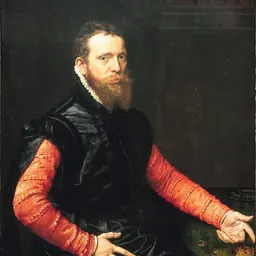


Contemporaries
People whose lives overlapped François Briot's




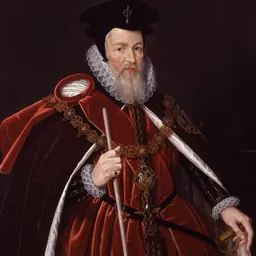
Frequently asked questions
Who was François Briot?
French medallist and goldsmith (1550-1616)
When was François Briot born?
François Briot was born in 1550 in Damblain.
When did François Briot die?
François Briot died on 26 April 1616 in Montbéliard.
What was François Briot's occupation?
François Briot was a medalist, goldsmith, metal engraver, printmaker, tinsmith and engraver.
What nationality was François Briot?
François Briot was French.
Sources & further reading
Cite this page
APA: Biography.guide. (2026). François Briot. https://biography.guide/francois-briot/
MLA: "François Briot." Biography.guide, https://biography.guide/francois-briot/.
Chicago: "François Briot." Biography.guide. https://biography.guide/francois-briot/.
Data last updated: 2026-09-20 · Spot an error? Report a correction.
Page generated 2026-09-27 05:17 UTC