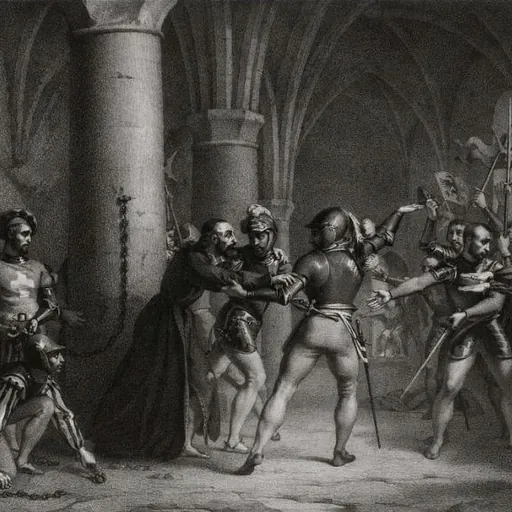
About François Bonivard
Lived 1493 – 1570 (aged 76–77). François Bonivard was a politician and historian.
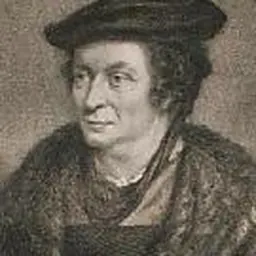
François Bonivard (or Bonnivard; 1493–1570) was a nobleman, ecclesiastic, historian, and Geneva patriot at the time of the Republic of Geneva. His life was the inspiration for Lord Byron's 1816 poem The Prisoner of Chillon. He was a partisan of the Protestant Reformation, and by most accounts was a libertine, despite his vocation.
Biography Bonivard was the son of Louis Bonivard, Seigneur de Lunes, and was born at Seyssel into a noble family of Savoy. He was educated by various monks under the jurisdiction of his uncle, Jean-Aimé de Bonivard, who was prior of St.-Victor, a monastery just outside the walls of Geneva. At the age of seven, Bonivard was sent to study at Pinerolo, Italy; for most of his youth, he reportedly preferred amusements to learning.
After Charles III, Duke of Savoy, seized the Bonivards' property except for the priory, Bonivard sided with the patriots of Geneva who opposed the Savoy efforts to control the region. In 1519 he fled Geneva, disguised as a monk, upon news that the Duke was approaching. He was cozened by friends, the Lord of Varuz and Brisset, the Abbot of Montheron of the Pays de Vaud, who betrayed him. They turned him over to the Duke, who imprisoned him at Grolée, one of his castles on the Rhone, from 1519 to 1521. The Abbot of Montheron was given the monastery St.-Victor, but was evidently poisoned by friends of Bonivard, who also worked to release Bonivard from prison. The Genevese also awarded him a seat on the Council of Two Hundred in 1537, A few years later, Catherine was arrested in their house for immorality and infidelity; Bonivard sought to exonerate her, but she was executed by drowning in the Rhone River, and her lover was beheaded.
In 1542, he was entrusted with compiling a history of Geneva from its beginning, and wrote that story to the date of 1530 before he died. The manuscript of Chroniqves de Genève (Chroniques de Genève) was sent to John Calvin for correction in 1551, but not actually published until 1831. In his later years, he enlisted the help of Antoine Froment to help with the chronicle.
Other published works include Advis et Devis de la Source de l'Idolatrie et Tryannie Papale, Advis et Devis de Langues (1563), and Advis et Devis sur l'Ancienne et Nouvelle Police de Genève.
In 1551, he donated his considerable library to the public. He left everything to the city of Geneva in his will. He died in 1570 at the age of seventy-seven. His exact date of death is not known because of a gap in the death records of the city.
Don’t just read it —
keep it.
Full-length biographies made to live with: read them, listen on the way to work, watch them tonight.
- E-book
- Audio
- Video
Instant download · yours to keep · every purchase keeps this site free
Important facts
People in François Bonivard's life
Named in this biography and alive at the same time


Related people
Same field, nearest in time


Contemporaries
People whose lives overlapped François Bonivard's





Frequently asked questions
Who was François Bonivard?
Genevan patriot, politician and historian
When was François Bonivard born?
François Bonivard was born in 1493 in Seyssel.
When did François Bonivard die?
François Bonivard died in 1570 in Geneva.
What was François Bonivard's occupation?
François Bonivard was a politician and historian.
What nationality was François Bonivard?
François Bonivard's recorded nationality: Republic of Geneva.
Sources & further reading
· Wikipedia: François Bonivard
Cite this page
APA: Biography.guide. (2026). François Bonivard. https://biography.guide/francois-bonivard/
MLA: "François Bonivard." Biography.guide, https://biography.guide/francois-bonivard/.
Chicago: "François Bonivard." Biography.guide. https://biography.guide/francois-bonivard/.
Data last updated: 2026-09-23 · Spot an error? Report a correction.
Portrait: Wikimedia Commons · author & licence
Page generated 2026-09-27 05:07 UTC