
About Franciszek Latinik
Lived 1864 – 1949 (aged 85). Franciszek Latinik was a Polish and Austrian military officer.
Franciszek Ksawery Latinik (17 July 1864 – 29 August 1949) was a Polish military officer, Colonel of Austro-Hungarian Army and Major General of the Polish Army.
Graduate of the General Staff Academy in Vienna, from 1914 he was a commander of the 100th Infantry Regiment of Austria-Hungary, with whom he participated in May 1915 in the break-up of the Russian front in the Battle of Gorlice. From 1918 after Poland gained independence, he served in the Polish Army; in January 1919 he was the commander of Polish forces fighting in Cieszyn Silesia against the Czech offensive. During the Battle of Warsaw in 1920 he commanded the First Polish Army and served as the besieged by the Red Army.
Biography He was born as the son of Antoni Izydor Latinik, high school geography teacher and author of the work Jeografija Galicyi dla szkół ludowych (Geography of Galicia for the People's Schools), and Kornelia née Romer, daughter of Teofil Romer, nobleman and Kraków Uprising participant, and granddaughter of Ignacy Łempicki, the grandson of Jan Wilhelm Hiż.
In 1882 he graduated from the Cadets School in Łobzów (currently a part of Kraków) and started service in Austro-Hungarian Army. He studied at the Academy of the General Staff in Vienna (1889–1891), also serving in the line, the staffs of the units, and in the General Staff. In 1896 he was promoted to captain, and in 1909 to Major. In 1909–1913 he commanded his original Cadets School in Łobzów. He was the commanding officer of the reserve officer school, lecturer in tactics at the Officer School of Infantry. On May 22, 1919, he was appointed commander of the Cieszyn Front of the South-West Front and on 30 May 1919 he was appointed commander of the 6th Infantry Division. From October 13, 1919, to March 1920, he commanded the 7th Infantry Division and at the same time ilesian Front. By the decision of the Chief Commander of November 23, 1919, he was appointed Lieutenant General on December 1, 1919. From February to August 1920 he was a representative of the Polish Army in the Border and Plebiscite Commission in Cieszyn.
On August 5, 1920, in the face of Red Army pushing west, just few days before Battle of Warsaw, Latinik was appointed Military Governor of Warsaw by the Chief Commander Józef Piłsudski. The main task of the Governor was to fortify the Modlin–Zegrze–Warsaw triangle. The Governor was supervising local civil and military authorities and had the right to appoint civilians for war benefits and to give local administrative authorities instructions on security, public order and peace. The Governor's adjutants could have arrested all suspected persons, regardless of their military rank and position. Evacuation of military and civilian institutions was prepared in the event of the collapse of defense of the Warsaw pretext. The Governorate also dealt with food supplies for the city and set maximum prices for groceries in order to prevent speculation. At the same time Latinik served as the commander of the 1st Polish Army, repelling the Bolshevik blow to the city. He took part in the fights in the Northern Front, among others in Battle of Radzymin.
The Military Governorate of Warsaw was dissolved on September 23, 1920. During the pursuit after the Red Army, Latinik was the commander of the Southern Group of the 6th Army. On April 20, 1921, he was appointed the commander of General District „Kielce”. He took over the duties of the district commander on 14 May, after his transfer holiday, and held the position until the General District Command "Kielce" was liquidated. Between September 20 and October 9, 1921, he stayed in Poznań for "family affairs". At the command of the district commander, he was temporarily replaced by a lieutenant general Eugeniusz Pogorzelski.
From November 15, 1921, he commanded the District No. X Corps in Przemysl. In the years 1920–22 he was part of the First Interim Chapter of the Virtuti Militari Order.
He was an antagonist to Piłsudski, who criticized Latinik's activity in Przemyśl. Latinik retired from active service in March 1925, after being conflicted with some former members of Polish Legions.
He lived in Kraków at the address Studencka Street 2. He was socially active, being a member of the "Development" Society. After the Second World War, at the age of 81, he founded and organized the Association of Military Returnees and Widows. Although he never engaged politically, he sympathized with the National Democracy; he had a guide of Kraków, in which only the shops belonging to Catholics were marked, as his grandson recalled: „Here and there, manually, grandfather marked a point and added word Jew”. He published several military memoir books, including Żołnierz polski pod Gorlicami 1915 (Polish Soldier at Gorlice, Przemyśl, 1923), Walka o Śląsk Cieszyński w r. 1919 (Fight for Teschen Silesia in year 1919), Bój o Warszawę. Rola wojskowego gubernatora i 1-ej armii w bitwie pod Warszawą w 1920 r. (Fight for Warsaw. The Role of the Military Governor and the 1st Army at the Battle of Warsaw in year 1920, Bydgoszcz, 1931) and a chapter Wspomnienie o generale broni Tadeuszu Rozwadowskim (The memory of General Tadeusz Rozwadowski) in a monograph dedicated to Tadeusz Rozwadowski (published in Kraków, 1929). He died in 1949 and was buried in the family tomb at the Rakowicki Cemetery.
Family In 1902 he married Helena Stiasny-Strzelbicka. They had three daughters: Anna (1902–1969), Irena (1904–1974) and Antonina (1906–1989), and six grandchildren: Irena and Andrzej Popiel, Janusz and Jerzy Rieger and Jerzy and Jan Vetulani.
Dates of rank Austro-Hungarian Army 1885: Second Lieutenant (Leutnant) 1889: Lieutenant (Oberleutnant) 1896: Captain (Rittmeister) 1909: Major (Major) 1911: Lieutenant Colonel (Oberstleutnant) 1915: Colonel (Oberst)
Polish Army 1919: Brigadier General (generał podporucznik) 1922: Major General (generał dywizji)
Decorations and awards Austria-Hungary
Memorial Medal for the War of 1918–1921 Medal of the 10th Anniversary of Independence (1928)
Others
He refused to accept Military Order of Maria Theresa for venturesome attitude during battle of Gorlice, claiming that after Poland reclaimed independence, he may accept only distinctions from the Polish government.
Don’t just read it —
keep it.
Full-length biographies made to live with: read them, listen on the way to work, watch them tonight.
- E-book
- Audio
- Video
Instant download · yours to keep · every purchase keeps this site free
Important facts
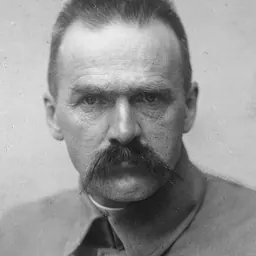
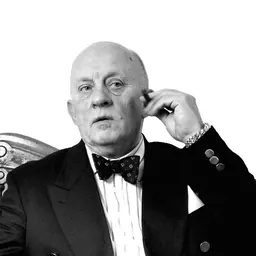
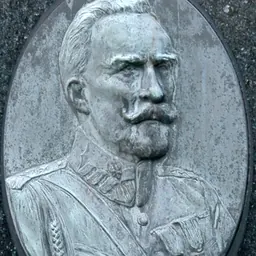
People in Franciszek Latinik's life
Named in this biography and alive at the same time
Related people
Same field, nearest in time


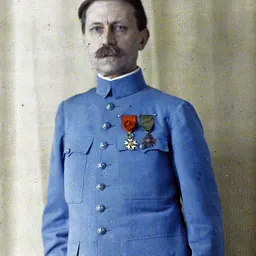


Contemporaries
People whose lives overlapped Franciszek Latinik's



Frequently asked questions
Who was Franciszek Latinik?
Polish general (1864–1949)
When was Franciszek Latinik born?
Franciszek Latinik was born on 17 July 1864 in Tarnów.
When did Franciszek Latinik die?
Franciszek Latinik died on 29 August 1949 in Kraków.
What was Franciszek Latinik's occupation?
Franciszek Latinik was a military officer.
What nationality was Franciszek Latinik?
Franciszek Latinik was Polish and Austrian.
Sources & further reading
· Wikipedia: Franciszek Latinik
Cite this page
APA: Biography.guide. (2026). Franciszek Latinik. https://biography.guide/franciszek-latinik/
MLA: "Franciszek Latinik." Biography.guide, https://biography.guide/franciszek-latinik/.
Chicago: "Franciszek Latinik." Biography.guide. https://biography.guide/franciszek-latinik/.
Data last updated: 2026-09-20 · Spot an error? Report a correction.
Page generated 2026-09-27 05:23 UTC