
About Francisco Pacheco
Lived 1535 – 1599 (aged 63–64). Francisco Pacheco was a poet.
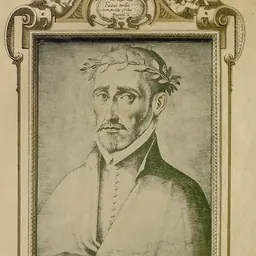
Francisco Pacheco (baptised 22 November 1535 – 10 October 1599) was a Spanish theologian, humanist, poet, and writer. Contemporary sources often refer to him as El Licenciado Pacheco or El Canónigo Pacheco.
At around that time, Pacheco entered Fernando de Herrera's circle of "doctos amigos" ["learned friends"], poets and humanists, which included Francisco de Medina, who had studied Theology at the same time as Pacheco,
He spent the following few years composing his Latin poems and working for the (Cabildo (city council) preparing inscriptions for the Alameda de Hércules (1574) and the Puerta de la Carne (1577). Towards the end of that decade, the Cathedral chapter ended their ostracism of him and he was again commissioned to prepare iconographical programmes for the Cathedral's chapterhouses (1579) and for its main monstrance (1580-1587).
Although the Crown had instituted disciplinary proceedings in 1596 for corruption at the Hospital, for which Pacheco would be dismissed shortly before his death in 1599, in 1597 King Philip appointed him senior chaplain of the Royal Chapel, enabling him to continue working on the spectacular Tomb of Philip II (Túmulo del rey Felipe II en Sevilla).
Academia de Francisco Pacheco The Academia de Francisco Pacheco was an academia literaria in Seville which brought together painters, poets and writers such as Pablo de Céspedes, Juan de Jáuregui, Francisco de Rioja, Cervantes, Baltasar del Alcázar and Juan de la Cueva. Run by the painter Francisco Pacheco, the poet's nephew, who had adopted his uncle's name as a pseudonym, it was the continuation of an earlier academia founded by Juan de Mal Lara, Fernando de Herrera and his uncle, Francisco Pacheco. By 1597, the painter had taken over as director.
Works Poems Macarronea, 1565: a satirical and earthy poem written in pig-Latin ("marraconea") made up of 632 hexameters criticising the Church, the University and poetic circles. had all the city's poets arrested and put in jail, leading to another satire being sent in defence of the jailed poets and they were all released. Sermones sobre la instauración de la libertad del espíritu [Sermons on Restoration of the Freedom of the Spirit], c. 1573: two extensive Horatian epistles in hexameters, strongly criticising the contemporary social order –nobility, royalty, slavery, torture, Law, Court, Church– and expressing the ideal of withdrawing to the Peña de Aracena together with Benito Arias Montano and Pedro Vélez de Guevara, and his most intimate colleagues, to devote themselves to poetry, erudition and Christian spirituality and to thus conquer the freedom of the spirit.
Don’t just read it —
keep it.
Full-length biographies made to live with: read them, listen on the way to work, watch them tonight.
- E-book
- Audio
- Video
Instant download · yours to keep · every purchase keeps this site free
Important facts
People in Francisco Pacheco's life
Named in this biography and alive at the same time




Related people
Same field, nearest in time
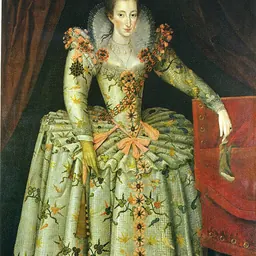
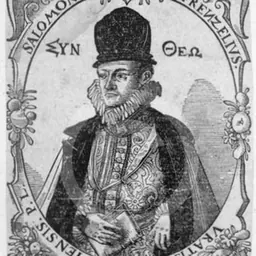
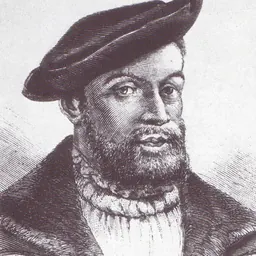
Contemporaries
People whose lives overlapped Francisco Pacheco's





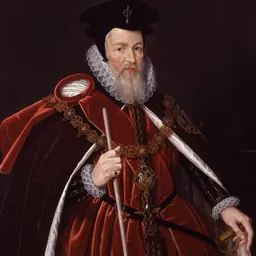
Frequently asked questions
Who was Francisco Pacheco?
Spanish poet (1535-1599)
When was Francisco Pacheco born?
Francisco Pacheco was born in 1535.
When did Francisco Pacheco die?
Francisco Pacheco died in 1599.
What was Francisco Pacheco's occupation?
Francisco Pacheco was a poet.
Sources & further reading
· Wikipedia: Francisco Pacheco
· DBpedia: Francisco Pacheco (poet)
Cite this page
APA: Biography.guide. (2026). Francisco Pacheco. https://biography.guide/francisco-pacheco-poet/
MLA: "Francisco Pacheco." Biography.guide, https://biography.guide/francisco-pacheco-poet/.
Chicago: "Francisco Pacheco." Biography.guide. https://biography.guide/francisco-pacheco-poet/.
Data last updated: 2026-09-20 · Spot an error? Report a correction.
Page generated 2026-09-27 05:11 UTC