
About Francisco Medrano
Lived 1570 – 1607 (aged 36–37). Francisco Medrano was a Spanish poet, writer and catholic priest.
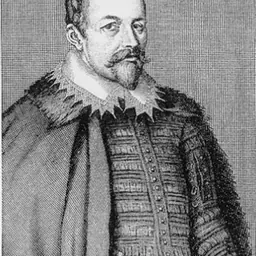
Francisco de Medrano y Villa (1570 in Seville – 1607) was a priest and lyric poet of the Spanish Renaissance, regarded as one of Spain's best imitators of Horace, comparing favorably in that respect with Luis de León. Francisco was a member of the noble House of Medrano, patrons and contributors of the Spanish Golden Age. His poetry was posthumously published in Palermo in 1617, together with the works of his friend Pedro Venegas de Saavedra. Francisco de Medrano died in 1607.
Education Francisco de Medrano, from a wealthy Sevillian banking and commercial family, began his studies at San Hermenegildo College under the Jesuits. In 1586, he joined the novitiate of Montilla (Córdoba) and later studied arts in Córdoba (1587).
Early career By 1590, he was assigned to the Jesuit province of Castile, specifically Salamanca, where he absorbed Renaissance poetic styles influenced by Juan Boscán, Garcilaso de la Vega, and Fray Luis de León. Medrano's works were published at Palermo (1617) as an appendix to the imitation of Ovid's "Remedia Amoris" by Pedro Venegas de Saavedra, a poet of Seville. According to the Spanish critic Adolfo de Castro, Medrano is the best of the Spanish imitators of Horace, comparing favorably in that respect with Luis de León. An example of this imitation can be seen in Medrano's X ode, which is framed as a farewell poem and mirrors Horace’s Ode I, 3 (Virgil: Off to Greece). Endowed with literary taste, he writes in good Spanish, and his style is free from the gongorism of his time. Among the odes of Medrano, his "La profecia del Tajo" is very similar to one of Luis de León of the same title. Although both are based upon Horace's ode to Mark Antony in which he would separate him and Cleopatra, there is a great difference between them. León's ode departs from the original of Horace, while Medrano's is an imitation of the latter so close as to amount almost to a translation. The poems of Medrano are reprinted in La biblioteca de autores españoles.
Translator and Poet of the Spanish Golden Age
Medrano's moral sonnets like the one beginning with '(What worries, Flavio, are these? What heaps of different troubles assail me?)' represent a small yet impactful aspect of his literary work. These moral sonnets exude a Latin gravitas "reminiscent of the Argensolas and occasionally anticipate the style of Quevedo."
On the other hand, Medrano's love sonnets, while mainly following a recognizable Petrarchan pattern, demonstrate "a unique ability to explore intimate relationships with a freshness reminiscent of Aldana." The concept of 'originality' in the realm of translations may seem paradoxical, yet Medrano's reinterpretations of Horace deviate in two crucial ways from earlier renditions, underscoring the creative ingenuity that distinguishes him from his peers:
The first deviation is formal, involving the choice to discard the lira-type stanza, which, for Luis de Leon, had appeared as the closest equivalent to the Horatian strophe, and notably, to attempt to capture the essence of Horace's succinct final lines. He adeptly captured both the reverberating effect and the inherent rhythm of the Latin expression, 'Dulce ridentem Lalagen amabo, / Dulce loquentem' (I shall love sweetly smiling, sweetly chattering Lalage). Historians note Medrano's entire poem, akin to others, "remarkably reproduces what Damaso Alonso refers to as the 'rhythm of thought' from the original with exceptional fidelity."
The second deviation is when Medrano systematically eliminates or simplifies elements that a seventeenth-century poet might perceive as 'dead matter' such as references to ancient Rome. Alternatively, he replaces original references with contemporary ones. For instance, in one of Medrano's poems, he mentions the Inca Empire: 'Quien trocara, prudente, / por cuanto el Inga atesoro, el cabello / de Amarili?' (What wise man would exchange Amaryllis's hair for all the Inca's treasure?). Damaso Alonso highlights, "there is an evident disparity between Horace's characteristic cynicism and what he terms Medrano's essential honesty."
Translations Two sonnets by Francisco de Medrano were translated into English by Henry Wadsworth Longfellow. They are Art and Nature and The Two Harvests.
Don’t just read it —
keep it.
Full-length biographies made to live with: read them, listen on the way to work, watch them tonight.
- E-book
- Audio
- Video
Instant download · yours to keep · every purchase keeps this site free
Important facts
People in Francisco Medrano's life
Named in this biography and alive at the same time
Related people
Same field, nearest in time



Contemporaries
People whose lives overlapped Francisco Medrano's



Frequently asked questions
Who was Francisco Medrano?
Spanish writer
When was Francisco Medrano born?
Francisco Medrano was born in 1570 in Seville.
When did Francisco Medrano die?
Francisco Medrano died in 1607 in Seville.
What was Francisco Medrano's occupation?
Francisco Medrano was a poet, writer and catholic priest.
What nationality was Francisco Medrano?
Francisco Medrano was Spanish.
Sources & further reading
· Wikipedia: Francisco Medrano
· DBpedia: Francisco de Medrano y Villa
Cite this page
APA: Biography.guide. (2026). Francisco Medrano. https://biography.guide/francisco-medrano/
MLA: "Francisco Medrano." Biography.guide, https://biography.guide/francisco-medrano/.
Chicago: "Francisco Medrano." Biography.guide. https://biography.guide/francisco-medrano/.
Data last updated: 2026-09-20 · Spot an error? Report a correction.
Page generated 2026-09-27 05:32 UTC