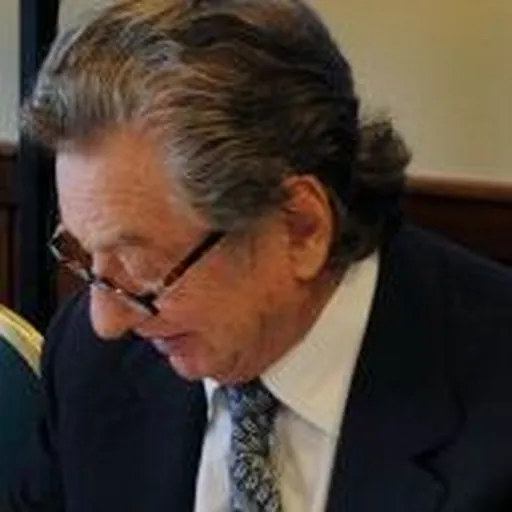
About Francisco Macri
Lived 1930 – 2019 (aged 88). Francisco Macri was an Italian and Argentine businessperson.
Francesco Raùl Macri (15 April 1931 – 2 March 2019) was an Italian-Argentine contractor, developer, industrialist and father of former Argentine President Mauricio Macri.
Life and career Childhood in Italy Macri was born in Rome, to Giorgio Macri and Lea Garbini. His mother belonged to a prosperous local family, proprietors of an intercity bus service and supporters of Fascist dictator Benito Mussolini.
His father was born to a family of fallen nobility from the Calabria region. Opponents of il Duce, their kinship to the powerful Pellicano clan allowed them to retain a small postal service carrier in the area around San Giorgio Morgeto.
Arrival in Argentina The birth of the Italian Republic prompted Giorgio Macri to enter politics, by which he co-founded a nationalist party, the Common Man's Front, ahead of the general elections in June 1946; following the party's poor showing, however, he departed for Buenos Aires, settling in the western suburb of San Justo. He immigrated with two of his seven siblings- Antonio (the father of Jorge Macri) and Maria Pia (who married Antonio Calcaterra). He later obtained housing in the Eva Perón Foundation's Ciudad Evita community, and was joined by his three children in January 1949. Franco Macri found work in as a construction laborer; he was promoted quickly and held an administrative post within a year, later earning his secondary school diploma at the Colegio Nacional de Buenos Aires and, in 1950, establishing a construction firm, Urbana.
Inheriting his father's interest in film (the elder Macri had worked for the iconic Cinecittà Studios), he also established MBC, which produced cinema for local directors Leopoldo Torre Nilsson and Alejandro Doria, among others.
Macri's marriage ended in separation in 1980 (no provision existed in Argentina for divorce until 1987), and in 1982 he married Cristina Cressier, with whom he had his sixth child, Florencia. The collapse of the Argentine auto industry in 1981–82 allowed Macri to purchase a controlling stake in Sevel Argentina, a local joint venture between Fiat and Peugeot formed in 1980. The acquisition averted the closure of the European automakers' Argentine plants, and tripled Socma's income.
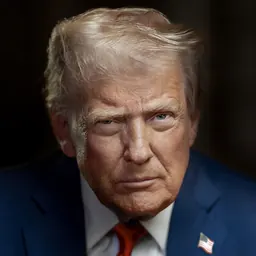
Ventures and misadventures Macri entered into a valuable real estate venture in New York, when in 1979, developer Abraham Hirschfeld sold him a 75% stake in 30 hectares (75 acres) of Hudson Riverfront land formerly owned by Penn Central. Planning to develop "Lincoln West," a residential complex, Macri agreed to invest US$100 million in mandated public works and related expenses, but could not find development financing. Ultimately, he sold the land to Donald Trump in 1985 for US$117 million, by transferring a unserviced Chase Manhattan loan to Trump. The family was shaken by the August 23, 1991, kidnapping of Mauricio Macri, Franco Macri's eldest son. Freed after two weeks in captivity for a reported ransom of US$6 million, Macri's abduction was executed by four members of the Policía Federal Argentina, which has policing purview over Buenos Aires (the perpetrators were located only a decade later).
Sevel, the Socma Group's centerpiece at the time, initially benefitted from the boom touched off by Economy Minister Domingo Cavallo's Convertibility Plan in 1991, seeing its auto sales grow from 30,000 in 1990 to 200,000 in 1994. The local auto industry was hit hard, however, by the Mexican peso crisis. A fall in sales to 130,000 led the company to divest itself of the Fiat licence in 1996, and Sevel revenues fell by nearly half, to US$1.1 billion.
Legacy Macri, a fan of the Boca Juniors football club since the 1950s, had a commercial relationship with it for almost as long, dating from his 1960 partnership in a small insurance firm with the club's president at the time, Alberto Armando. He leveraged this to promote his elder son, Mauricio, as president of the club in 1992, though he was defeated by the incumbent, Antonio Alegre (credited with saving the club from insolvency in the 1980s). Macri was elected in 1995, however, and caused controversy by earmarking a multi-million dollar renovation of the Bombonera stadium, and granting the contract to Impresit (Macri's construction firm).
Florencia, Macri's youngest daughter, was kidnapped on April 30, 2003, and freed a week later after a ransom of nearly a million dollars was reportedly paid. The federal postal service contract with Socma, through Correos Argentinos, was rescinded, citing the company's debt to taxpayers of US$296 million. Pago Fácil, the electronic funds transfer service operated by Socma, became one of the group's leading firms, processing over 7 million payments a month. Among the group's most significant real estate developments after 2004 was the Mulieris Towers, in Buenos Aires' Puerto Madero district.
Macri returned to the auto industry in 2007, when he obtained licensing to produce Chery automobiles, as well as their parts, which would be assembled in Uruguay. His son, Mauricio, was elected Mayor of Buenos Aires in 2007, and in 2008, the 78-year-old Macri divested Socma of two of its most important firms, Iecsa (construction) and Creaurban (real estate), in favor of Angelo Calcaterra, his nephew. Chery Socma, the joint venture with the Chinese automaker, exported its first units in September 2009.
Macri published a reflection on his over half-century as an Argentine businessman, El futuro es posible, in 2004. From 1949 when he arrived in Argentina Macri kept the suitcase with which he came. Shortly after the Panama Papers made the news, Mauricio appeared in a short television interview in which he said his father, Franco Macri, had founded the company through a "legal operation". He added that the company had been intended to carry out investment operations in Brazil but the business was never completed.
Journalist Joaquín Morales Solá considered it unlikely that Mauricio would be prosecuted for the Panama revelations. Mauricio appears himself in the directory, Franco Macri had reported it to the AFIP, and it was closed in 2008, just a year after Mauricio Macri became chief of government.
On 7 April 2016, federal prosecutor Federico Delgado began a formal investigation into Macri's involvement with Fleg Trading Ltd., the company registered in Panama for which President Macri was listed as director. Judge Sebastián Casanello was asked to start the file on the inquiry. The initial petition was made by Norman Martínez, deputy for the Front for Victory. Martínez claimed Macri could be guilty of perjury due to omissions made in his sworn statement. Martínez also referenced another offshore company, Kagemusha SA, which had been established in 1981 and to which President Macri also had connections.
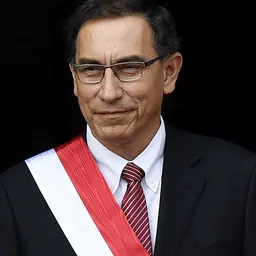
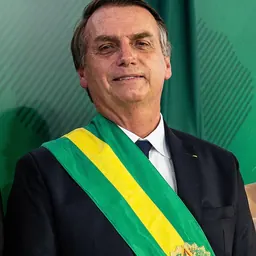
Death Macri died on March 2, 2019, in his house in Barrio Parque. Most Argentine politicians sent their condolences to Mauricio Macri, including (despite their rivalry) former president Cristina Fernández de Kirchner. He also received messages from other South American presidents, such as Brazilian Jair Bolsonaro, Bolivian Evo Morales, Paraguayan Mario Abdo Benítez, Peruvian Martín Vizcarra and the U.S. ambassador Edward Prado.
Don’t just read it —
keep it.
Full-length biographies made to live with: read them, listen on the way to work, watch them tonight.
- E-book
- Audio
- Video
Instant download · yours to keep · every purchase keeps this site free
Important facts
Family & relationships
People in Francisco Macri's life
Named in this biography and alive at the same time




Related people
Same field, nearest in time


Contemporaries
People whose lives overlapped Francisco Macri's

Frequently asked questions
Who was Francisco Macri?
Argentine businessman (1930-2019)
When was Francisco Macri born?
Francisco Macri was born on 15 April 1930 in Rome.
When did Francisco Macri die?
Francisco Macri died on 2 March 2019 in Palermo.
What was Francisco Macri's occupation?
Francisco Macri was a businessperson.
What nationality was Francisco Macri?
Francisco Macri was Italian and Argentine.
Sources & further reading
Cite this page
APA: Biography.guide. (2026). Francisco Macri. https://biography.guide/francisco-macri/
MLA: "Francisco Macri." Biography.guide, https://biography.guide/francisco-macri/.
Chicago: "Francisco Macri." Biography.guide. https://biography.guide/francisco-macri/.
Data last updated: 2026-09-22 · Spot an error? Report a correction.
Portrait: Wikimedia Commons · author & licence
Page generated 2026-09-27 04:59 UTC