
About Francisco Jê Acaiaba de Montezuma
Lived 1794 – 1870 (aged 75). Francisco Jê Acaiaba de Montezuma was a Brazilian lawyer and politician.
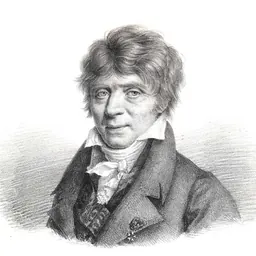
Francisco Jê Acaiaba de Montezuma, first and only Viscount of Jequitinhonha, born Francisco Gomes Brandão (23 March 1794 – 15 February 1870), was a Brazilian jurist, diplomat and politician. He was a senator for the province of Bahia from 1851 to 1870, commanded two ministries during the regency of Diogo Antônio Feijó and was president of the Bank of Brazil.
Montezuma graduated in law from the University of Coimbra. He was the founder and first president of the . He was also a pioneer in Brazilian Freemasonry, being the greatest Brazilian Masonic authority of his time. As a politician, he was one of the early proponents of abolitionism.
Biography Family and education Born Francisco Gomes Brandão, he was the son of the Portuguese merchant Manuel Gomes Brandão and mestizo Narcisa Teresa de Jesus Barreto. The family had a good income. His father wanted to make him a priest, so he joined the Seraphic Order of Discalced Franciscans in 1808.
In spite of his father's wish, Montezuma left the convent in a few months and entered the Escola Médico-Cirúrgica in Salvador, the first medical school in Bahia. In 1816, he moved to Portugal, studying at the Faculty of Law of the University of Coimbra, where he graduated in 1821.
In 1823, Montezuma married Mariana Angélica de Toledo Marcondes, in Rio de Janeiro. Together they had five children. Mariana died in 1836. He remarried, in second nuptials, to Francisca Maria de Jesus, the Viscountess of Jequitinhonha, in 1842, at João Ribeiro's farm, in Rio Comprido, Rio de Janeiro. Francisca was the widow of Rio de Janeiro politician and wholesaler Marcolino Antônio Leite. No children were recorded from this marriage.
Name With the Independence of Brazil, Montezuma abandoned his birth name, changing it to Francisco Jê Acaiaba de Montezuma – thus incorporating to the name allusions to indigenous peoples that formed the Brazilian nation, as well as a tribute to Aztec emperor Montezuma (Jê, spelled "Gê" at the time, designates the Brazilian amerindians of the non-Tupi-Guarani linguistic branch; Acaiaba, spelled "Acayaba" at the time, a word of Tupi origin). At this time, he was appointed councilor With the independence of Brazil, he swore allegiance to the Kingdom of Brazil. In 1822, he was part of the commission responsible for meeting with Pedro I, in Rio de Janeiro, to ask him for measures. Upon meeting the emperor, he received the Order of the Southern Cross for his actions in the struggle for independence and the title of Baron of Cachoeira. Montezuma, however, refused the nobility title.
In 1837, Montezuma was appointed general deputy for Bahia. He was one of the supporters of the Declaration of Age of emperor Pedro II and, in 1840, he was re-elected deputy. Before being chosen, Montezuma had appeared twice on the triple lists: once for Bahia and once for Rio de Janeiro. As a senator, he was a notorious proponent of the abolition of slavery. In 1865, he was the first to advocate in Parliament for the abolition of slavery for the next 15 years. He presented several projects that dealt with the gradual extinction of slavery. One of his proposals gave rise to the Rio Branco Law.
Montezuma was the founder and first president of the Institute of Brazilian Lawyers. He held the presidency of the institution from 1843 until 1850, when he resigned as he considered this function incompatible with the post of State Councilor. He remained as honorary president of the institute. He fought, without success, for the creation of the Order of Attorneys of Brazil.
Freemasonry Montezuma had a prominent place in the history of Freemasonry in Brazil. On 12 March 1829, then in exile, he received a letter of authorization from the Supreme Council of Belgium to install a Supreme Council of the Scottish Rite in Brazil. Back in Brazil, Montezuma installed the Supreme Council. As the Grand Sovereign Commander of the Supreme Council of the 33rd Degreeof the Scottish Rite, it was the greatest Masonic authority in Brazil at the time.
Don’t just read it —
keep it.
Full-length biographies made to live with: read them, listen on the way to work, watch them tonight.
- E-book
- Audio
- Video
Instant download · yours to keep · every purchase keeps this site free
Important facts
People in Francisco Jê Acaiaba de Montezuma's life
Named in this biography and alive at the same time

Related people
Same field, nearest in time




Contemporaries
People whose lives overlapped Francisco Jê Acaiaba de Montezuma's




Frequently asked questions
Who was Francisco Jê Acaiaba de Montezuma?
Brazilian lawyer and politician (1794-1870)
When was Francisco Jê Acaiaba de Montezuma born?
Francisco Jê Acaiaba de Montezuma was born on 23 March 1794 in Salvador.
When did Francisco Jê Acaiaba de Montezuma die?
Francisco Jê Acaiaba de Montezuma died on 15 February 1870 in Rio de Janeiro.
What was Francisco Jê Acaiaba de Montezuma's occupation?
Francisco Jê Acaiaba de Montezuma was a lawyer and politician.
What nationality was Francisco Jê Acaiaba de Montezuma?
Francisco Jê Acaiaba de Montezuma was Brazilian.
Sources & further reading
· Wikipedia: Francisco Jê Acaiaba de Montezuma
· DBpedia: Francisco Jê Acaiaba de Montezuma, Viscount of Jequitinhonha
Cite this page
APA: Biography.guide. (2026). Francisco Jê Acaiaba de Montezuma. https://biography.guide/francisco-je-acaiaba-de-montezuma/
MLA: "Francisco Jê Acaiaba de Montezuma." Biography.guide, https://biography.guide/francisco-je-acaiaba-de-montezuma/.
Chicago: "Francisco Jê Acaiaba de Montezuma." Biography.guide. https://biography.guide/francisco-je-acaiaba-de-montezuma/.
Data last updated: 2026-09-20 · Spot an error? Report a correction.
Page generated 2026-09-27 05:33 UTC