
About Francisco Gonzalo Marín
Lived 1863 – 1897 (aged 33–34). Francisco Gonzalo Marín was an American journalist.
Lieutenant Francisco Gonzalo Marín, also known as Pachín Marín (March 12, 1863 – November 1897), was a poet and journalist who fought alongside José Martí as a member of the Cuban Liberation Army. He is among those who are said to have designed the Puerto Rican flag.
Early years Marín (birth name: Francisco Gonzalo Marín Shaw ) was one of six siblings born to Santiago Marín Solá and Celestina Shaw Figuero in Arecibo, Puerto Rico, the town in which he received both his primary and secondary education. It was a period in history when the last two remaining Spanish colonies in the Antilles, Puerto Rico and Cuba, were demanding either more autonomy or full independence. Marín entered a seminary, but was unable to finish his studies because his family could not economically afford it. Marín went to work with the intention of helping his family and became a typesetter by trade. At the age of twenty, he founded a newspaper called El Postilion, which supported the independence cause and openly advocated his ideas. Marín expressed love for his country in his poems and in his newspaper. In 1884, he published his first book of poems titled Flores nacientes (Newborn Flowers) and followed with Mi óbolo in 1887, which contained the poems "Mis dos cultos" (My two cults), "A la asamblea" (To the Assembly) and "Al sol" (To the Sun). He had an older brother, Wenceslao Marín, whom he admired and with whom he shared his ideals.
Marín's brother enlisted in the Cuban Liberation Army which was fighting the Spanish Crown and was given the rank of lieutenant. In the meantime, Marín was the victim of political persecution by the Spanish government in the island and went into exile to the Dominican Republic in 1889. During his stay, he criticized the actions of Ulises Hereaux, the president of the republic, and he found himself once again in exile. In 1890, he went to live in Venezuela. In Caracas he was hired by "El siglo de Caracas" (the Century of Caracas) publishing house and he published various poems, among them "Emilia". However, it wasn't long before he entered into another conflict, this time with the Venezuelan head of state Raimundo Andueza Palacio and was once more exiled, this time to the island of Martinique. During his stay in the city, he collaborated in the La Gaceta del Pueblo a separatist newspaper which published the narrative "New York from Within". Marín is credited with designing the Puerto Rican flag. He used the Cuban flag as a model and inverted the colors in the flag's triangle and stripes. He presented the flag in New York's "Chimney Corner Hall", a gathering place of independence advocates. The flag soon came to symbolize the ideals of the Puerto Rican independence movement. Some people believe that Manuel Besosa was the designer, based on a letter written by his daughter in which she says, "...my father asked me to sew together some pieces of cloth, white, red and blue that he brought himself, this tiny flag had 5 alterned stripes, red and white, and a triangle with a five point star within it...".
Also, in a letter written by Maria Manuela (Mima) Besosa, the daughter of the Puerto Rican Revolutionary Committee member Manuel Besosa, she stated that she sewed the flag. This created a belief that her father could have been its designer.
Cuban Liberation Army Soon, Marín was fighting in Cuba where he was given the rank of lieutenant. Marín was wounded after he and his men confronted the Spanish Army in a skirmish in Turiguanó. Believing that he would be a burden to his men, he refused to be treated and was placed on a hammock. In November 1897, Lt. Francisco Gonzalo Marín died and when his men returned they buried his remains. his brother Wenceslao also died fighting in Cuba.
Poetic works Among his poetic works are: Flores Nacientes (Born Flowers) -1884 Mi Óbolo-1887 Romances-1892 En el barco (A mi Madre) (In the boat) -1894 El Trapo (The Flag) -1896 En la arena (On the sand), Obra Poética (Poetic Work) and Antología De Pachín Marín, were published posthumously in 1898. El trapo (The cloth) - The following are the verses of Marin's "El trapo":
Spanish(original version) Cuando un pueblo no tiene una bandera, bandera libre que enarbole ufano. en pos de su derecho soberano y el patrimonio, la gentil quimera;When a people does not have a flag, a free flag that it may raise proud, while seeking its sovereign right and the patrimony, a gentle chimera;si al timbre de su gloria entera bríos de combate en contra del tirano, la altiva dignidad del ciudadano o el valor instintivo de la fiera;if to the sound of its entire glory vigor of battle against the tyrant, the arrogant dignity of the citizen or the instinctive value of the wild animal; con fe gigante y singular arrojo láncese al campo del honor fecundo, tome un lienzo, al azar, pálido o rojo,with singular and gigantic faith may it charge the field of fertile honor, take a cloth at random, pale or red,y, al teñirlo con sangre el iracundo verá cambiarse el mísero despojoe en un trapo que asombre a todo el mundo.And, upon staining it with blood the irate one will see the wretched spoil transformed into a rag that will amaze everyone.
Postscript The Puerto Rican flag designed by Marín was approved by the Government of Puerto Rico on July 24, 1952, making it the official flag of Puerto Rico. However, the flag adopted by the government was slightly different. Instead of a light blue triangle, preferred by the independence movement, the government approved a dark blue triangle similar to the blue used in the flag of the United States. The city of Arecibo named an avenue in his honor.
Don’t just read it —
keep it.
Full-length biographies made to live with: read them, listen on the way to work, watch them tonight.
- E-book
- Audio
- Video
Instant download · yours to keep · every purchase keeps this site free
Important facts
People in Francisco Gonzalo Marín's life
Named in this biography and alive at the same time
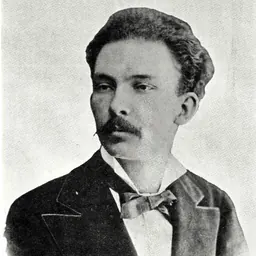
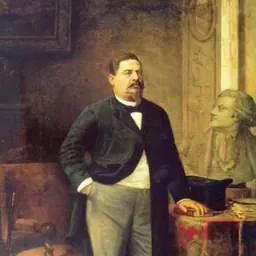
Related people
Same field, nearest in time
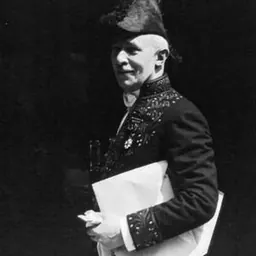
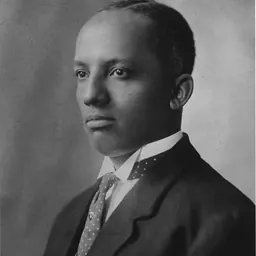


Contemporaries
People whose lives overlapped Francisco Gonzalo Marín's




Frequently asked questions
Who was Francisco Gonzalo Marín?
Puerto Rican military officer
When was Francisco Gonzalo Marín born?
Francisco Gonzalo Marín was born on 12 March 1863 in Arecibo.
When did Francisco Gonzalo Marín die?
Francisco Gonzalo Marín died in 1897 in Cuba.
What was Francisco Gonzalo Marín's occupation?
Francisco Gonzalo Marín was a journalist.
What nationality was Francisco Gonzalo Marín?
Francisco Gonzalo Marín was American.
Sources & further reading
· Wikipedia: Francisco Gonzalo Marín
· DBpedia: Francisco Gonzalo Marín
Cite this page
APA: Biography.guide. (2026). Francisco Gonzalo Marín. https://biography.guide/francisco-gonzalo-marin/
MLA: "Francisco Gonzalo Marín." Biography.guide, https://biography.guide/francisco-gonzalo-marin/.
Chicago: "Francisco Gonzalo Marín." Biography.guide. https://biography.guide/francisco-gonzalo-marin/.
Data last updated: 2026-09-20 · Spot an error? Report a correction.
Page generated 2026-09-27 05:03 UTC