
Francisco Gómez de Sandoval, 1st Duke of Lerma
Spanish politician
About Francisco Gómez de Sandoval, 1st Duke of Lerma
Lived 1553 – 1625 (aged 71–72). Francisco Gómez de Sandoval, 1st Duke of Lerma was a Spanish politician, military personnel, catholic priest and duke.
Francisco Gómez de Sandoval y Rojas, 1st Duke of Lerma, 5th Marquess of Denia, 1st Count of Ampudia (1552/1553 – 17 May 1625), was a favourite of Philip III of Spain, the first of the validos ('most worthy') through whom the later Habsburg monarchs ruled. His administration was marked by costly wars, including the Twelve Years' Truce with the Dutch Republic, financial mismanagement, and the controversial expulsion of the Moriscos. Eventually, he was deposed in 1618 under a palace intrigue orchestrated by his son and political rival, Cristóbal de Sandoval. Lerma retired as a cardinal and was succeeded by the Count-Duke of Olivares but faced financial penalties and died in 1625 at Valladolid.
Biography
Believed to have been born in 1552, Francisco de Sandoval was the son of Francisco de Rojas de Sandoval, Count of Lerma and Marquis of Denia. His mother was Isabelle de Borgia, daughter of Saint Francis Borgia, Duke of Gandía and General of the Jesuit Order.
Influence The family of Sandoval was ancient and powerful. The future duke of Lerma was born and raised at Tordesillas. As long as Philip II lived, the nobles had little effective share in the government, with the exception of a few who were appointed viceroys or commanded armies abroad. Lerma passed his time as a courtier, and made himself a favourite with the young prince Philip, heir to the Spanish throne. The dying King Philip II foresaw that Lerma was one of those nobles who were likely to mislead the new sovereign. The old king's fears were, it is claimed by some, fully justified after his death. Others however, claim that Lerma was a fully capable favourite, as he led Castile and the Habsburg dominions on a more modest and economically viable course of peace than both Phillip II and Olivares during the reign of Philip IV – both figures that have received far more positive recognition by historians.
According to Friar Juan Fernández de Medrano in 1601, Lerma was viewed by his contemporaries as the singular soul and guiding force of the Spanish monarchy, a leader whose virtues illuminated the kingdom like the Sun governing the heavens. He was seen as "a natural and divinely appointed leader, uniquely capable of maintaining unity and harmony within the state."
Foreign policy
As chief minister Lerma's ideas of foreign policy were firmly grounded in feudal ideas about royal patrimony. He cemented Spanish rule by many marriage alliances with the Austrian Habsburgs and then with the French Bourbons. Lerma's administration began by making peace with France, in the 1598 Treaty of Vervins in 1598, but he persisted in costly and useless hostilities with England till 1604, when Spain was forced by exhaustion to make peace. Lerma used all his influence against a recognition of the independence of the Low Countries. They had 5 children: Cristóbal de Sandoval, Duke of Uceda (1577–1624), his successor. Diego de Sandoval (died 1632), married Luisa de Mendoza, VII Condesa de Saldaña. Juana de Sandoval (died 1624), married Manuel Pérez de Guzmán y Silva, 8th Duke of Medina Sidonia. Luisa de Guzmán (1613–1666), married John II, 8th Duke of Braganza, later crowned King John IV of Portugal. Catalina de Sandoval (died 1648), married Pedro Fernández de Castro, 7th count of Lemos. Francisca de Sandoval (died 1663), married Diego López de Zúñiga Avellaneda, 2nd Duke of Peñaranda de Duero.
Domestic policy When Lerma fell from power in 1618, his status as cardinal (which he had acquired for exactly this purpose 6 months earlier) gave him immunity from prosecution by his numerous enemies, who instead turned on Lerma's trusted and unscrupulous secretary, Rodrigo Calderón, Count of Oliva (d. 1621), who as Lerma's agent was made a scapegoat. Calderón was tortured and executed on trumped up charges of witchcraft and other crimes, which demonstrated what would likely have been Lerma's fate, if a cardinal's hat hadn't protected his head.
Lerma was also responsible for the appointment of Don Pedro Franqueza to reform royal finances, but who instead managed to embezzle enough funds to purchase the title of Count of Villalonga. He was placed on trial and forfeited his riches.
At a time when the state was practically bankrupt, he encouraged the King in extravagance, and accumulated for himself a fortune estimated by contemporaries at forty-four million ducats.
On the hilltop overlooking the village of Lerma in Old Castile that provided his grand title, the duke built a palace (1606–1617, by Francisco de Mora) capped with corner towers, on the site of a fortification, ranged round a double-arcaded courtyard facing an arcaded square and linked to the rebuilt church of San Pedro with a private passageway. Lerma was pious, spending lavishly on religious houses.
In fiction
Lerma is mentioned in the early 18th-century picaresque novel Gil Blas (Chapter IV) by Alain-Rene Lesage. A young Mikhail Lermontov associated his surname with Lerma's title, which is an obvious fiction; even the family legend traced back the name to Thomas Learmonth the Rhymer from Scotland, but not to Lerma. The poet painted an imaginary portrait of the "Duke of Lerma" and created some other works featuring Spaniards. Anachronistically, a "Duke of Lerma" features as one of the minor characters in the 1867 opera Don Carlos by Giuseppe Verdi. A fictionalized, more treasonous version of Lerma, renamed the "Duke of Lorca," is the villain of the 1948 film Adventures of Don Juan played by Errol Flynn.
Don’t just read it —
keep it.
Full-length biographies made to live with: read them, listen on the way to work, watch them tonight.
- E-book
- Audio
- Video
Instant download · yours to keep · every purchase keeps this site free
Important facts
People in Francisco Gómez de Sandoval, 1st Duke of Lerma's life
Named in this biography and alive at the same time
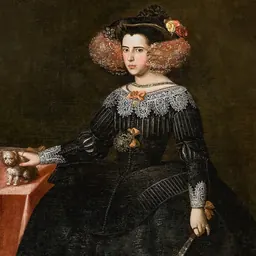



Related people
Same field, nearest in time
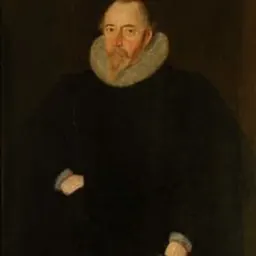


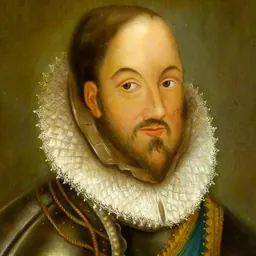
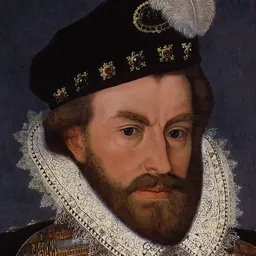
Contemporaries
People whose lives overlapped Francisco Gómez de Sandoval, 1st Duke of Lerma's

Frequently asked questions
Who was Francisco Gómez de Sandoval, 1st Duke of Lerma?
Spanish politician (1553-1625)
When was Francisco Gómez de Sandoval, 1st Duke of Lerma born?
Francisco Gómez de Sandoval, 1st Duke of Lerma was born in 1553 in Tordesillas.
When did Francisco Gómez de Sandoval, 1st Duke of Lerma die?
Francisco Gómez de Sandoval, 1st Duke of Lerma died on 17 May 1625 in Valladolid.
What was Francisco Gómez de Sandoval, 1st Duke of Lerma's occupation?
Francisco Gómez de Sandoval, 1st Duke of Lerma was a politician, military personnel, catholic priest and duke.
What nationality was Francisco Gómez de Sandoval, 1st Duke of Lerma?
Francisco Gómez de Sandoval, 1st Duke of Lerma was Spanish.
Sources & further reading
· Wikipedia: Francisco Gómez de Sandoval, 1st Duke of Lerma
· DBpedia: Francisco de Sandoval y Rojas, 1st Duke of Lerma
Cite this page
APA: Biography.guide. (2026). Francisco Gómez de Sandoval, 1st Duke of Lerma. https://biography.guide/francisco-gomez-de-sandoval-1st-duke-of-lerma/
MLA: "Francisco Gómez de Sandoval, 1st Duke of Lerma." Biography.guide, https://biography.guide/francisco-gomez-de-sandoval-1st-duke-of-lerma/.
Chicago: "Francisco Gómez de Sandoval, 1st Duke of Lerma." Biography.guide. https://biography.guide/francisco-gomez-de-sandoval-1st-duke-of-lerma/.
Data last updated: 2026-09-20 · Spot an error? Report a correction.
Page generated 2026-09-27 05:31 UTC