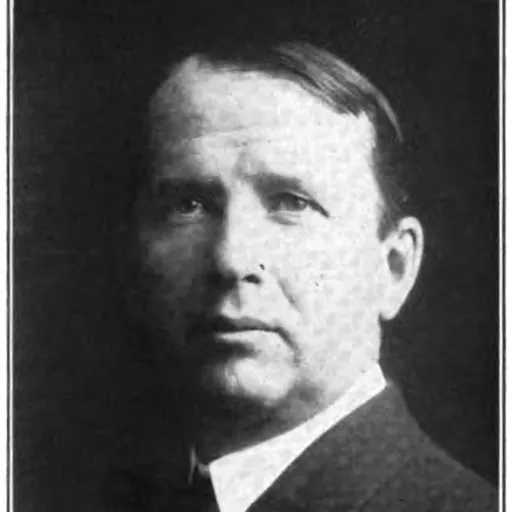
About Francis Willford Fitzpatrick
Lived 1863 – 1931 (aged 68). Francis Willford Fitzpatrick was an American architect.
Francis Willford Fitzpatrick (April 9, 1863 – July 10, 1931) was an architect in Duluth, Minnesota, Washington, DC, Omaha, Nebraska, and Evanston, Illinois. He often abbreviated his name as F. W. Fitzpatrick in publications and correspondence. Fitzpatrick was an early advocate of fireproof buildings, and he was a frequent columnist in architectural trade publications on a variety of topics.
Early life Fitzpatrick was born in Montreal, Canada East, on April 9, 1863. His parents were John and Mary Fitzpatrick. He immigrated to the United States in 1883 and began working as a drafter in the office of Minneapolis architect Leroy Buffington, remaining until 1887. Then in 1888, Fitzpatrick worked at the offices of the brothers Fremont D. Orff and George W. Orff. He formed the Minnesota Decorating Company and successfully contracted for the interior painting and decorating of the 107-room Dacotah Hotel in Grand Forks, North Dakota in 1889.
He joined the American Institute of Architects in 1889.
Traphagen and Fitzpatrick After completing his work at the Dacotah Hotel, Fitzpatrick moved to Duluth, Minnesota, and formed a partnership, Traphagen and Fitzpatrick, with Oliver G. Traphagen that lasted from 1890 to 1896. This was his most productive time as an architect. Noted Duluth architect Frederick German worked for the two as a draftsman at this time.
List of Traphagen and Fitzpatrick designs
Phoenix Block, 1890 Fitger Brewery Boiler House, 1890 A W. Wieland Store, 1890 Hoppmann Building, 1890 Lester Park Hotel, 1890 Philadelphia Terrace (townhouses), 1890 Chester Terrace (townhouses), 1890 Clinton & Kate Markell House, 1890 Alonzo & Julia Whiteman House, 1890 Costello Block (second), 1891 Lyceum Theater, 1891 First Presbyterian Church, 1891 Incline Pavilion, 1891 Duluth Shoe Co./Duluth Dry Goods Co., 1891 Selleck Block, 1891 Charlotte Wells Store, 1891 Hardy Hall, 1891 James Norton Rental Houses (2), 1891 Alexander Miles Rental Houses (6), 1891 Henry & Lizzie Blume House, 1891 Torrey Building, 1892 Boyle Brothers Saloon & Restaurant, 1892 Duluth Street Railway Co. Barn, 1892 Duluth Driving Park, 1892 Myron & Mary Bunnell House, 1892 William & Josephine Magie House, 1892 Oliver & Amelia Traphagen House, 1892 Munger Terrace (townhouses), 1892 Townsend & Mayme Hoopes House, 1892 William & Amelia Sherwood House, 1892 Charles & Maude Towne House, 1892 Herald Building, 1893 Mesaba Block, 1893 Stone-Ordean Warehouse, 1893 St. Louis Hotel (second), 1893 Sagar Drug, 1893 Hamilton & Martha Peyton House, 1893 Charles & Louise Schiller House, 1893 George & Jessica Spencer House, 1893 Crane Ordway Building, 1894 Elmer & Lizzie Matter House, 1894 Board of Trade Building (second), 1895 Tuohy Mercantile, 1895 P.R. L. Hardenbergh & Co. Building, 1895 Fitger's Brewery Settling Room, 1896 At the treasury, Fitzpatrick worked for Jeremiah O'Rourke and then for William Aiken. Fitzpatrick was assigned to the Chicago Federal Building project as an assistant to architect Henry Ives Cobb, and he moved to Chicago to become one of many supervisors of construction. Soon Fitzpatrick was the only supervisor of construction, and his relationship with Cobb deteriorated for reasons of procurement and process related to construction. Fitzpatrick resigned from the project in 1903 and returned to private practice two years before the building was completed.
Private practice Fitzpatrick became a consulting architect in 1903, and he specialized in fire prevention designs. He also worked with other architects to solve design problems. His favorite area of expertise may have been Architectural rendering, and he enjoyed submitting drawings for competition awards.
By 1917, Fitzpatrick joined the Bankers Realty Investment Company in Omaha, Nebraska as head of the architectural department. The company designed and built residential and commercial structures capitalized by investors. While at Bankers, he designed the Hotel Yancey in Grand Island, Nebraska, the Blackstone Hotel in Omaha, and a hotel in Sioux City, Iowa. The job did not last long, and in 1919 Fitzpatrick moved to Evanston, Illinois and continued as a consulting architect.
The July 13, 1907, issue of The American Architect and Building News contained a letter from F. W. Fitzpatrick refuting the conclusions of the AIA titled, "The Origination of the Steel Skeleton Idea." In his letter, Fitzpatrick claimed that he himself had designed steel skeletons in support of church towers prior to 1883, and he had sketched the steel column and horizontal beam design for Buffington's 12-story Tribune building when he was working for Buffington in 1883.
Then in 1912, an article in The Washington Post credited Fitzpatrick with inventing the skyscraper. Claims about Fitzpatrick's role in early skyscraper design were not actively contested, but the opinion of the AIA may have been more accurate.
Ideas, opinions, and quotations Fitzpatrick was a frequent contributor to various trade publications and newspapers. In his research, historic preservationist Ed Zimmer counted over 200 articles and letters to the editor by Fitzpatrick on architecture and other topics. Fitzpatrick's style was frequently grandiloquent and passionate, but his vision was often accurate.
On the United States Capitol Building,
On progress,
On government,
A poem on China,
On Social Security (postal insurance),
On the handwriting of President Cleveland,
On corruption at City Hall,
On the use of concrete in construction,
On step-back construction in urban planning,
On plate glass,
On the Lincoln Memorial,
On the boring work of fellow architects,
On the invention of the skyscraper,
Death While crossing the street in Evanston, Fitzpatrick was fatally struck by a car on July 10, 1931. An obituary at the time described his life,
Don’t just read it —
keep it.
Full-length biographies made to live with: read them, listen on the way to work, watch them tonight.
- E-book
- Audio
- Video
Instant download · yours to keep · every purchase keeps this site free
Important facts
People in Francis Willford Fitzpatrick's life
Named in this biography and alive at the same time





Related people
Same field, nearest in time



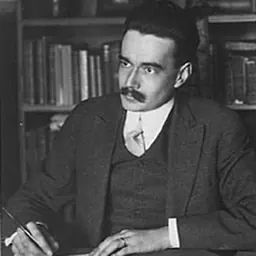
Contemporaries
People whose lives overlapped Francis Willford Fitzpatrick's
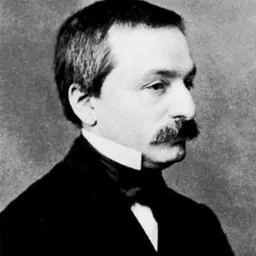



Frequently asked questions
Who was Francis Willford Fitzpatrick?
Canadian-American architect, 1863-1931
When was Francis Willford Fitzpatrick born?
Francis Willford Fitzpatrick was born on 9 April 1863 in Montreal.
When did Francis Willford Fitzpatrick die?
Francis Willford Fitzpatrick died on 10 July 1931 in Evanston.
What was Francis Willford Fitzpatrick's occupation?
Francis Willford Fitzpatrick was an architect.
What nationality was Francis Willford Fitzpatrick?
Francis Willford Fitzpatrick was American.
Sources & further reading
· Wikipedia: Francis Willford Fitzpatrick
· DBpedia: Francis W. Fitzpatrick
Cite this page
APA: Biography.guide. (2026). Francis Willford Fitzpatrick. https://biography.guide/francis-willford-fitzpatrick/
MLA: "Francis Willford Fitzpatrick." Biography.guide, https://biography.guide/francis-willford-fitzpatrick/.
Chicago: "Francis Willford Fitzpatrick." Biography.guide. https://biography.guide/francis-willford-fitzpatrick/.
Data last updated: 2026-09-23 · Spot an error? Report a correction.
Portrait: Wikimedia Commons · author & licence
Page generated 2026-09-27 05:05 UTC