
Francis Verney
English pirate
About Francis Verney
Lived 1584 – 1615 (aged 30–31).
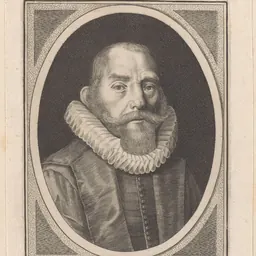
Sir Francis Verney (1584 – 6 September 1615) was an English adventurer, soldier of fortune, and pirate. A nobleman by birth, he left England after the House of Commons sided with his stepmother in a legal dispute over his inheritance, and became a mercenary in Morocco and later a Barbary corsair.
Verney was among the most successful captains to operate on the Barbary coast during the early 17th century and, despite having no seafaring experience, was one of four leaders of the Tunisian pirate fleet commanded by John Ward. His supposed conversion to Islam with Ward in 1610 was the cause of considerable controversy in his native country. Verney was later captured and spent two years in the Sicily slave galleys. He was rescued by an English Jesuit in 1614 and converted to Catholicism shortly before his death.
Early life The only son of Audrey Gardner (died 1588) and Sir Edmund Verney (died 1600), Francis Verney was born in 1584 at Pendley Manor in Tring, Hertfordshire, England. His father who came from a gentry family with city and court connections , through his first and third marriages into two other gentry families, made Francis one of several stepchildren within the Redmayne, Turville, and St. Barbe families; he was related to a total of seven gentry families through marriage. Within his immediate family, he had a younger half-brother, Edmund (1590–1642), who was born on 1 January 1590, the only child produced by Edmund and Lady Mary Blakeney.
In 1599, Francis was married to his stepsister, Ursula St. Barbe, daughter of William St. Barbe of Broadlands and Mary Blakeney. The marriage was presumably arranged by Edmund and Lady Mary, described as a "masterful" woman, to cement their families fortunes and, more specifically, to protect the interests of Lady Mary and her daughter. She also persuaded her husband to divide the property granted to Francis by his uncle's will with their son Edmund. This resulted in the original will being superseded and this new settlement confirmed by a private act of Parliament passed in the House of Lords on 3rd February, 1597/8 (39 Eliz. 1. c. 10 ) . These moves greatly increased the influence and power of Lady Mary. Edmund Verney died on 11 January 1600, when Francis was only 15 years old, and was subsequently sent off to Trinity College, Oxford in September of that year. Though little of his childhood is recorded, according to the Dictionary of National Biography, he had "all the advantages that a fine face and figure, great personal courage, and a magnificent taste in dress could bestow". It was during this period that he began running huge debts spending as much as £3,000 a year . Leaving Oxford, Verney soon rebelled against his arranged marriage living separately from his wife in Alsatia, a notorious neighbourhood within Whitefriars, a sanctuary where debtors and other criminals fled to escape punishment, where one of his servants, Richard Gygges, was murdered in a drunken brawl in 1604 He was very bitter after losing his case, in addition to the overwhelming debt he faced, causing him to "forsake the friends who had injured him, and the country which has refused him redress". He wandered the continent for some time,
Family tradition claims he went to Morocco where he joined Captain John and Philip Giffard, both relatives of the Verneys, who commanded an army of two hundred fellow Englishmen, by Francis Cottington of the English embassy in Madrid. Richard Bishop, and Kara Osman, the latter captain of the Janissaries at Tunis. Simon Danziger In December 1610, according to claims made by the Venetian ambassador in Tunis, he and Ward were accused of "turning Turk" by becoming converts to Islam until being ransomed to an English Jesuit. Verney was granted his freedom on the condition that he convert to Catholicism which he did. though both disputed some of William Lithgow's claims.
Of the personal effects sent to the Verney family by John Watchin, which included a turban, slippers, silk tunics, and pilgrim's staff, Lady Frances made mention that all were still preserved at Claydon House. Interest in Verney carried over into the 20th century as part of the era's popular culture. He was referenced in Dashiell Hammett's 1930 detective novel The Maltese Falcon as one of the people who possessed the jeweled bird. The title character of the 1940 swashbuckler film The Sea Hawk, played by Errol Flynn, was inspired by the lives of both Verney and Sir Henry Mainwaring.
Don’t just read it —
keep it.
Full-length biographies made to live with: read them, listen on the way to work, watch them tonight.
- E-book
- Audio
- Video
Instant download · yours to keep · every purchase keeps this site free
Important facts
People in Francis Verney's life
Named in this biography and alive at the same time
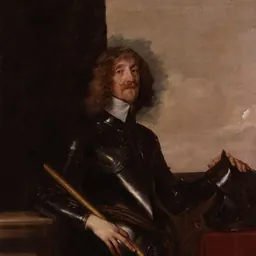
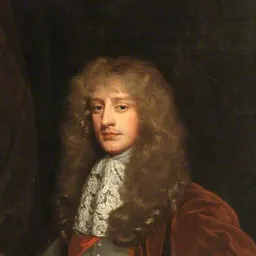

Contemporaries
People whose lives overlapped Francis Verney's
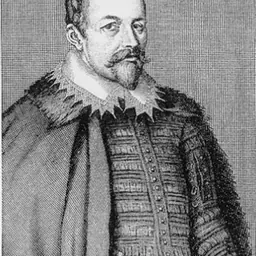



Frequently asked questions
Who was Francis Verney?
English pirate
When was Francis Verney born?
Francis Verney was born in 1584 in Tring.
When did Francis Verney die?
Francis Verney died on 6 October 1615 in Messina.
Sources & further reading
Cite this page
APA: Biography.guide. (2026). Francis Verney. https://biography.guide/francis-verney/
MLA: "Francis Verney." Biography.guide, https://biography.guide/francis-verney/.
Chicago: "Francis Verney." Biography.guide. https://biography.guide/francis-verney/.
Data last updated: 2026-09-20 · Spot an error? Report a correction.
Page generated 2026-09-27 04:59 UTC