
About Francis Kett
Lived 1547 – 1589 (aged 41–42). Francis Kett was a politician and anglican priest.
Francis Kett (c. 1547–1589) was an Anglican clergyman burned for heresy.
Life
Kett was born in Wymondham, Norfolk, the son of Thomas and Agnes Kett, and the nephew of the rebel Robert Kett, the main instigator of Kett's Rebellion.
Although Kett's father died while he was still a boy he was able to attend university thanks to support from his mother's second husband. After being admitted to Clare College, Cambridge in 1566, Francis graduated BA from Corpus Christi College, Cambridge in 1570. After proceeding MA in 1573 he was elected a fellow of that college. At some point he also entered holy orders.
In 1580 Kett resigned his fellowship and studied medicine, graduating MD in 1581, and in 1585 "Francis Kett, doctor of phisick" published 'The Glorious and Beautiful Garland of Man's Glorification, containing the godly misterie of heavenly Jerusalem', a book dedicated to Queen Elizabeth: and also in 1585
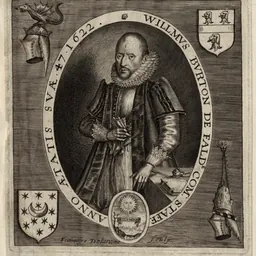
However, in 1588 Edmund Scambler, the Bishop of Norwich, brought charges of heresy against him. Kett's views, if the charges against him were accurate, seem to have approximated to Arianism: he believed Jesus was not God but a good man who had suffered "only as Jesus already, and shall suffer hereafter as Christ" (that is, that having returned to earth Jesus would "suffer againe for the sinnes of the world" and eventually become divine). Kett also had millenarian beliefs, claiming that "Christ is now in his human nature gathering a church in Erthe in Judea"; and that "this year of our Lord 1588 divers Jews shall be sent to divers countries to publish the new covenant". Another account reports that he also believed in psychopannychism or soul sleep, that the soul lapses into a state of unawareness between death and resurrection on the Day of Judgment. The puritan minister William Burton reported with horror Kett's denial of Christ's divinity, that "Christ is not God, but a good man as others be"; but he also observed that however "monstrous" Kett's beliefs he gave every appearance of being a good man, continually praising God, praying and reading the Bible.
In late 1588 Scambler wrote to Lord Burghley urging that Kett should be executed with all speed, and he was accordingly burnt to death in the ditch of Norwich Castle on 14 January 1589. William Burton was a witness of his final suffering:
...when he went to the fire he was clothed in sackecloth, he went leaping and dauncing: being in the fire, above twenty times together clapping his hands, he cried nothing but blessed bee God … and so continued until the fire had consumed all his nether partes, and until he was stifled with the smoke.
It has been suggested that Kett's unorthodox opinions might have influenced the free-thinking views of Christopher Marlowe, who was also a student at Corpus Christi. However Kett's time as Fellow only overlapped the arrival of the young Marlowe by three or four months.
Don’t just read it —
keep it.
Full-length biographies made to live with: read them, listen on the way to work, watch them tonight.
- E-book
- Audio
- Video
Instant download · yours to keep · every purchase keeps this site free
Important facts
People in Francis Kett's life
Named in this biography and alive at the same time


Related people
Same field, nearest in time

Contemporaries
People whose lives overlapped Francis Kett's

Frequently asked questions
Who was Francis Kett?
English priest (1547-1589)
When was Francis Kett born?
Francis Kett was born in 1547 in Wymondham.
When did Francis Kett die?
Francis Kett died on 14 January 1589.
What was Francis Kett's occupation?
Francis Kett was a politician and anglican priest.
Sources & further reading
Cite this page
APA: Biography.guide. (2026). Francis Kett. https://biography.guide/francis-kett/
MLA: "Francis Kett." Biography.guide, https://biography.guide/francis-kett/.
Chicago: "Francis Kett." Biography.guide. https://biography.guide/francis-kett/.
Data last updated: 2026-09-20 · Spot an error? Report a correction.
Page generated 2026-09-27 05:23 UTC