
About Francis Barraud
Lived 1856 – 1924 (aged 68). Francis Barraud was a British and English painter.
Francis James Barraud (16 June 1856 – 29 August 1924) was an English painter. He is best known for his painting His Master's Voice, one of the most famous commercial logos in the world, having been adopted as a recording industry trademark used by various corporations including RCA Victor, EMI, HMV, JVC and Deutsche Grammophon. The image, which depicts a dog named Nipper, ear cocked as he listens to a wind-up disc gramophone helped popularize the nascent field of sound recording and brought Barraud worldwide fame. He subsequently established himself as an artist for corporate clients, spending the rest of his career producing dozens of copies of the painting which made his name.
Early life Barraud was born in Marylebone, London, on 16 June 1856 into a family of artists and creatives. Both his father, Henry Barraud (1811–1874), and paternal uncle William Barraud (1810–1850) were well-known animal painters. Barraud's patrilineal great-grandfather, Paul Philip Barraud, was an eminent chronometer maker of Huguenot extraction, descended from an old French family that came over to England at the time of the revocation of the Edict of Nantes. he was the nephew of George Rose (1817–1882), a dramatist, novelist, and humorous entertainer, who wrote under the pseudonym Arthur Sketchley.
Barraud was educated at Ushaw College in Durham and St. Edmund's College in Ware, Hertfordshire. Following in his father's footsteps, Barraud then pursued an artistic education, studying at Heatherley's School of Art and the Royal Academy Schools, where he was the recipient of the silver medal for life drawing.
His Master's Voice
It is difficult to say how the idea came to me beyond the fact that it suddenly occurred to me that to have my dog listening to the phonograph, with an intelligent and rather puzzled expression, and call it His Master's Voice would make an excellent subject. We had a phonograph and I often noticed how puzzled he was to make out where the voice came from. It was certainly the happiest thought I ever had. In 1931, The Gramophone Company merged with the Columbia Graphophone Company to form Electric and Musical Industries Limited (EMI).
Later life and death Barraud was never able to match the success of His Master's Voice and, by 1913, he was struggling financially. Upon learning this, the Gramophone Company's Alfred Clark commissioned a replica of His Master's Voice for The Victor Talking Machine Company. An Encore Too Many (1887), one of Barraud's earlier works, was purchased by the Liverpool Corporation and is currently in the collection of the city's Walker Art Gallery.
Don’t just read it —
keep it.
Full-length biographies made to live with: read them, listen on the way to work, watch them tonight.
- E-book
- Audio
- Video
Instant download · yours to keep · every purchase keeps this site free
Important facts
People in Francis Barraud's life
Named in this biography and alive at the same time




Related people
Same field, nearest in time

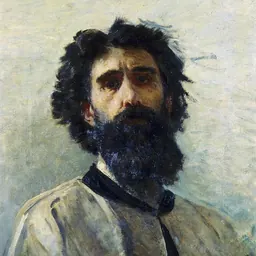
Contemporaries
People whose lives overlapped Francis Barraud's




Frequently asked questions
Who was Francis Barraud?
British painter (1856–1924)
When was Francis Barraud born?
Francis Barraud was born on 16 June 1856 in Liverpool.
When did Francis Barraud die?
Francis Barraud died on 29 August 1924 in Kingston upon Thames.
What was Francis Barraud's occupation?
Francis Barraud was a painter.
What nationality was Francis Barraud?
Francis Barraud was British and English.
Sources & further reading
Cite this page
APA: Biography.guide. (2026). Francis Barraud. https://biography.guide/francis-barraud/
MLA: "Francis Barraud." Biography.guide, https://biography.guide/francis-barraud/.
Chicago: "Francis Barraud." Biography.guide. https://biography.guide/francis-barraud/.
Data last updated: 2026-09-26 · Spot an error? Report a correction.
Page generated 2026-09-27 05:15 UTC