
About Francis Barrallier
Lived 1773 – 1853 (aged 79). Francis Barrallier was a French explorer.
Kanangra-Boyd National Park, the area Barrallier reached in his expedition of 1802Francis Louis Barrallier (born Louis François Barrallier, 19 October 1773 – 11 June 1853) was a French military officer in the British Army. Born to a monarchist family in Toulon, he was a cartographer, explorer of Australia, and a surveyor.
Life and career Francis Barrallier was born in Toulon, France, on 19 October 1773, and baptised Louis François Barralier. François Barrallier was a president and his father a vice president of commissioners of different districts of the counter-revolutionary royalist authorities of Toulon. He was the eldest son of Jean-Louis Barrallier, a marine engineer and monarchist, and Marie-Antoinette-Francoise Hernandez. The family fled to the United Kingdom in 1793 during the Siege of Toulon by the republicans. They lived for a time at Milford Haven, in Pembrokeshire, where Jean was employed designing the new port. Francis was trained by his father in engineering and surveying. At first he was given miscellaneous tasks including the design of a proposed orphanage at Parramatta. In July 1800 the outgoing Governor of NSW, John Hunter, appointed him an ensign in the New South Wales Corps.
In March 1801, Governor Philip Gidley King sent him with Lieutenant James Grant in to further explore, survey and map Bass Strait. Barrallier's resulting maps of Jervis Bay, Western Port and some of Bass Strait were recognised by Governor King, who made him the Colony's engineer and artillery officer.
Again in the role of surveyor, in June 1801 he sailed to the Hunter River in an expedition led by Colonel William Paterson. Later that year he made a second trip there with surveyor Charles Grimes, and with him surveyed part of the Paterson River. found himself unwelcome amongst the Gundungurra people whose country they had entered. On the second incursion, with two different Aboriginal assistants, Badbury (Boodbury) and Le Tonsure, he penetrated further west but eventually turned around at Johnston Falls in Wheengee Whungee Creek, six kilometres southwest of Kanangra Walls. The party was short of supplies and low on morale and was far short of crossing the mountains. After a third unsuccessful incursion, which involved an attempt to follow the Wollondilly River upstream, Barrallier returned to Sydney. The expedition had taken 51 days altogether. and subsequently wrote a long journal, in French. These documents provide an important record of his encounters with the First Nations people he met or who accompanied him, and reveal that Barrallier had an uncommon understanding of their ownership of country. It is likely that his attitudes were influenced in part by his encounters with members of the French Baudin expedition, which visited Sydney in the months before the expedition.
In May 1803 Barrallier fell victim of the feuding between Governor King and the New South Wales Corps, and was dismissed as aide-de-camp. He submitted his resignation from the army and left for England. His resignation was never accepted, probably due to the support of Captain John Macarthur and Sir Joseph Banks. He undertook further training in the hope he would return to NSW as surveyor general, but was disappointed in that ambition. In 1809 he earned a silver medal for his role in the invasion of Martinique, and was made a captain in the 101st Regiment. He was then appointed aide-de-camp to General Sir George Beckwith, commander of the English forces in the West Indies, and in 1810 earned another silver medal for his role in the invasion of Guadalupe.
In 1812 Barrallier was instructed to make a survey of Barbados, a task which occupied several years during which he was appointed surveyor general of the island. He lived mainly in England, but also in France, having married Isobel Skyrme at Lambeth in 1819.
In 1827 he published his map of Barbados. This map has been significant as it lists the names of all the English owners of the plantations of the time.
Francis Barrallier died in London on 11 June 1853, aged nearly eighty. Barrallier Island, a tiny islet that he would have visited in Western Port, was named after him. Several places in the Blue Mountains also carry his name.
Don’t just read it —
keep it.
Full-length biographies made to live with: read them, listen on the way to work, watch them tonight.
- E-book
- Audio
- Video
Instant download · yours to keep · every purchase keeps this site free
Important facts
People in Francis Barrallier's life
Named in this biography and alive at the same time




Related people
Same field, nearest in time


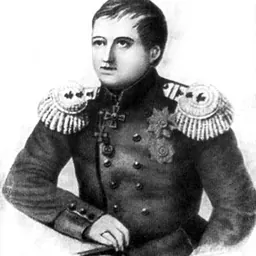
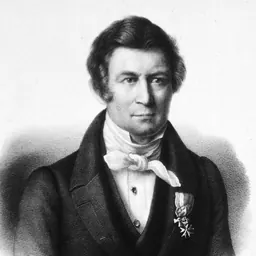
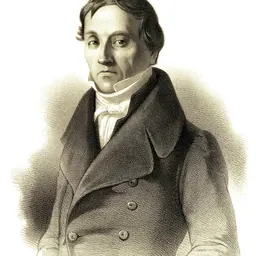
Contemporaries
People whose lives overlapped Francis Barrallier's


Frequently asked questions
Who was Francis Barrallier?
Australian explorer (1773-1853)
When was Francis Barrallier born?
Francis Barrallier was born on 19 October 1773 in Toulon.
When did Francis Barrallier die?
Francis Barrallier died on 11 June 1853 in London.
What was Francis Barrallier's occupation?
Francis Barrallier was an explorer.
What nationality was Francis Barrallier?
Francis Barrallier was French.
Sources & further reading
· Wikipedia: Francis Barrallier
Cite this page
APA: Biography.guide. (2026). Francis Barrallier. https://biography.guide/francis-barrallier/
MLA: "Francis Barrallier." Biography.guide, https://biography.guide/francis-barrallier/.
Chicago: "Francis Barrallier." Biography.guide. https://biography.guide/francis-barrallier/.
Data last updated: 2026-09-20 · Spot an error? Report a correction.
Page generated 2026-09-27 05:20 UTC